
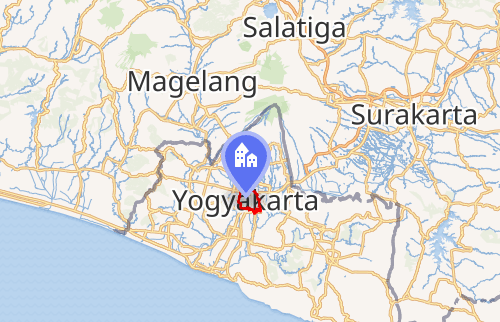

RADAR TULUNGAGUNG – The Yogyakarta Special Region Status remains one of Indonesia’s most unique constitutional arrangements, distinguishing the province from all others through a governance system rooted in royal tradition and historical privilege. The status, which is legally recognized by the Indonesian government, reflects Yogyakarta’s longstanding cultural significance and its extraordinary contribution to the nation’s founding.
Yogyakarta differs from other provinces because the reigning Sultan serves as governor, while the Duke of Pakualaman serves as deputy governor. Residents do not elect these positions through regional elections. Instead, the arrangement follows a hereditary system rooted in the history of the Yogyakarta Sultanate and the Pakualaman Duchy.
The province also played a critical role in Indonesia’s early years as an independent nation. In 1945, Yogyakarta’s royal leaders openly supported the new republic and voluntarily joined it. The city later became Indonesia’s temporary capital during the fight against Dutch efforts to regain control. That loyalty and support remain central to the Yogyakarta Special Region Status today.
Historical Foundations Behind Yogyakarta’s Special Status
The origins of Yogyakarta’s unique position trace back to the establishment of the Yogyakarta Sultanate in 1755 following the Treaty of Giyanti, which divided the Mataram Kingdom into two successor states: the Yogyakarta Sultanate and the Surakarta Sunanate.
Prince Mangkubumi, later known as Sultan Hamengkubuwono I, became the first ruler of Yogyakarta and established the sultanate as an independent political and cultural center. Over the following centuries, the Sultanate developed its own governance structure and maintained a strong influence over social, political, and cultural life in the region.
During the Dutch colonial era, both the Yogyakarta Sultanate and the Pakualaman Duchy held recognized autonomous status under agreements with the colonial government. Their internal affairs remained largely self-governed, distinguishing them from many other territories directly administered by the Dutch East Indies administration.
The Japanese occupation authorities also continued to recognize the special position of the two royal entities during World War II, allowing them to maintain a degree of local administrative authority under Japanese supervision.
Yogyakarta’s Crucial Contribution to Indonesian Independence
The strongest basis for the Yogyakarta Special Region Status emerged during Indonesia’s struggle for independence.
Following the proclamation of independence on August 17, 1945, Sultan Hamengkubuwono IX and Paku Alam VIII quickly declared their support for the newly established Republic of Indonesia. On September 5, 1945, both leaders issued official declarations affirming that the Yogyakarta Sultanate and Pakualaman Duchy would become part of the Republic.
This decision was significant because the integration occurred voluntarily. At a time when many regions faced political uncertainty regarding their relationship with the new state, Yogyakarta openly aligned itself with the republican government.
The region’s importance increased further during the Indonesian National Revolution. In early 1946, amid growing security threats in Jakarta, the republican government relocated the national capital to Yogyakarta. The city served as Indonesia’s capital from 1946 until 1949, becoming the center of political, diplomatic, and military resistance against Dutch efforts to restore colonial rule.
Historical records show that Sultan Hamengkubuwono IX provided substantial logistical, financial, and political support to the republican leadership, including President Sukarno and Vice President Mohammad Hatta. His commitment became one of the most important factors behind the central government’s later recognition of Yogyakarta’s special position.
Legal Recognition and the Unique Governance System
Indonesia established the Special Region of Yogyakarta under Law No. 3 of 1950. The law merged the former territories of the Yogyakarta Sultanate and the Pakualaman Duchy into a provincial-level administrative unit.
Article 18B(1) of Indonesia’s 1945 Constitution also provides the legal basis for special and privileged regions. The provision recognizes regional governments with unique historical and administrative characteristics.
Today, Yogyakarta remains the only Indonesian province where voters do not directly elect the governor and deputy governor. Instead, the reigning Sultan of Yogyakarta serves as governor, while the reigning Duke of Pakualaman serves as deputy governor.
Law No. 13 of 2012 further strengthened Yogyakarta’s special status. The legislation reaffirmed the province’s unique governance model and granted special authority over regional administration, land affairs, cultural preservation, spatial planning, and institutional governance.
Supporters say the arrangement honors Yogyakarta’s contribution to Indonesia’s independence while helping preserve traditions that continue to shape local identity.
More than a constitutional designation, the Yogyakarta Special Region Status reflects a long-standing partnership between the Indonesian republic and the royal institutions that supported the nation during its fight for independence. More than 70 years later, that legacy continues to define one of Indonesia’s most distinctive provinces.