
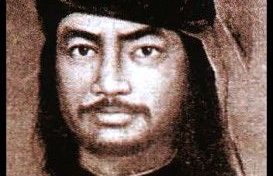

RADAR TULUNGAGUNG – Sultan Hasanuddin, the 16th ruler of the Sultanate of Gowa, earned a place among Indonesia’s most revered national heroes through his determined resistance against the Dutch VOC in the 17th century. As the VOC expanded its influence across eastern Indonesia and attempted to control regional trade, Sultan Hasanuddin mobilized military forces, strengthened alliances, and defended Gowa’s position as a major maritime power.
Born on January 12, 1631, in Gowa, South Sulawesi, Hasanuddin grew up in an environment that emphasized Islamic scholarship, leadership, and diplomacy. His father, Sultan Malikussaid, involved him in state affairs from an early age, allowing him to develop the political and military skills that later defined his reign.
After ascending the throne in 1653 at the age of 22, Sultan Hasanuddin confronted mounting pressure from the VOC, which sought to monopolize the lucrative spice trade. His refusal to accept Dutch trade restrictions sparked a prolonged conflict that cemented his reputation as the “Rooster of the East,” a title the Dutch themselves gave him in recognition of his courage and persistence on the battlefield.
Sultan Hasanuddin’s Rise to Power and Leadership of Gowa
From an early age, Hasanuddin was exposed to governance and diplomacy. Historical records indicate that his father frequently involved him in important political discussions and state affairs, allowing him to learn administrative skills and military strategy before adulthood.
In November 1653, at the age of 22, Hasanuddin ascended the throne as the 16th Sultan of Gowa following the death of Sultan Malikussaid. Although he was not automatically the primary heir, his leadership qualities and political capabilities reportedly convinced Gowa’s elite to support his succession.
Under his rule, Gowa remained one of the most influential maritime powers in eastern Indonesia. The kingdom maintained an open-trade policy that welcomed merchants from various regions, including Malays, Portuguese, English, and other foreign traders. This approach directly conflicted with the VOC’s efforts to establish a monopoly over the lucrative spice trade.
The War Against the VOC and the Bongaya Treaty
The central conflict of Sultan Hasanuddin’s reign emerged from VOC attempts to dominate commerce across eastern Indonesia. Gowa opposed the Dutch monopoly system, arguing that trade routes and maritime resources should remain accessible to all merchants rather than controlled by a single foreign power.
In 1666, the VOC launched a major military campaign against Gowa under the command of Admiral Cornelis Speelman. The Dutch received support from several regional allies, including forces associated with Arung Palakka of Bone. Despite intense resistance from Gowa’s troops, the prolonged conflict gradually weakened the kingdom’s military position.
After months of warfare, Sultan Hasanuddin signed the Treaty of Bongaya on November 18, 1667. The agreement imposed severe restrictions on Gowa, including Dutch control over trade and territorial concessions that significantly reduced the kingdom’s influence.
However, dissatisfaction with the treaty quickly led to renewed fighting. Sultan Hasanuddin rejected what many in Gowa viewed as an unfair settlement and resumed resistance against the VOC.
Fall of Somba Opu and Sultan Hasanuddin’s Legacy
The final phase of the conflict came in 1669 when VOC forces, reinforced by troops from Batavia and regional allies, intensified their assault on Gowa. After a lengthy siege, Dutch-led forces succeeded in breaching Fort Somba Opu, the kingdom’s strongest defensive fortress, in June 1669. The fall of the fort marked a decisive turning point in the war.
Following the defeat, Sultan Hasanuddin abdicated the throne in June 1669 after ruling Gowa for 16 years. His son, Sultan Amir Hamzah, succeeded him as ruler. Hasanuddin spent his final year away from power before passing away on June 12, 1670, at the age of 39. He was buried in the royal cemetery complex of Gowa in present-day South Sulawesi.
Although his kingdom ultimately succumbed to Dutch military pressure, Sultan Hasanuddin’s steadfast opposition to colonial domination secured his place in Indonesian history. Today, he is remembered as a national hero whose resistance embodied the struggle for sovereignty and economic independence in the archipelago.