

RADAR TULUNGAGUNG – The history of Surabaya stretches back more than a thousand years, long before it became Indonesia’s second-largest city. What many people know today as a bustling metropolitan center was once a small riverside settlement called Ujung Galuh, located near the mouth of the Brantas River in East Java.
According to historical records, the name Ujung Galuh appeared in the Klagen Inscription from 1037 during the reign of King Airlangga. The inscription described the coastal area as an important point in river management and small-scale trade routes between settlements. Historians believe this was the earliest sign that the Surabaya region had already become part of the classical Javanese civilization.
The early residents of Ujung Galuh mostly worked as fishermen, farmers, and sailors. Using small wooden boats, they transported fish and agricultural products to nearby settlements through river routes. Although simple, these trading activities later became the foundation of Surabaya’s maritime culture that still defines the identity of Arek Suroboyo today.
How Geography Shaped the Rise of Surabaya
Researchers from Universitas Negeri Surabaya explained that the Surabaya area changed naturally over centuries because of river sedimentation and tectonic land uplift. Mud deposits from the Brantas River slowly formed new land areas, transforming the original water village into a larger and more strategic mainland settlement.
This geographical evolution helped Surabaya grow into one of the most important ports in Java. Expanding land opened opportunities for markets, residential areas, and harbor activities. Historians consider this transformation one of the key reasons why Surabaya later emerged as a major economic center in the region.
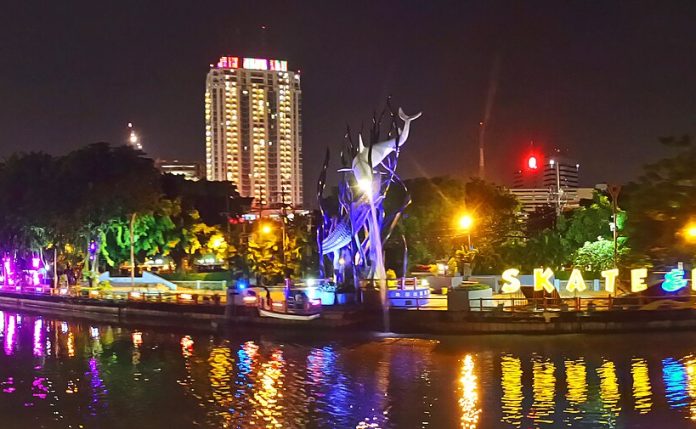
The origin of the city’s name also carries deep meaning. The most popular interpretation says “Sura” means bravery, while “Baya” means danger. Combined together, Surabaya symbolizes courage in facing threats. Another legendary version tells the story of a shark and crocodile fighting for territory, a myth that later inspired the city’s famous shark and crocodile statue.
Surabaya and the Birth of Majapahit
One of the most important chapters in Surabaya history happened in 1293. During that year, Raden Wijaya defeated Mongol forces sent to punish King Kertanegara. The victory took place in areas now considered part of Surabaya.
The Surabaya city government later established 31 May 1293 as the official birth date of the city. The battle was remembered not only as a military triumph but also as a brilliant strategic maneuver. Raden Wijaya initially cooperated with the Mongols before launching a surprise attack against them.
During the golden era of the Majapahit Kingdom, Surabaya became an essential harbor connecting trade routes across the archipelago. Merchants from Bali, Makassar, Kalimantan, Maluku, China, India, and Arabia visited the port. The city evolved into a major distribution center for rice, spices, textiles, and agricultural products.
Historians also noted Surabaya’s political importance within Majapahit. Administrative ties connected the region directly to the royal capital in Trowulan, proving Surabaya was far more than a peripheral settlement.
The Fierce Resistance Against Mataram
After the decline of Majapahit in the 16th century, Surabaya transformed into an independent duchy with strong naval power and military influence across East Java. Its growing dominance eventually attracted the attention of the Mataram Sultanate under Sultan Agung.
A prolonged conflict known as the Surabaya War erupted between 1614 and 1625. The battles involved naval blockades and land invasions. Although Surabaya eventually fell under Mataram control, its fierce resistance strengthened the city’s image as a brave and resilient region unwilling to surrender easily.
This spirit later became closely associated with the outspoken and fearless character of Arek Suroboyo society.
Colonial Modernization and Economic Expansion
Under Dutch colonial rule during the 17th to 19th centuries, Surabaya rapidly developed into one of the largest commercial hubs in the Dutch East Indies. Its strategic location along international sea routes attracted traders from Europe and across the Indonesian archipelago.
The Dutch expanded Port of Tanjung Perak, built railway lines, and introduced electric trams in the city center. Surabaya became a modern colonial city filled with European-style buildings, busy trading districts, and industrial facilities.
Agricultural commodities such as sugar, coffee, and tobacco from East Java plantations were collected in Surabaya before export to Europe. The city also became increasingly multicultural, with Javanese, Madurese, Arab, Chinese, Indian, and European communities living side by side.
The Heroic Battle of 10 November 1945
The defining moment in modern Surabaya history came after Indonesian independence. On 10 November 1945, Surabaya residents fought British troops attempting to restore Dutch colonial rule. Armed mostly with bamboo spears and limited weapons, local fighters launched one of the fiercest battles in Indonesian history.
The heroic resistance eventually earned Surabaya the title “City of Heroes,” while 10 November is commemorated nationally as Heroes’ Day in Indonesia. The battle cemented Surabaya’s reputation as a symbol of courage and patriotism.
Today, Surabaya continues evolving as a center of education, trade, and maritime logistics. Institutions such as Airlangga University and Institut Teknologi Sepuluh Nopember attract students from across the country, while Tanjung Perak remains one of Southeast Asia’s busiest ports.
Despite rapid modernization, Surabaya still preserves its local traditions, historic kampung culture, and strong communal identity. From the ancient settlement of Ujung Galuh to a futuristic metropolitan city, Surabaya’s long journey reflects resilience, adaptation, and an enduring spirit that continues shaping Indonesia today.