
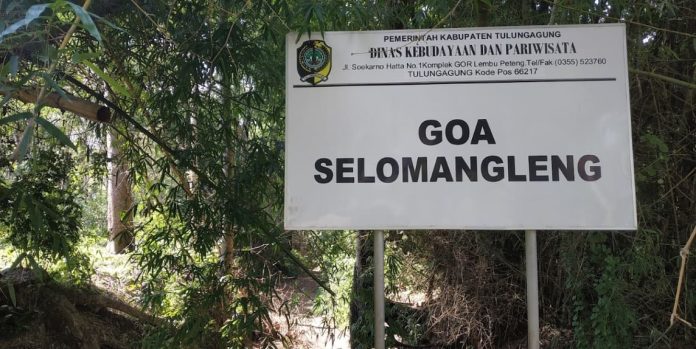

RADAR TULUNGAGUNG – Deep in the hills of southern Tulungagung, East Java, stands a mysterious ancient site that continues to spark debate among historians and archaeology enthusiasts. Selomangleng Cave is not an ordinary meditation site. Ancient artisans carved the cave directly into monolithic stone and filled it with rare reliefs, sacred symbols, and clues that may connect the complex to the spiritual traditions of great Javanese rulers.
The Selomangleng Cave complex in Tulungagung recently attracted attention because of its unusual combination of cave architecture, temple-style carvings, and ancient storytelling panels. Historians suspect the site served not only as a hermitage for ascetics, but also as a sacred educational center linked to royal spiritual rituals during the Majapahit era.
The cave sits near several important historical sites in Tulungagung, including Boyolangu Temple, the memorial temple linked to Gayatri Rajapatni, one of the influential figures behind the rise of Majapahit. This location strengthens speculation that Selomangleng Cave once played an important role in the spiritual journey of Javanese nobility.
Ancient Cave With Temple-Like Features
At first glance, Selomangleng Cave resembles a small temple rather than a natural cave. Ancient craftsmen decorated the entrance with kirthimukha carvings and placed two dwarapala statues on both sides. One figure appears seated like a disciple, while the other stands majestically with divine symbolism attached to its design.
Inside the cave, visitors can find one of the most intriguing discoveries in East Javanese archaeology: reliefs depicting scenes from the legendary Kakawin Arjuna Wiwaha written by Mpu Kanwa during the reign of King Airlangga.
The reliefs tell the famous story of Arjuna resisting the temptation of heavenly nymphs while meditating. In the epic, Arjuna later receives a divine mission to defeat the giant king Niwatakawaca and restore cosmic balance.
Researchers believe these reliefs may represent one of the oldest visual forms of wayang storytelling in Java. The artists placed each relief inside rectangular panels that resemble the layout of wayang beber performances that became popular centuries later.
Debate Over the Age of Selomangleng Cave
Scholars still debate the exact age of Selomangleng Cave. Dutch archaeologist Bernet Kempers estimated the cave dated back to the 10th century because the carvings closely resemble reliefs at the Jolotundo bathing site.
However, historian N.J. Krom argued the carvings originated during the Majapahit era because the reliefs display distinctive kiritamakuta-style crowns.
Many researchers support the Majapahit theory because decorative motifs at the site strongly resemble designs found in several East Java temples from the 13th and 14th centuries.
The Sacred Tiger Altar Above the Cave
One of the most mysterious parts of the complex lies about 500 meters uphill from the main cave. Visitors who climb the rocky path will discover what locals call “Candi Meja” or the Table Temple.
The structure features a carved stone platform decorated with tapak dara motifs that often symbolize protection and spiritual balance in Majapahit architecture.
The site becomes even more extraordinary because the staircase features tiger carvings instead of the naga or makara figures commonly found in ancient Javanese temples.
Historians suspect the tiger imagery symbolizes the spiritual path of Shiva worshippers. Some researchers also connect the statues to the ancient Bubuksah and Gagangaking mythology, where a tiger manifestation of the god Shiva guides ascetics to heaven.
Because archaeologists found no traces of supporting pillars around the platform, experts believe the site functioned as an open-air sacred altar for initiation rituals or royal consecration ceremonies.
Connection to Airlangga and Royal Asceticism
The Arjuna Wiwaha reliefs at Selomangleng Cave have also raised deeper questions about the relationship between spirituality and kingship in ancient Java.
In Javanese tradition, rulers often practiced wanaprastha, a spiritual retreat in which kings temporarily abandoned worldly power to live like ascetics in remote hermitages. Historical records show that figures such as Airlangga and Wisnuwardhana were associated with this tradition.
Because of this, some historians speculate that Selomangleng Cave may have served as a retreat or religious learning center for nobles preparing for spiritual purification.
Although no definitive evidence has confirmed the theory, the cave remains one of the most fascinating archaeological sites in Tulungagung. The combination of Arjuna Wiwaha reliefs, sacred tiger symbolism, and royal spiritual themes continues to attract researchers eager to uncover the hidden layers of East Java’s ancient civilization.
Today, Selomangleng Cave stands not only as a historical landmark, but also as a reminder of how deeply spirituality, leadership, and art were intertwined in the golden age of Java.