
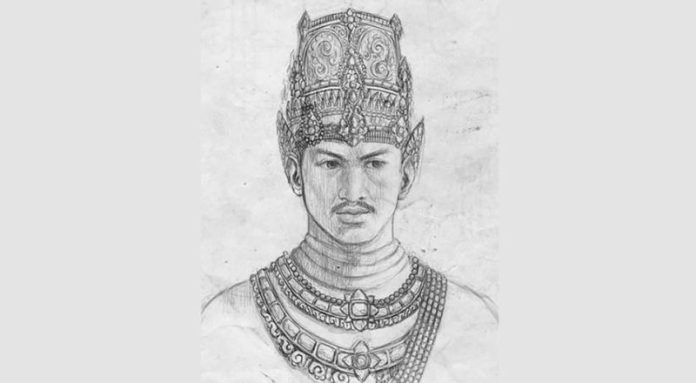

RADAR TULUNGAGUNG – The story of Raden Wijaya, the founder of the Majapahit Empire, remains one of the most fascinating chapters in Indonesian history. Known as the first king of Majapahit, Raden Wijaya played a crucial role in shaping the political landscape of the archipelago in the late 13th century. His journey from a displaced noble to a powerful ruler is filled with intrigue, strategy, and historical debate.
Raden Wijaya, often referred to in historical texts such as Pararaton and Negarakertagama, is widely recognized as the man behind the establishment of the Majapahit Empire in 1293. However, historians note that his original name was likely Nararya Sanggramawijaya, a title found in the Kudadu inscription. The commonly used title “Raden” only became popular later, making it a retrospective attribution.
Conflicting Origins and Royal Lineage
The origins of Raden Wijaya remain a subject of debate among historians. According to Pararaton, he was the son of Mahisa Campaka, a prince of the Singosari Kingdom. Meanwhile, the Wangsakerta manuscript suggests a different lineage, stating that he was the son of Rakyan Jayadarma, a Sundanese royal linked to the Galuh Kingdom.
This version implies that Raden Wijaya had strong ties to Sundanese royalty, possibly positioning him as a displaced heir. His father, Jayadarma, reportedly died before ascending the throne, forcing his mother to return to Singosari, where Wijaya was raised. This dual heritage highlights the complex political alliances that shaped his early life.
From Singosari Collapse to Strategic Escape
The fall of the Singosari Kingdom marked a turning point in Raden Wijaya’s life. In 1292, a rebellion led by Jayakatwang, a ruler from Kediri, successfully overthrew King Kertanegara. During the chaos, Raden Wijaya fled to avoid capture.
With the help of a village chief in Kudadu, he managed to escape to Madura, where he sought refuge with Arya Wiraraja, a regional leader. Together, they devised a clever plan to reclaim power. Wijaya pretended to submit to Jayakatwang and requested permission to open land in the Tarik forest.
This area would later become the foundation of Majapahit. The name itself reportedly originated from a bitter “maja” fruit found in the forest, symbolizing both hardship and resilience.
Alliance with Mongol Forces
In a surprising twist, Raden Wijaya formed an alliance with Mongol forces sent by Kublai Khan. The Mongols had arrived in Java in 1293 to punish Kertanegara for insulting their envoy. However, they were unaware that Kertanegara had already been killed.
Seizing the opportunity, Wijaya convinced the Mongols to help him defeat Jayakatwang. The combined forces successfully attacked Kediri, capturing and defeating the rebel ruler. This strategic alliance demonstrated Wijaya’s political intelligence and ability to leverage global dynamics to his advantage.
Turning Against the Mongols
After Jayakatwang’s defeat, Raden Wijaya executed a bold move. He requested permission from the Mongols to return to Majapahit under the pretense of preparing tribute. Once back, he launched a surprise attack on the Mongol troops.
Caught off guard, the Mongols suffered heavy losses and were forced to retreat from Java. Historical records indicate that thousands of Mongol soldiers were killed during this counterattack. By April 1293, the Mongol forces had completely withdrawn.
This decisive action allowed Raden Wijaya to eliminate foreign influence and consolidate power, paving the way for the establishment of the Majapahit Empire.
Coronation and Legacy
Following his victory, Raden Wijaya officially crowned himself as king in November 1293, taking the title Kertarajasa Jayawardhana. His reign marked the beginning of one of the greatest empires in Southeast Asian history.
Beyond his military achievements, Raden Wijaya also strengthened political alliances through marriage. He married several daughters of Kertanegara, ensuring continuity of Singosari’s royal lineage within Majapahit.
His legacy endured through his successors, particularly Jayanegara, who continued the expansion of the empire. The rise of Majapahit would later reach its peak under rulers like Hayam Wuruk and Gajah Mada.
A Master Strategist in History
The story of Raden Wijaya is not just about founding a kingdom, but about survival, intelligence, and strategic brilliance. From navigating royal conflicts to defeating both local rivals and foreign invaders, his journey reflects the complexity of power in ancient Java.
Today, Raden Wijaya is remembered as a visionary leader whose decisions laid the foundation for one of Indonesia’s most influential empires.