
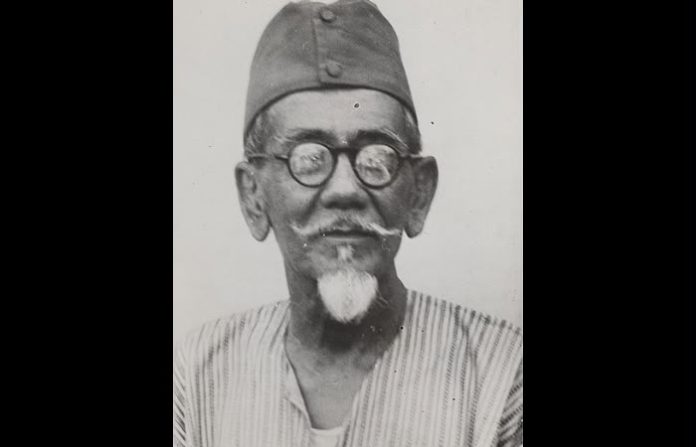

RADAR TULUNGAGUNG – Haji Agus Salim played a pivotal role in securing international recognition for Indonesia’s independence through a sophisticated diplomatic campaign that helped establish the newly proclaimed republic on the global stage. Widely regarded as one of the country’s most influential statesmen, Agus Salim combined intellectual brilliance, political leadership, and diplomatic skill to defend Indonesia’s sovereignty during its most vulnerable years.
Born as Mashudul Haq in Koto Gadang, West Sumatra, on October 8, 1884, Haji Agus Salim emerged as one of the leading figures of Indonesia’s nationalist movement long before independence was declared in 1945. His contributions spanned journalism, political activism, Islamic reform, and diplomacy, ultimately earning him recognition as one of Indonesia’s most respected national heroes.
As Indonesia faced Dutch efforts to reassert colonial control after World War II, Haji Agus Salim became one of the key architects of the republic’s diplomatic strategy, helping transform Indonesia’s struggle for independence into an international issue.
From Colonial-Era Scholar to Nationalist Leader
Agus Salim received an elite education during the Dutch colonial period. He attended Europeesche Lagere School (ELS) and later graduated from Hogere Burgerschool (HBS) in Batavia with outstanding academic achievements. Although he aspired to continue his studies in the Netherlands, the colonial government rejected his scholarship application.
In 1906, he traveled to Jeddah, where he worked as a translator at the Dutch Consulate. During his stay in the Arabian Peninsula, he studied Islam under the prominent scholar Syekh Ahmad Khatib al-Minangkabawi, a relative who significantly influenced his intellectual development.
Upon returning to the Dutch East Indies, Agus Salim entered journalism and became active in Sarekat Islam, one of the largest indigenous political organizations of the era. Initially assigned to observe the movement due to his government connections, he instead became convinced by its mission and joined its struggle against colonial rule.
His political influence grew rapidly. He later represented Sarekat Islam in the Volksraad, the colonial advisory council. Notably, Agus Salim became one of the first figures to use the Malay language, later standardized as Indonesian, in official speeches before the council, challenging Dutch political norms.
Diplomatic Campaign That Won Global Recognition for Indonesia
Following Indonesia’s declaration of independence on August 17, 1945, Agus Salim assumed several key government positions, including Deputy Foreign Minister and later Foreign Minister.
His most significant achievement came through international diplomacy. While the Netherlands sought to portray Indonesia’s independence movement as a domestic rebellion, Agus Salim worked tirelessly to secure foreign recognition of the republic.
Leveraging his extensive connections in the Islamic world, he established communication with influential leaders in the Middle East. His diplomatic efforts contributed to Egypt becoming one of the first countries to formally recognize Indonesia’s independence in 1947. That recognition proved crucial because it encouraged other Arab nations, including Saudi Arabia, Syria, and Jordan, to follow suit.
The growing number of international acknowledgments strengthened Indonesia’s position and undermined Dutch attempts to isolate the young republic diplomatically.
Agus Salim also participated in numerous international negotiations and helped introduce Indonesia’s cause to broader global audiences, including diplomatic circles in Europe and discussions surrounding the newly formed United Nations.
A Life of Simplicity Behind Extraordinary Achievements
Despite his status as a prominent statesman, Haji Agus Salim lived a remarkably modest life. Historical accounts describe him as a polyglot who mastered multiple foreign languages, yet he never accumulated personal wealth.
Throughout much of his life, he moved between rented homes in cities such as Surabaya, Yogyakarta, and Jakarta. Colleagues often remarked on the contrast between his international reputation and his simple lifestyle.
Agus Salim also held progressive views on education and religion. He encouraged a modern understanding of Islam and supported broader participation of women in public discussions. Rather than relying entirely on formal schools, he personally educated most of his children, many of whom later became known for their intellectual abilities and language skills.
His commitment to public service reflected a belief that leadership required sacrifice rather than privilege. That philosophy shaped both his political career and personal life.
Haji Agus Salim died on November 4, 1954. Seven years later, on December 27, 1961, President Soekarno officially designated him a National Hero of Indonesia. Today, his legacy endures as a symbol of principled leadership, intellectual excellence, and diplomatic achievement that helped secure Indonesia’s place among the nations of the world.