
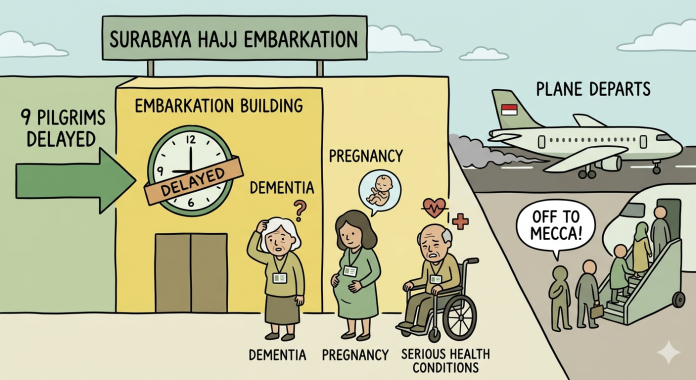

RADAR TULUNGAGUNG – Health officials at the Surabaya Hajj embarkation barred nine Indonesian pilgrims from traveling to Saudi Arabia after medical screenings uncovered dementia cases, pregnancy, and several serious illnesses ahead of this year’s Hajj pilgrimage. Authorities have already dispatched more than 38,000 pilgrims through the embarkation hub as the peak Hajj season approaches.
Officials overseeing the Surabaya Hajj embarkation confirmed that 102 flight groups, locally known as kloter, have departed for the Holy Land in recent weeks. Medical teams, however, stopped several prospective pilgrims after health examinations revealed conditions that could endanger them during the pilgrimage.
The cases have intensified attention on Indonesia’s Hajj health screening system, especially for elderly pilgrims and those suffering from chronic illnesses before traveling to Saudi Arabia.
Health Screenings Detect Dementia, Pregnancy, and Chronic Illnesses
Officials from the Hajj organizing committee at the Surabaya embarkation said health evaluations identified multiple conditions that forced several pilgrims to postpone their departures.
Two pilgrims could not continue their journeys after medical teams confirmed they were pregnant. Authorities also discovered two dementia cases involving severe memory impairment.
In addition, one pilgrim required dialysis treatment, while two others suffered from heart-related illnesses that raised concerns among medical officers.
An official at the embarkation center also mentioned a tuberculosis-related case during a media briefing. However, authorities continued monitoring several patients before making final decisions regarding their departures.
Medical teams conduct strict health checks every year to ensure pilgrims can safely complete the physically demanding Hajj pilgrimage. The screenings focus heavily on elderly worshippers and individuals with chronic diseases because extreme temperatures and overcrowded conditions in Saudi Arabia often increase medical risks.
Indonesia regularly sends one of the world’s largest Hajj contingents, making health preparedness a major priority for authorities during the annual pilgrimage season.
More Than 44,000 Pilgrims Scheduled From Surabaya
This year, the Surabaya Hajj embarkation is scheduled to send around 44,000 Indonesian pilgrims to Saudi Arabia. Officials confirmed that more than 38,000 pilgrims have already departed in 102 flight groups.
Despite the delays affecting several pilgrims, the overall departure process has continued smoothly, according to organizers.
Authorities said 14 remaining flight groups are expected to enter the Surabaya Hajj dormitory complex in stages over the coming days before departing for Saudi Arabia.
Indonesia remains one of the largest contributors of Hajj pilgrims globally. The country consistently receives one of the biggest national quotas allocated by Saudi authorities due to its massive Muslim population.
The Ministry of Religious Affairs has repeatedly emphasized the importance of medical screening, especially for elderly pilgrims and those with chronic illnesses. Health checks are intended not only to protect individual pilgrims but also to prevent medical emergencies during the pilgrimage.
Extreme temperatures, long walking distances, and crowded conditions during Hajj can significantly increase health risks for vulnerable participants.
Authorities Tighten Health Monitoring Ahead of Peak Hajj Rituals
The postponed departures have prompted officials to strengthen health monitoring procedures as Indonesia prepares for the busiest stage of the Hajj pilgrimage.
Authorities stated that medical teams may recommend postponements for pilgrims whose conditions could worsen during travel or while performing religious rituals in Saudi Arabia.
Officials continue coordinating with hospitals and regional health agencies to monitor pilgrims who require further treatment before receiving clearance to travel.
The Surabaya embarkation committee emphasized that safety considerations remain the top priority throughout this year’s Hajj operation.
Indonesia has expanded its Hajj medical protocols in recent years after several elderly pilgrims experienced dehydration, exhaustion, and other health complications during previous pilgrimage seasons.
As thousands more Indonesians prepare to depart, officials have urged families to ensure that elderly relatives and vulnerable pilgrims undergo complete medical evaluations before leaving for Saudi Arabia.
Authorities expect the Surabaya Hajj embarkation to complete the remaining departures over the coming days as Indonesian pilgrims continue arriving in the Holy Land ahead of the peak Hajj rituals.