
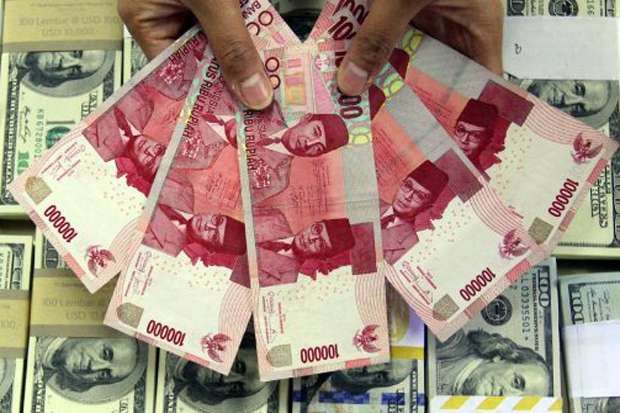

JAKARTA – The rupiah weakens again this week, hovering around the 17,600 level against the US dollar, as external pressures and domestic concerns continue to weigh on Indonesia’s currency.
In early trading, the rupiah remained in the 17,630 range, extending a downward trend that has seen the currency repeatedly hit new all-time lows in recent weeks. Analysts say the depreciation is not surprising, given the sustained pressure since the start of the year.
Global factors remain the primary driver. The US dollar has strengthened significantly, supported by ongoing geopolitical tensions in the Middle East, particularly between the United States and Iran. The uncertainty has pushed investors toward safe-haven assets, boosting demand for the dollar.
As a result, regional currencies—including the Singapore dollar and Malaysian ringgit—have also come under pressure. The rupiah has followed the same trajectory, reflecting broader market sentiment rather than isolated domestic weakness.
Analysts warn that the rupiah could continue to weaken in the coming days if the US dollar index maintains its upward momentum. The trend suggests limited room for short-term recovery without a shift in global conditions.
On the domestic front, the Indonesian government has introduced measures such as a bond stabilization fund to support financial markets. The policy aims to maintain stability in government bond yields and prevent excessive selling by foreign investors.
However, the impact on the currency has so far been limited. Despite intervention efforts, the rupiah continues to decline, indicating that broader structural issues remain unresolved.
Investor concerns over Indonesia’s fiscal outlook are also contributing to the pressure. Questions around budget deficits and fiscal sustainability—particularly projections approaching the 3% threshold of GDP—have affected market confidence.
Analysts note that the rupiah is currently trading well below its estimated fair value, which is considered to be around 15,000 per US dollar. This gap suggests that market sentiment, rather than fundamentals alone, is driving the depreciation.
To stabilize the currency, experts emphasize the need for stronger fiscal credibility. Clear evidence that the government can manage its deficit and maintain economic discipline could help restore investor confidence and support the rupiah.
Until then, the currency is likely to remain vulnerable to both global volatility and domestic policy uncertainty.