
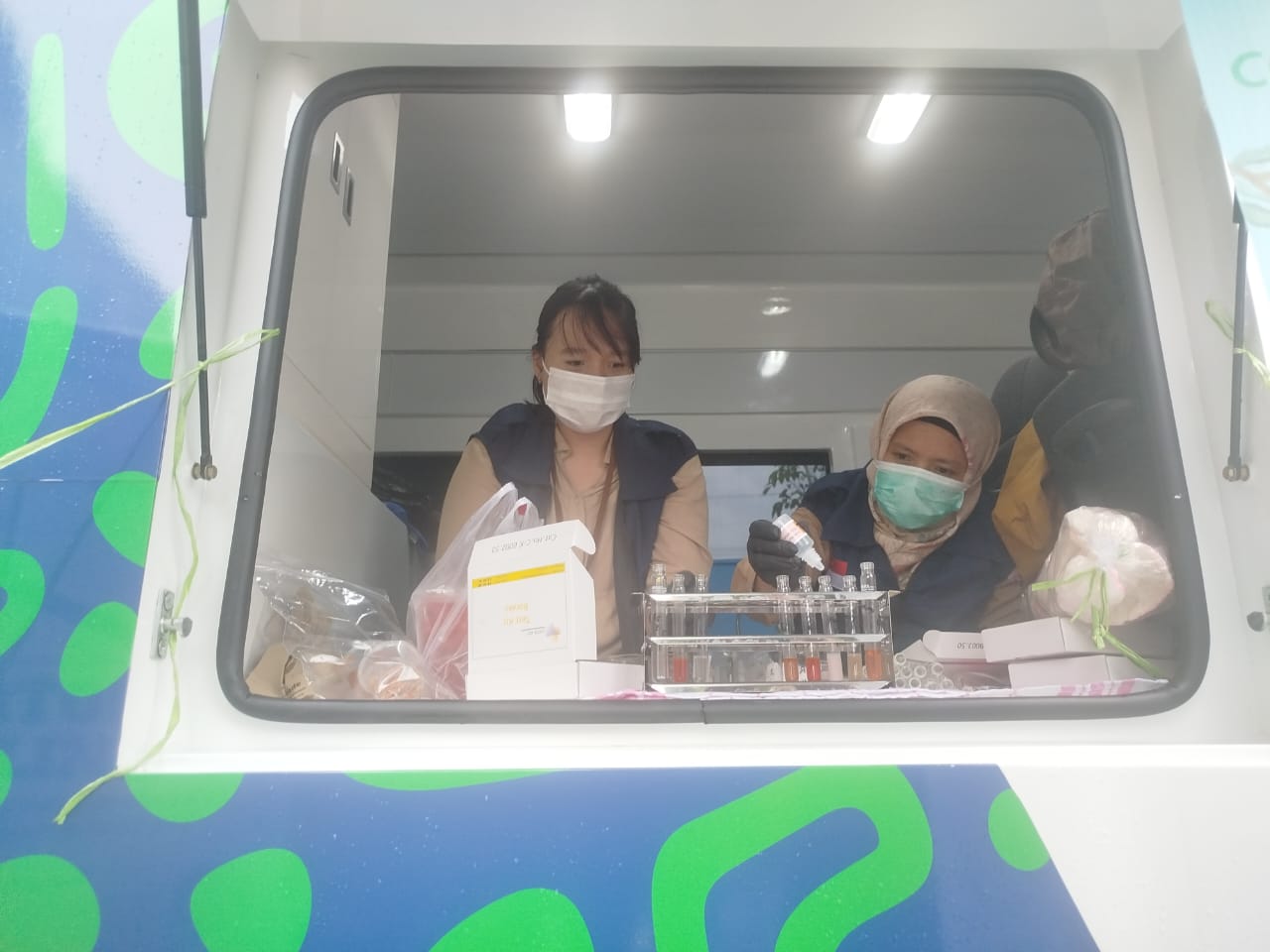

TRENGGALEK – Authorities detected Rhodamine B Takjil Trenggalek during Ramadan food safety inspections after officials found a snack containing the banned dye in Trenggalek, East Java.
The Trenggalek Health Office, Population Control and Family Planning Agency (Dinkesdalduk KB) carried out the inspection with representatives from the Food and Drug Monitoring Agency (BPOM) Kediri. The team tested food samples from popular takjil markets on Tuesday, March 3.
Officials collected 20 food samples from three busy locations: Pasar Pon Square, Trenggalek Town Square, and Menak Sopal Stadium.
Field tests identified one colored cracker product that contained Rhodamine B, a textile dye strictly prohibited in food products.
Yajid Menan, Head of Disease Control and Environmental Health at the Trenggalek Health Office, said the inspection formed part of Ramadan food monitoring efforts.
“Besides monitoring vendors, we also tested takjil products sold in several public areas such as Pasar Pon, the town square, and Menak Sopal Stadium,” Yajid said.
The operation focused on two main goals. First, officials aimed to ensure that food products met safety standards, including physical, chemical, and bacteriological requirements.
Second, the team wanted to educate both vendors and consumers about choosing safe food during Ramadan.
The Trenggalek Health Office said similar inspections will continue throughout the fasting month to protect public health and maintain food safety.
Meanwhile, BPOM Kediri representative Shirodin Latif explained that officials tested the samples using four parameters.
The tests screened for Metanil Yellow, Rhodamine B, formalin, and borax, substances commonly misused in food production.
“From the 20 samples tested, we found one cracker product containing Rhodamine B,” Shirodin said.
He warned consumers to avoid crackers with very bright pink edges, which may indicate the presence of the illegal dye.
“If you want to buy crackers, it is safer to choose plain white ones,” he advised.
Officers immediately issued a warning to the vendor who sold the contaminated product. The vendor agreed to stop selling the item.
Shirodin also warned that long-term consumption of Rhodamine B could pose serious health risks, including cancer.
For other test parameters, officials confirmed no traces of formalin, borax, or other dangerous food additives in the remaining samples.
“We found no other harmful substances. Formalin, borax, and other dyes were not detected,” Shirodin said.
Authorities said the inspections aim to prevent residents from consuming food that contains hazardous chemicals during Ramadan.