
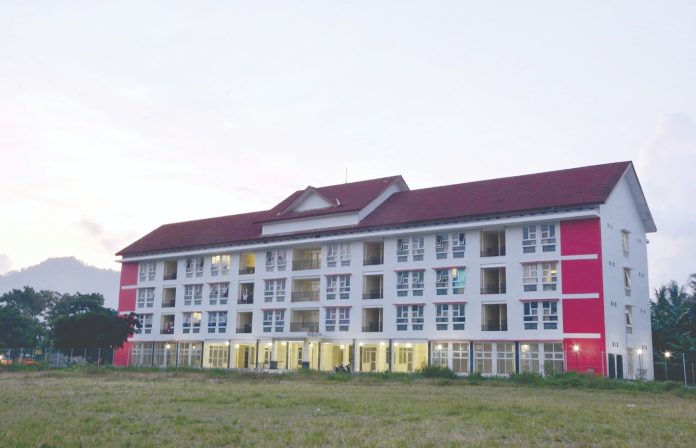

TRENGGALEK – Watulimo Rusunawa, a low-cost public rental apartment complex in Trenggalek Regency, continues to struggle with low occupancy despite cheap rental prices and complete facilities.
Only 17 of its 51 available units are currently occupied, according to the Housing and Settlement Area Division of the Trenggalek Housing, Settlement, and Transportation Agency (Disperkimhub).
Subyantoro Retno Pamuji, head of the division, said the local government has promoted the apartment complex since it reopened after the COVID-19 pandemic. However, public interest remains low.
“As of now, only 17 units have tenants from a total of 51 available units,” he said on Monday (April 27).
Indonesia’s Ministry of Public Works and Public Housing (PUPR) built the Watulimo Rusunawa in 2016. The building stayed underused for years before officials turned it into a COVID-19 dormitory during the pandemic from 2020 to 2021.
After the pandemic eased, the Trenggalek regency government reopened the building for public rental. Still, demand did not rise significantly.
Officials offered the housing units to several villages in Watulimo District, including Prigi, Karanggandu, and Tasikmadu. Yet only a small number of people registered.
Pamuji said most current residents come from Watulimo District. They are mainly newly married couples and factory workers.
The second and third floors attract the most tenants, while the fourth floor remains empty.
“Most of the 17 tenants stay on the second floor, followed by the third floor. The fourth floor is still empty,” he explained.
The first floor does not serve as housing because the government plans to use it for shops and office space.
Rental prices remain much cheaper than private boarding houses nearby. Tenants pay Rp100,000 per month for second-floor units, Rp75,000 for third-floor units, and Rp50,000 for fourth-floor units.
Nearby boarding houses can charge up to Rp500,000 per month.
“This is far cheaper than local boarding houses,” he added.
Each unit includes two bedrooms, a living room, a kitchen, a private bathroom, and basic furniture such as beds and wardrobes.
These facilities make the apartments suitable for small families. However, local work patterns create another challenge for the project.
Many residents in coastal Watulimo work as fishermen. They often handle wet equipment and need larger open spaces for daily activities.
This makes vertical housing less practical for their lifestyle.
“The working patterns of local residents affect demand. Many fishermen need more space for their activities,” Pamuji said.
To increase occupancy, the Trenggalek government plans to expand promotion beyond Watulimo District.
Officials may also offer the apartments to residents from other districts and even outside the regency.
The leasing system also gives tenants flexibility. Residents can rent for up to five years and renew the contract every year if needed.
“We are still working to increase public interest. We hope more people will use the Watulimo Rusunawa in the future,” he said.