
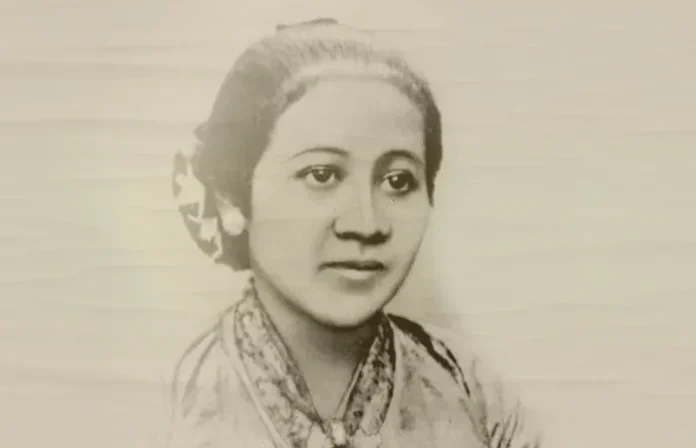

RADAR TULUNGAGUNG – Kartini and Islam remain closely linked in Indonesia’s intellectual history, but the relationship was far more complex than commonly understood. Long before becoming a national symbol of women’s emancipation, Kartini openly criticized the way religious teachers taught Islam in Java, questioning religious practices that emphasized ritual while offering little understanding of the Quran’s meaning.
Known internationally for her advocacy of women’s education and equality, Kartini developed a deep interest in religious questions during the final years of her life. Her letters reveal a critical thinker who challenged established norms and sought a more meaningful understanding of faith.
Rather than rejecting Islam itself, historical records suggest that Kartini questioned the methods through which religious teachings were delivered to ordinary people, particularly when sacred texts were taught without explanation or translation.
Kartini’s Early Criticism of Religious Education
Born on April 21, 1879, into a Javanese aristocratic family, Kartini pursued an education uncommon for women of her era. Exposure to European literature and intellectual currents encouraged her to approach social and religious issues with a rational and analytical mindset.
In several letters written between 1899 and 1902, Kartini expressed frustration with religious instruction that focused primarily on recitation. One of her most frequently cited criticisms concerned the teaching of the Quran in Arabic without providing explanations in a language students could understand.
Writing to her Dutch friend Stella Zeehandelaar on November 6, 1899, Kartini compared the practice to forcing someone to memorize a foreign-language book without ever explaining its contents. For her, reading sacred texts without understanding their meaning diminished their educational and spiritual value.
Historians note that these criticisms were directed primarily at religious pedagogy rather than Islamic doctrine itself. Kartini believed that faith should encourage understanding, reflection, and moral development rather than blind acceptance.
The Encounter With Kiai Saleh Darat
A major turning point came when Kartini attended a religious gathering in Demak, Central Java, where she listened to a sermon delivered by the respected scholar Kiai Saleh Darat, whose full name was KH Muhammad Saleh bin Umar.
Unlike many teachers of the period, Saleh Darat explained the meaning of Surah Al-Fatihah in Javanese, making the text accessible to local audiences. Historical accounts describe Kartini as deeply moved by hearing the Quran explained in a language she fully understood.
The encounter helped answer many of the questions she had long raised about religion. Kartini reportedly discussed her concerns directly with the scholar and expressed admiration for the beauty and depth of Quranic teachings once their meanings became clear.
The influence of Saleh Darat extended beyond a single meeting. Scholars of Indonesian Islamic history frequently cite him as an important figure in the vernacularization of Islam in Java, a movement that sought to make religious knowledge accessible through local languages.
Influence on Quran Translation and Religious Tolerance
Several historical sources suggest that Kartini’s concerns about accessibility encouraged broader efforts to translate and interpret Islamic texts for Javanese readers. Saleh Darat later produced Faid al-Rahman fi Tarjamah Tafsir Kalam Malik al-Dayyan, widely recognized as the first known Quranic translation and commentary written in Javanese using Arabic-Pegon script.
Although the work remained unfinished before Saleh Darat’s death in 1903, it covered the Quran from Surah Al-Fatihah through Surah Ibrahim and became an important milestone in Indonesian Islamic scholarship.
Kartini’s later writings also reflected a more inclusive religious outlook. In letters to J.H. Abendanon and other correspondents, she emphasized compassion, humanity, and mutual respect across religious boundaries. She argued that moral virtue could be found among people of different faiths and criticized efforts to combine humanitarian assistance with religious conversion campaigns.
Her position did not reject religion. Instead, she advocated understanding, tolerance, and the pursuit of universal ethical values. Historians regard these views as evidence of a mature spiritual outlook shaped by both critical inquiry and personal reflection.
Kartini’s legacy therefore extends beyond women’s emancipation. Her intellectual journey illustrates how questioning inherited traditions can lead to deeper understanding, while her engagement with Islam helped inspire discussions about religious education, local-language scholarship, and interfaith respect that continue to resonate in Indonesia today.