
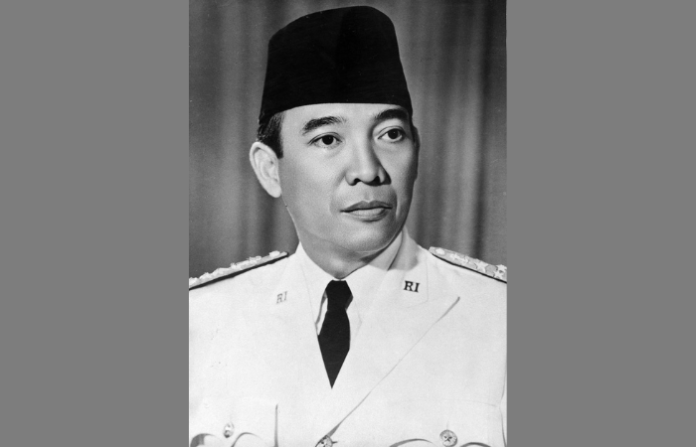

RADAR TULUNGAGUNG – The story of Ir Soekarno is more than just the tale of Indonesia’s first president. It is a complex journey of ambition, struggle, charisma, and controversy that shaped the nation’s early history. Ir Soekarno biography continues to attract attention as people seek to understand the man behind Indonesia’s independence.
Born as Kusno Sosrodihardjo on June 6, 1901, in Blitar, East Java, Soekarno did not initially carry the name that would later become iconic. Due to frequent illness during childhood, his parents decided to change his name to Soekarno, hoping for better fortune. This early transformation marked the beginning of a life filled with significant changes.
Early Education and Intellectual Growth
Soekarno showed exceptional intelligence from a young age. He mastered multiple languages, including Dutch, English, German, Arabic, and Japanese. His educational journey took a major turn when he studied under H.O.S. Tjokroaminoto, a prominent nationalist leader and founder of Sarekat Islam.
Living in Tjokroaminoto’s house exposed Soekarno to influential figures such as Haji Agus Salim and Musso. These interactions shaped his political awareness and strengthened his desire to fight colonialism.
Soekarno later pursued higher education at the Technische Hoogeschool in Bandung (now ITB), majoring in civil engineering. During this period, he not only developed technical skills but also sharpened his oratory and leadership abilities.
Political Awakening and the Birth of PNI
The Ir Soekarno biography highlights a crucial milestone in 1927 when he founded the Indonesian National Party (PNI). The party aimed to achieve independence from Dutch colonial rule. His bold political stance quickly drew attention, and consequences.
Soekarno was arrested and imprisoned multiple times by the Dutch authorities. Despite these setbacks, his influence continued to grow. His speeches inspired many Indonesians to join the independence movement.
Interestingly, Soekarno once engaged in ideological debates with Mohammad Hatta. Although they had differing political approaches, both leaders eventually united for a common goal: independence.
Love Life and Personal Controversies
Beyond politics, Soekarno’s personal life also became a subject of public interest. He married several times, starting with Siti Utari, followed by Inggit Garnasih, who supported him during his early struggles.
Later, he married Fatmawati, who famously sewed Indonesia’s first red-and-white flag. Their marriage marked an important chapter in his life, especially during the independence era.
However, his multiple marriages, including with Hartini, Ratna Sari Dewi, and others, sparked controversy. These relationships often intersected with his political life, adding complexity to his public image.
Independence and Leadership
In 1945, Soekarno, alongside Mohammad Hatta, proclaimed Indonesia’s independence. This historic moment cemented his role as a national hero. He became the first President of Indonesia, leading the country through its early years of nation-building.
Under his leadership, Indonesia navigated political turbulence, economic challenges, and ideological conflicts. His charismatic speeches and strong personality made him a central figure in global politics during the Cold War era.
Downfall and Final Years
Despite his achievements, Soekarno’s presidency eventually faced significant challenges. Political instability and events like the G30S Movement weakened his position.
In 1967, he was officially removed from power and replaced by Suharto. After stepping down, Soekarno lived under strict supervision and experienced declining health.
He passed away on June 21, 1970, at the age of 69. His death marked the end of an era, but his legacy remains deeply embedded in Indonesia’s history.
A Legacy That Endures
The Ir Soekarno biography is a reflection of resilience, vision, and complexity. From a sickly child named Kusno to a powerful leader, his journey continues to inspire generations.
While his life was filled with both achievements and controversies, there is no denying his crucial role in shaping Indonesia. His story serves as a reminder that leadership often comes with both triumphs and challenges.