
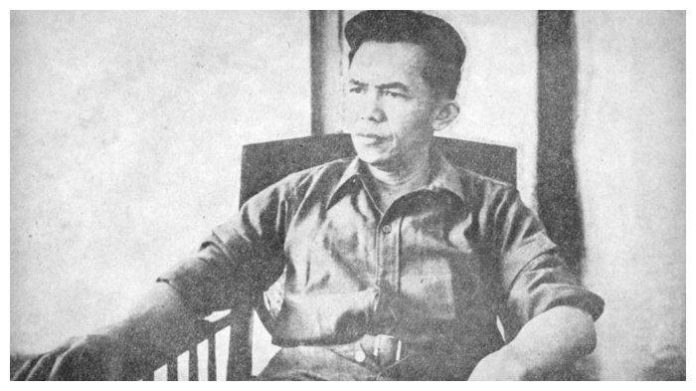

RADAR TULUNGAGUNG – The story of Tan Malaka continues to spark debate among historians and the public. As one of Indonesia’s national heroes, he played a crucial role in the independence movement. However, the mystery surrounding his death still raises questions and fuels curiosity.
Tan Malaka, born as Sutan Ibrahim in 1897 in West Sumatra, grew up in a noble family. His background gave him access to Dutch education, a privilege few Indonesians had at the time. He excelled in school and later continued his studies in the Netherlands, where he explored socialist and communist ideas that shaped his political vision.
After finishing his studies, Tan Malaka returned to Indonesia and directly witnessed the harsh reality faced by plantation workers. He saw inequality in education and social treatment, which pushed him to take action. He started teaching and founded schools to help underprivileged communities gain access to education.
Rise of a Revolutionary Figure
Tan Malaka’s involvement with nationalist movements intensified when he joined Sarekat Islam and later aligned with leftist factions. His political journey eventually led him to become a key figure in the early formation of the Indonesian Communist Party. Known for his sharp criticism of colonial rule, he became a target of Dutch authorities and was exiled abroad.
During his exile, Tan Malaka remained active in international communist networks while continuing to think about Indonesia’s future. In 1924, he wrote the influential book Naar de Republiek Indonesia, which is believed to have inspired future leaders such as Soekarno and Mohammad Hatta in conceptualizing Indonesia as a republic.
However, his political career was not without conflict. Internal disagreements, especially following a failed communist uprising in 1926, led to tensions within the movement. Feeling betrayed, Tan Malaka distanced himself from the PKI and formed his own movement, continuing his struggle independently.
Conflict After Independence
Following Indonesia’s independence in 1945, Tan Malaka returned and re-entered the political arena. Unlike many leaders at the time, he openly criticized the diplomatic approach taken by the government, including policies associated with Sutan Sjahrir.
Tan Malaka believed that negotiations with the Dutch were too weak and risked undermining true independence. His outspoken stance created friction with the government, leading to his arrest in 1948, although he was later released due to lack of evidence.
Despite his release, tensions remained high. As political instability grew, Tan Malaka continued to move across regions, particularly in East Java, where he gained support among local communities.
The Mystery of His Death
The biggest question surrounding Tan Malaka is how he died. For years, his fate was unclear, with rumors suggesting he disappeared during the revolutionary period.
In 2009, Dutch historian Harry A. Poeze claimed to have uncovered crucial evidence after decades of research. According to his findings, Tan Malaka was captured by Indonesian military forces in East Java and executed on February 21, 1949.
The execution was allegedly carried out by a local military unit without approval from higher command, shocking even figures like Sudirman. The incident was reportedly kept secret to avoid unrest among Tan Malaka’s followers.
Where Was Tan Malaka Buried
Another mystery lies in his burial site. Poeze suggested that Tan Malaka was buried in a remote area on the slopes of Mount Wilis, in Kediri, East Java. Excavations conducted in 2009 uncovered human remains with hands tied behind the back, strongly indicating an execution-style death.
However, forensic analysis failed to confirm the identity due to the degradation of DNA over time. As a result, the exact location of Tan Malaka’s grave remains unverified to this day.
A Legacy Beyond Controversy
Despite the controversies, Tan Malaka was officially recognized as a national hero in 1963. His ideas, writings, and relentless պայք for independence continue to influence historical discourse in Indonesia.
His story highlights not only the complexity of Indonesia’s struggle for independence but also the internal conflicts that shaped the nation’s early years. While the mystery of his death may never be fully resolved, Tan Malaka’s legacy as a revolutionary thinker and patriot remains firmly intact.