
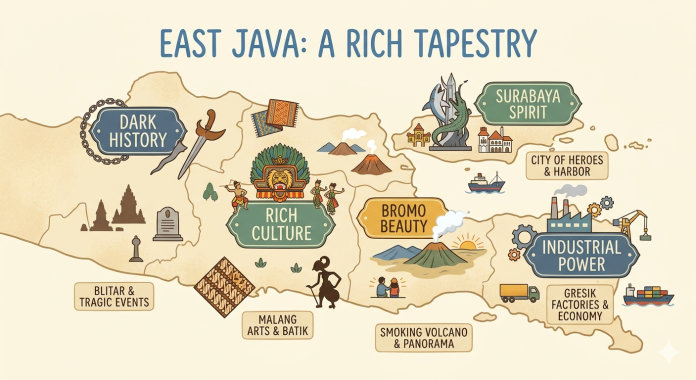

RADAR TULUNGAGUNG – East Java has long carried a reputation as one of Indonesia’s most intense and outspoken provinces. Behind its firm-speaking people and bold cultural identity, the province also stores layers of tragedy, mystical traditions, breathtaking landscapes, and industrial power that continue shaping its modern image today.
The story of East Java cannot be separated from its strong social character. Many Indonesians often describe East Javanese people as direct, fearless, and emotionally expressive. However, beneath that tough impression lies a region rich in culture, history, and natural beauty.
From Surabaya’s crowded harbor to the mystical traditions in Banyuwangi, East Java presents a combination of modern industry and ancient customs rarely found elsewhere in Indonesia.
The Dark History Behind East Java’s Image
One of the darkest chapters in East Java history was the Banyuwangi witch hunt tragedy in 1998. The incident targeted alleged shamans or “dukun santet” in areas dominated by the Osing ethnic group.
For generations, local communities depended on traditional healers for rituals, blessings, harvest ceremonies, and spiritual guidance. However, political tension ahead of the 1999 election allegedly worsened the situation. Groups of mysterious attackers reportedly moved in organized formations wearing ninja-like outfits and carrying communication devices.
The tragedy left deep trauma across Banyuwangi and strengthened the province’s mystical reputation.
Another unforgettable disaster was the Lapindo mudflow tragedy in Porong, Sidoarjo. Triggered by drilling activities in 2006, the disaster submerged villages and displaced thousands of residents. Even today, the mudflow remains one of Indonesia’s largest environmental catastrophes.
East Java also remembers the death of labor activist Marsinah in Sidoarjo. The female factory worker disappeared and later died after organizing protests demanding better wages and women workers’ rights. Her case still symbolizes unresolved human rights issues in Indonesia.
Surabaya and the Spirit of Resistance
East Java’s tough image also emerged from the historic Battle of Surabaya on November 10, 1945. Indonesian fighters and local militias confronted Allied forces shortly after independence.
The battle later inspired Indonesia’s Heroes’ Day and cemented Surabaya as the “City of Heroes.”
That bold spirit still survives today through the famous Suroboyoan dialect. Words that may sound harsh to outsiders often function as expressions of friendship among locals.
Terms like “jancuk” or “cuk” remain common in casual conversations, especially among younger generations and football supporters.
Unique Cultures and Mystical Traditions
East Java contains diverse ethnic groups, including the Tengger, Osing, Bawean, and Madurese communities. Each group preserves unique traditions and languages influenced by ancient Javanese, Balinese, Sulawesi, and maritime cultures.
Traditional arts also strengthen East Java’s identity. Reog Ponorogo remains one of the province’s most iconic performances, combining giant masks, supernatural elements, and traditional music.
Ludruk performances also continue entertaining audiences through stories about ordinary people mixed with comedy and social criticism.
In coastal regions such as Tuban, Lamongan, and Gresik, some communities still preserve the “Ganjuran” tradition, where the woman’s family proposes marriage to the man instead of the opposite.
East Java Culinary Paradise
Besides culture and history, East Java is widely known for its flavorful cuisine.
Rawon, with its dark beef broth, has become one of Indonesia’s most recognizable traditional dishes. Other famous foods include Soto Lamongan, Pecel Madiun, Rujak Cingur, and Lontong Kupang.
Most East Java dishes feature rich broth, bold spices, and strong flavors that reflect the outspoken personality often associated with local people.
Tourism Beyond the Harsh Stereotype
Despite its reputation for heat and crowded cities, East Java also offers some of Indonesia’s best natural tourism destinations.
Mount Bromo continues attracting tourists with its dramatic volcanic scenery and sunrise views. Nearby Batu City provides cooler weather and mountain landscapes popular among domestic travelers.
Banyuwangi offers Baluran National Park and the famous Ijen Crater, known for its blue fire phenomenon. Meanwhile, Lumajang attracts nature lovers through the majestic Tumpak Sewu Waterfall.
These destinations prove East Java is far more than an industrial province filled with busy urban centers.
The Industrial Backbone of Indonesia
Today, East Java has transformed into one of Indonesia’s strongest economic contributors.
Surabaya hosts PT PAL, the country’s largest shipbuilding industry. Madiun became home to PT INKA, Southeast Asia’s major train manufacturer, while Gresik houses massive cement and petrochemical industries.
The province also supports Indonesia’s energy sector through power plants and the giant Cepu oil block.
With strong industries, rich traditions, historical scars, and world-class tourism, East Java continues standing as one of Indonesia’s most influential provinces.
Its people may speak loudly and directly, but behind that fierce reputation lies resilience, creativity, and pride deeply rooted in centuries of history.