
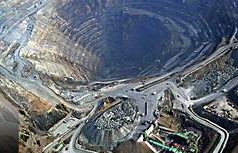

RADAR TULUNGAGUNG – The history of Freeport Indonesia is closely tied to the development of one of the world’s largest gold and copper mining complexes in Papua. From its origins in the 1960s to Indonesia’s acquisition of majority ownership in 2018, the company’s presence has remained one of the most debated chapters in the country’s natural resource sector.
Papua, known for its vast mineral wealth, hosts the Grasberg mining district, where mining operations have produced enormous quantities of copper, gold, and silver for decades. PT Freeport Indonesia operates the mining complex, which has become a strategic asset for both Indonesia and the global mining industry.
While the operation has generated significant economic value, it has also sparked long-running discussions over foreign investment, resource sovereignty, and how mining revenues should be distributed among stakeholders.
Discovery of Papua’s Mineral Wealth Led to Freeport’s Arrival
Geological reports from Dutch expeditions in the 1930s laid the foundation for Freeport’s operations in Papua. Dutch geologist Jean Jacques Dozy identified unusually rich copper deposits in the mountainous region near what would later become the Ertsberg mine.
Governments, companies, and researchers largely overlooked his findings during World War II and the turbulent post-war years. Interest resurfaced in the late 1950s after mining executive Forbes Wilson reviewed Dozy’s reports and organized an expedition to Papua in 1960.
The team confirmed that the area contained substantial copper mineralization. Their discovery attracted the attention of Freeport Sulphur Company, which later evolved into Freeport-McMoRan.
However, political developments complicated early plans. During the early 1960s, Indonesia and the Netherlands were locked in a dispute over West New Guinea, then known internationally as West Irian. As sovereignty over the territory shifted to Indonesia, mining investment plans stalled temporarily.
Following political changes in Indonesia, lawmakers enacted the Foreign Investment Law in 1967, and the Indonesian government signed a Contract of Work with Freeport. The agreement made Freeport the first major foreign investor to receive a mining contract under the new administration.
From Ertsberg to Grasberg: Building a Global Mining Giant
Developing the mine presented extraordinary engineering challenges. The remote mountainous terrain required extensive infrastructure, including roads, transport systems, and processing facilities in one of the world’s most difficult mining environments.
Commercial production at Ertsberg began in the early 1970s. As reserves gradually declined, exploration continued across the surrounding region.
A major breakthrough came in 1988 with the discovery of the Grasberg deposit, located near Ertsberg. Grasberg would eventually become one of the largest gold and copper reserves ever identified. The mine contains massive deposits of copper, gold, and silver and has ranked among the world’s most valuable mining assets for decades.
Over time, Freeport expanded operations using large-scale open-pit and underground mining methods. Advanced crushing, transportation, and processing systems enabled the company to handle hundreds of thousands of tons of ore each day.
According to PT Freeport Indonesia data, the mining district has evolved into a complex operation that includes several underground mines following the depletion of the original open-pit resources.
Indonesia Takes Majority Control After Decades of Negotiations
One of the most significant turning points in Freeport Indonesia’s history occurred in 2018.
After years of negotiations, Indonesia increased its ownership stake in PT Freeport Indonesia from 9.36% to 51.23% through a US$3.85 billion transaction led by the state mining holding company, then known as Inalum and now operating as MIND ID.
President Joko Widodo described the agreement as a milestone that would allow Indonesia to receive greater benefits through taxes, royalties, dividends, and other state revenues. The deal also converted Freeport’s long-standing Contract of Work into a Special Mining Business License (IUPK), extending operational certainty through 2041.
Today, PT Freeport Indonesia remains one of Indonesia’s most important mining companies. While debates over environmental management, economic benefits, and Papua’s development continue, the Grasberg mining district stands as one of the most significant mining projects ever developed in Southeast Asia. Its history reflects not only the discovery of extraordinary mineral wealth but also Indonesia’s broader journey toward greater control over its natural resources.