
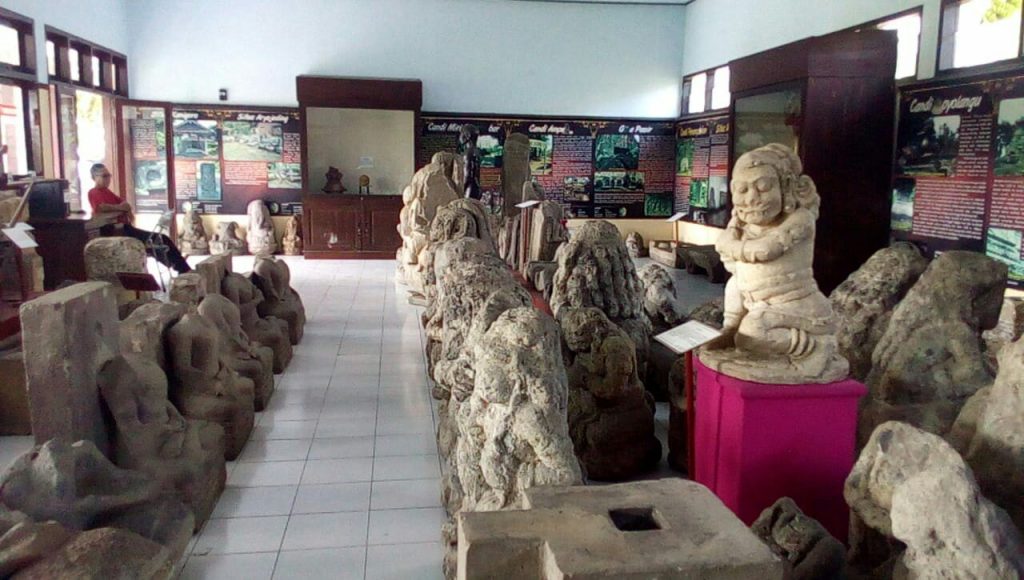

RADAR TULUNGAGUNG – The story of ancient civilization in East Java is once again attracting public attention after the rich historical collection inside the Tulungagung Regional Museum resurfaced through a cultural tourism program. Located in Boyolangu District, the museum keeps hundreds of archaeological and ethnographic artifacts, including the famous replica of Homo Wajakensis, one of the oldest human discoveries in Indonesia.
The Tulungagung Regional Museum has become an important destination for visitors who want to explore the long history of human civilization in Tulungagung. Through collections inherited from the Kediri Kingdom, Singasari Kingdom, and Majapahit era, the museum offers a complete picture of cultural development in the southern part of East Java.
Interest in Homo Wajakensis has continued to grow because the ancient human fossil was first discovered in Wajak, Tulungagung. The discovery strengthened Tulungagung’s position as one of the important prehistoric sites in Indonesia and drew attention from historians and archaeology enthusiasts.
Historical Tourism Destination in Boyolangu
The Tulungagung Regional Museum is located on Raya Boyolangu Street Km 4, Gedangsewu Selatan, Boyolangu District. The museum stores a wide range of archaeological and ethnographic collections gathered from various regions in Tulungagung Regency.
Visitors entering the museum can find ancient statues, temple gate relics, traditional fishing tools, and historical objects related to the kingdoms that once ruled East Java. The collections are carefully preserved as part of efforts to protect local cultural heritage.
Museum officials explained that the institution functions not only as a storage place for ancient artifacts but also as an educational center for the community. Every object displayed inside the building represents a part of Tulungagung’s long historical journey from prehistoric times to the industrial era.
The museum currently has around 269 collections consisting of statues, gate fragments, and ethnographic items. Several objects originate from the glorious periods of Kediri, Singasari, and Majapahit kingdoms, which played major roles in shaping Javanese civilization.
The Discovery of Homo Wajakensis
One of the museum’s main attractions is the replica of Homo Wajakensis. The fossil was originally discovered in Wajak area, Tulungagung, in 1889 by a Dutch researcher during an excavation process.
According to historical records, the discovery happened accidentally while excavation activities were taking place in a rocky area. The fossil later became one of the most important prehistoric findings in Indonesia because it provided evidence about early human life in Java.
Although the original fossil is now stored in the Netherlands, the replica displayed in Tulungagung still attracts strong curiosity from visitors. Many tourists come specifically to learn about prehistoric humans and understand the significance of Homo Wajakensis in world archaeology.
The discovery also highlights Tulungagung’s role in the study of ancient human migration in Southeast Asia. Historians believe the area once became part of an important prehistoric settlement due to its geographical conditions and natural resources.
Preserving Ancient Collections
Museum management continues regular preservation efforts to maintain the quality of historical collections. Staff members routinely clean and maintain artifacts to prevent damage to valuable objects.
When residents discover suspected historical objects in certain locations, they usually report the findings to related government agencies. The Tourism and Culture Office then coordinates with research teams to conduct further studies and verification.
Experts consider these preservation efforts crucial because many ancient relics in Tulungagung hold high historical and scientific value. Without proper maintenance, important evidence of past civilizations could disappear over time.
The museum also helps younger generations understand the importance of protecting cultural heritage. Schools often organize educational visits so students can study East Java civilization directly from the archaeological collections.
Educational Tourism in Tulungagung
Tulungagung Regional Museum has become one of the recommended educational tourism destinations in the regency. Families, students, and researchers frequently visit the museum to explore archaeological collections and learn about local history.
Tourism observers believe historical tourism holds strong potential to increase public interest in Tulungagung’s cultural heritage. Besides natural attractions, the regency also has valuable historical assets that deserve wider promotion.
The museum experience offers more than just ancient objects. Visitors can trace the development of human civilization in Tulungagung, starting from prehistoric times to the kingdom era and modern society.
Through historical tourism programs supported by the Tulungagung Culture and Tourism Office, the museum is expected to become an important educational icon in East Java. The growing popularity of Homo Wajakensis and other archaeological collections could also strengthen Tulungagung’s identity as a center of historical tourism in Indonesia.