
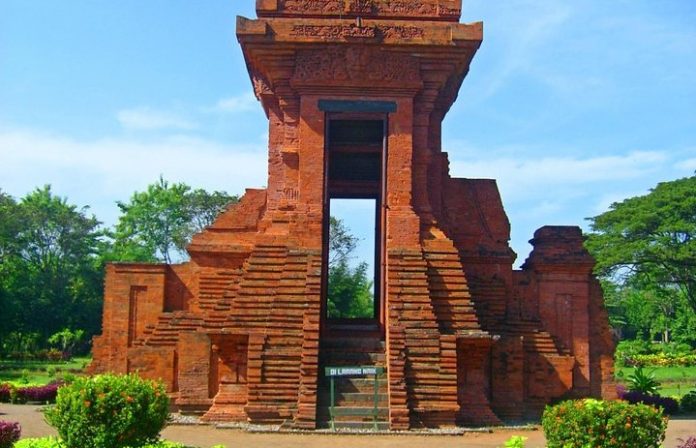

RADAR TULUNGAGUNG – The Majapahit Kingdom history continues to attract global attention as one of Southeast Asia’s greatest empires. Founded in 1293 under the name Wilwatikta, this powerful kingdom was ruled by the Rajasa dynasty, a lineage tracing back to the Singasari Kingdom. The story of Majapahit is not only about expansion and glory but also internal conflicts, betrayals, and eventual decline.
From its founding to its collapse, the Majapahit Kingdom history is shaped by a series of rulers whose leadership defined different eras. Each king and queen faced unique challenges, ranging from rebellions to succession disputes, making the kingdom’s journey both dynamic and complex.
Understanding the Majapahit Kingdom history means examining its rulers closely. Their reigns reflect how the empire rose to dominance and later fell apart after centuries of power.
The Founding Era and Early Turmoil
Majapahit was established by Raden Wijaya, also known as Dyah Wijaya, who ruled from 1293 to 1309. After defeating Jayakatwang with the help of Mongol forces, he expelled those same allies and declared himself king under the title Kertarajasa Jayawardhana. His reign, however, was marked by internal rebellions such as Ranggalawe and Sora, which he successfully suppressed.
His successor, Jayanegara (1309-1328), inherited a fragile kingdom. Known for his controversial personality, Jayanegara faced multiple uprisings, including the rebellion of Ra Kuti. He was eventually assassinated by his own physician, highlighting the instability within the palace.
The Golden Age Under Strong Leadership
The throne then passed to Tribhuwanatunggadewi (1328–1350), who ruled on behalf of her mother, Dyah Gayatri, daughter of Kertanegara, the last king of the Singasari Kingdom. Her leadership marked a turning point in the Majapahit Kingdom history, as she worked closely with Gajah Mada, the kingdom’s influential prime minister. During her reign, Gajah Mada famously declared the Sumpah Palapa, vowing to unify the archipelago.
Majapahit reached its peak during the reign of Hayam Wuruk (1350-1389). With Gajah Mada still serving as a key figure, the empire expanded its influence across much of Southeast Asia. This period is widely regarded as the golden age of Majapahit, characterized by political stability, economic growth, and territorial expansion.
Civil War and the Beginning of Decline
After Hayam Wuruk’s death, the kingdom entered a period of internal conflict. The Paregreg War between Wikramawardhana and Bhre Wirabhumi divided the kingdom and weakened its control over outer regions. Although Wikramawardhana emerged victorious, the damage was significant, and many territories broke away.
Subsequent rulers, including Suhita (1429-1447), attempted to restore order. However, the kingdom continued to face leadership struggles and revenge-driven politics. Suhita notably punished figures involved in earlier conflicts, reflecting ongoing instability within the royal family.
Power Struggles and Fragmentation
The mid-15th century saw rapid changes in leadership. Kings such as Kertawijaya and Rajasawardhana ruled briefly, often being overthrown by rivals. This period was marked by a power vacuum and internal competition among royal family members.
Territorial fragmentation became more evident as central authority weakened. Regional leaders began asserting independence, and the once-unified empire started to fracture. These internal disputes significantly contributed to the decline of Majapahit’s influence.
The Final Ruler and Collapse
The last ruler, Dyah Ranawijaya (1486–1527), marked the end of the Majapahit Kingdom history. Despite attempts to maintain authority, the kingdom had already lost much of its power. Historical records, including inscriptions from his reign, indicate a declining political structure.
Eventually, Majapahit fell and became subordinate to the Demak Sultanate. This transition marked the end of one of the greatest Hindu-Buddhist empires in Indonesian history after more than three centuries.
A Legacy That Endures
Although the empire collapsed, its cultural and political legacy remains significant. The Majapahit Kingdom history continues to influence Indonesian identity, symbolizing unity and strength across the archipelago.
From its ambitious founding to its dramatic downfall, Majapahit stands as a powerful reminder of how leadership, unity, and internal conflict shape the fate of civilizations.