
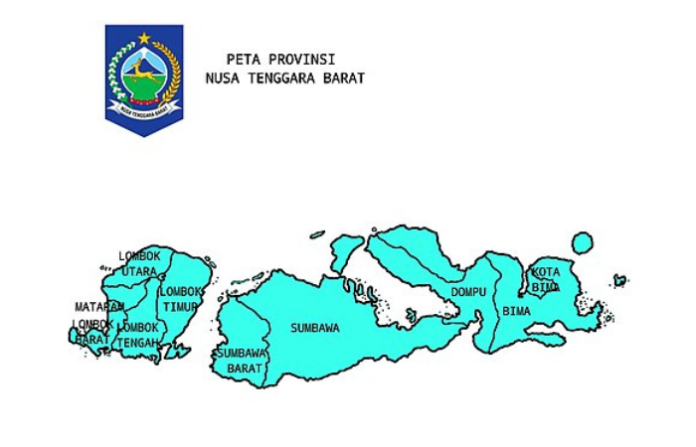

RADAR TULUNGAGUNG – The history of West Nusa Tenggara traces a long journey through the influence of ancient kingdoms, colonial administrations, wartime occupation, and post-independence political reforms before the province officially gained its status in 1958. Covering the islands of Lombok and Sumbawa, the region reflects centuries of cultural and political transformation that helped shape modern Indonesia.
Long before becoming a province, the area experienced the rise and fall of powerful regional rulers. Historical records indicate that the Majapahit Empire extended its influence over Lombok and parts of Sumbawa during the 14th century, connecting the islands to one of the largest political powers in the Indonesian archipelago.
The region later witnessed the arrival of new political forces, including rulers from Sulawesi and Bali, whose influence expanded across parts of the Lesser Sunda Islands. These shifts created a complex political landscape that continued until the arrival of European colonial powers in the early 17th century.
Colonial Rule and Japanese Occupation Shaped the Region
Dutch influence began to grow in West Nusa Tenggara during the 17th century, although local kingdoms, particularly the Bima Sultanate, initially resisted foreign intervention. Over time, colonial authorities established administrative control over the region and reorganized local governance structures.
Under Dutch administration, Lombok and Sumbawa were divided into administrative territories supervised by colonial officials. Local communities often needed approval from Dutch authorities for governance and development activities, reflecting the centralized nature of colonial rule.
The colonial period ended when Japanese forces occupied the region in 1942 during World War II. Historical accounts show that Japanese authorities imposed strict controls on political, economic, educational, and communication activities. Radio stations and newspapers came under Japanese supervision, limiting access to information and isolating the region from developments elsewhere in the world.
As a result, many residents were unaware of Japan’s surrender to Allied forces in August 1945. Information about the defeat reached the region only after Japanese authorities officially announced it. Soon afterward, Indonesian national symbols replaced Japanese emblems, marking a new chapter in local history.
From Sunda Kecil to the Formation of West Nusa Tenggara
Following Indonesian independence, the territory that now forms West Nusa Tenggara became part of the Province of Sunda Kecil, which had its capital in Singaraja, Bali.
The political structure of Indonesia underwent several changes during the early years of independence. West Nusa Tenggara also briefly became part of the State of East Indonesia during the federal period of the Republic of the United States of Indonesia (RIS) before returning to the unitary state system.
As demands for regional autonomy grew, the government moved to reorganize the former Sunda Kecil administrative area. The territory was eventually divided into three provinces: Bali, West Nusa Tenggara, and East Nusa Tenggara. This restructuring reflected local aspirations and Indonesia’s broader efforts to strengthen regional governance.
Official Provincial Status and Modern Identity
West Nusa Tenggara officially became a province on August 14, 1958, following the enactment of Law No. 64 of 1958 concerning the establishment of the Level I Regions of Bali, West Nusa Tenggara, and East Nusa Tenggara. The province encompasses Lombok and Sumbawa, with Mataram serving as its capital.
Today, West Nusa Tenggara is known not only for its historical significance but also for its growing tourism industry. Destinations such as Mount Rinjani, Gili Trawangan, Senggigi Beach, and Pink Beach attract visitors from around the world.
The province’s development reflects decades of political evolution and cultural exchange. From ancient kingdoms and colonial administrations to its official establishment in 1958, West Nusa Tenggara’s history remains an important part of Indonesia’s national story.