
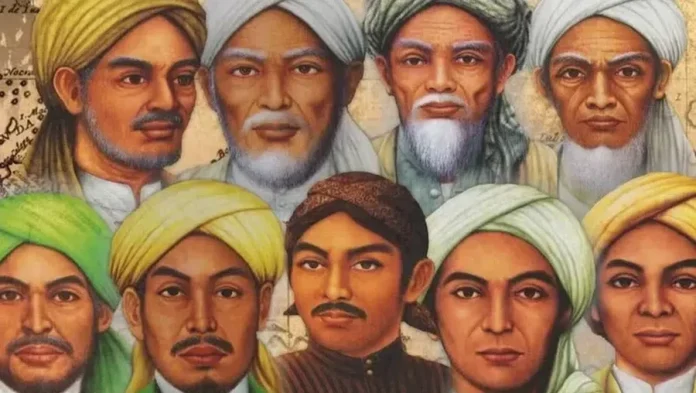

RADAR TULUNGAGUNG – Java’s Wali Songo played a decisive role in spreading Islam across the island during the 15th and 16th centuries. Historians widely credit their peaceful and culturally adaptive approach for helping Islam become the dominant faith among Javanese communities. Their legacy continues to shape religious traditions, social values, and cultural life throughout Indonesia today.
Generations of Indonesians, particularly in Central and East Java, have preserved stories about the Wali Songo. Although folklore and mystical narratives often surround these figures, historians point to archaeological evidence, local manuscripts, foreign records, and enduring traditions that confirm their historical significance.
Researchers have uncovered tombs, mosques, and manuscripts dating to the late Majapahit era and the rise of Islamic kingdoms such as Demak. These sources indicate that prominent Islamic scholars actively promoted Islam during a period of major political and social transformation in Java.
How Wali Songo Became the Driving Force Behind Islam’s Expansion in Java
The term Wali Songo, commonly translated as “Nine Saints,” refers to a group of influential Islamic scholars who accelerated the spread of Islam across Java during the 15th and 16th centuries.
Many historians, however, view Wali Songo as more than a fixed group of nine individuals. Some academic studies describe a broader network of scholars, teachers, family members, and disciples who coordinated efforts to introduce Islamic teachings to local communities.
Prominent figures traditionally associated with the movement include Sunan Ampel, Sunan Kalijaga, Sunan Giri, Sunan Bonang, and Sunan Gunung Jati. Rather than confront local traditions, these scholars embraced cultural engagement. They used local languages, arts, social customs, and community networks to communicate Islamic values.
Their strategy helped communities adopt Islam without abandoning their cultural identity. As a result, Islam gained acceptance across many regions of Java and gradually became an integral part of everyday life.
Historical Evidence Supporting the Existence of Wali Songo
Historians acknowledge that Muslim traders and communities had already reached parts of the Indonesian archipelago centuries before the rise of Wali Songo. Trade networks connected the region to Muslim merchants from the Middle East, South Asia, and other parts of Asia as early as the seventh century.
However, historical research shows that large-scale conversion among indigenous Javanese communities accelerated during the 15th and 16th centuries. At the same time, Majapahit experienced political decline, while new Islamic centers such as Demak expanded their influence.
Archaeological sites linked to Wali Songo continue to attract pilgrims and researchers. The tomb complex of Sunan Gunung Jati in Cirebon remains one of the most visited religious sites in Indonesia. Historic mosques and religious landmarks across Java also preserve evidence of the movement’s influence.
Many scholars also highlight the strong role of Sufism in the spread of Islam during this period. Sufi teachers emphasized spirituality, moral conduct, tolerance, and gradual religious education. Their approach allowed Islamic teachings to connect with local customs and social realities.
Why the Legacy of Wali Songo Still Shapes Indonesian Islam Today
The influence of Wali Songo extends far beyond religious conversion. Their methods helped shape a distinctly Indonesian expression of Islam that remains deeply connected to local culture.
Religious teachers and community leaders adopted traditional arts, literature, music, storytelling, and performance as tools for education and outreach. Historians generally agree that these methods encouraged cultural adaptation instead of cultural replacement.
Many Indonesians continue to associate Wali Songo with the development of Islamic-themed literature, local religious traditions, and community-based education. Their teachings also encouraged values such as tolerance, social harmony, and respect for cultural diversity.
Historical accounts describe how several Wali Songo figures respected local customs while introducing Islamic principles. This approach helped reduce social resistance and encouraged wider acceptance of the new faith among different social groups.
Today, Islamic institutions, pilgrimage traditions, cultural festivals, and religious communities across Indonesia continue to reflect their influence. The movement left a lasting mark on the religious and cultural landscape of Java and helped shape the character of Indonesian Islam.
Although legends surrounding Wali Songo continue to evolve, historians recognize their contribution as one of the most significant developments in Indonesian history. Their success demonstrates how dialogue, cultural understanding, and peaceful engagement can drive profound social change.