
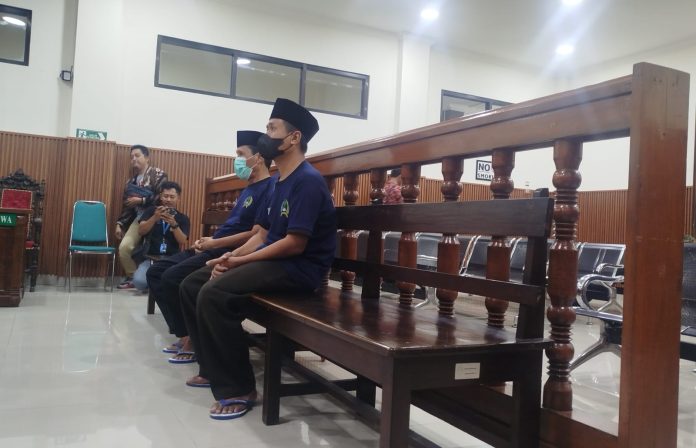

TRENGGALEK – Two Islamic boarding school leaders in Trenggalek have appealed a court verdict that sentenced them to two years in prison in a sexual abuse case involving female students.
Masduki, 74, and Muhammad Faisol Subhan Hadi, 39, submitted appeals after judges at the Trenggalek District Court announced the ruling. Prosecutors also challenged the verdict because they considered the punishment too light.
Marshias Mereapul Ginting, spokesperson for the Trenggalek District Court, confirmed that both sides officially filed appeals on April 29, 2026.
“The current status of the cases involving Masduki and Faisol is under appeal. Both parties submitted appeals at the same time,” Marshias said on Tuesday.
According to Marshias, the defendants objected to the judges’ decision because they disagreed with the sentence. Prosecutors, meanwhile, argued that the punishment failed to reflect justice for the victims.
“The reasons behind the objections appear in the appeal documents. Both the defendants and prosecutors expressed dissatisfaction with the ruling,” he explained.
The legal process will now continue at the Surabaya High Court. Judges at the appeal level will review the case and decide whether to maintain, reduce, or increase the punishment.
Because of the appeal, the verdict has not yet gained permanent legal status. The higher court now holds authority to issue the next decision in the case.
Although the latest ruling only imposed a two-year prison sentence, both defendants remain behind bars. They are currently serving separate nine-year prison terms in another similar case.
“After the defendants complete the earlier prison sentences, they will continue serving the punishment from this new ruling once the decision becomes final,” Marshias added.
During previous court hearings, judges described the defendants’ status as leaders of an Islamic boarding school as an aggravating factor. The panel stated that the case damaged the reputation of educational institutions and weakened public trust in religious schools.
The judges also criticized the defendants’ attitude during the trial. According to the court, both men refused to admit wrongdoing and failed to show remorse for their actions.
The case drew public attention in Trenggalek because it involved figures who held important positions within a religious educational institution. Local residents closely monitored the hearings as the trial continued over the past months.
Legal observers believe the appeal process could significantly affect the final punishment. The Surabaya High Court now has the authority to reassess the evidence, legal arguments, and sentencing considerations presented during the trial.
The appeal also leaves open the possibility of harsher punishment if appeal judges agree with prosecutors who demanded stronger legal consequences.
For now, the case remains unresolved as both parties continue pursuing further legal action through the Indonesian court system.