
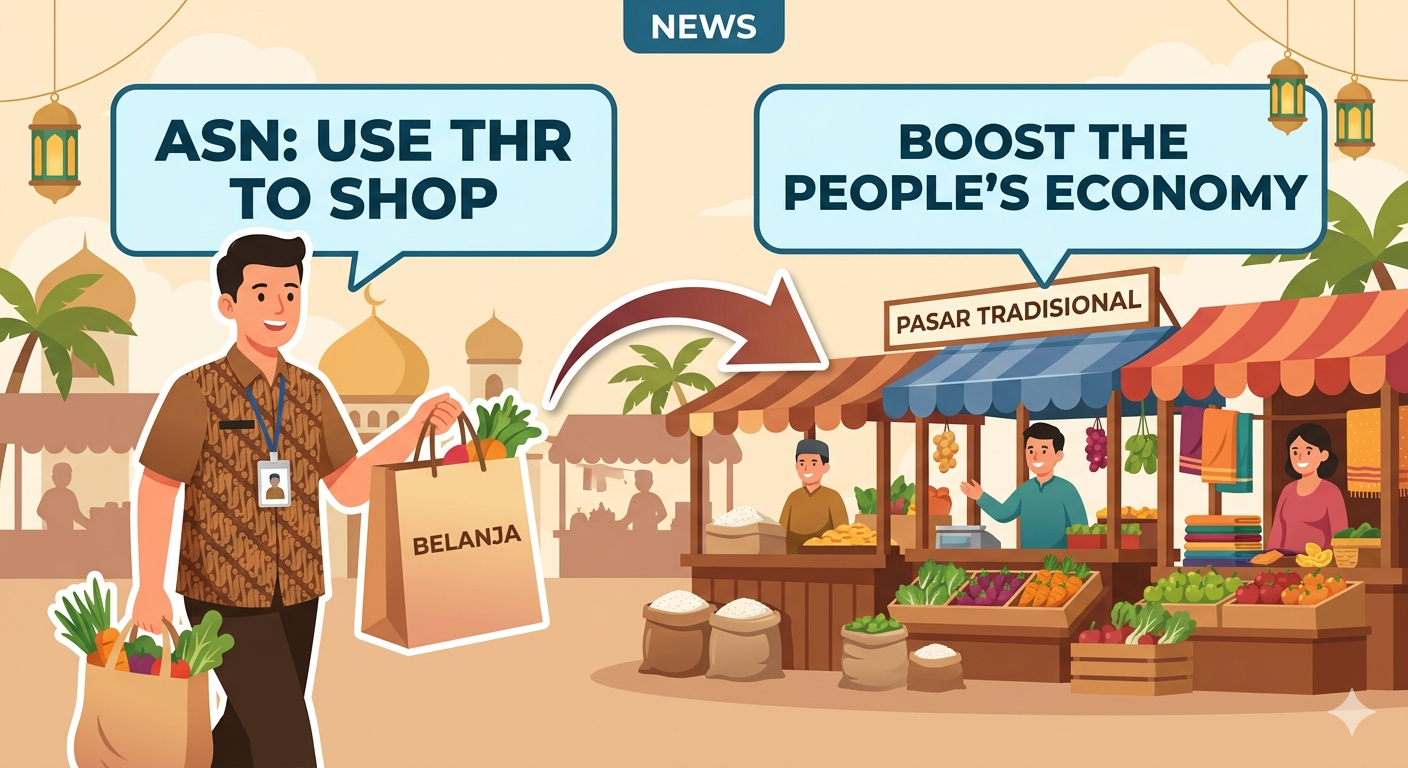

BLITAR – The Blitar City Government has urged civil servants to support traditional market shopping ahead of Eid by spending part of their holiday allowance in local markets across Blitar.
The policy aims to strengthen small-scale trade during one of the busiest shopping periods of the year. Local officials want the seasonal spending power of government employees to directly benefit market traders and neighborhood businesses.
Parminto, head of the city’s industry and trade office, said the mayor had issued a circular encouraging all civil servants to direct part of their Eid allowance toward traditional markets.
According to him, the instruction seeks to ensure that holiday bonuses generate wider economic impact rather than being spent on less productive consumption.
“The mayor issued a circular asking civil servants to use part of their holiday allowance for shopping in traditional markets. At minimum, this can help move the people’s economy,” he said.
Officials expect the measure to increase circulation of money among small traders during the final weeks before Eid.
This year, civil servants received a holiday allowance that is around 15 percent lower than previous levels. Even so, the city government believes the remaining amount still carries enough purchasing power to support daily household spending.
The circular specifically encourages shopping at several major traditional markets in the city, including Pasar Pon, Pasar Legi, and Pasar Wage.
To spread economic impact more evenly, each government department received a designated market location.
That arrangement aims to prevent crowd concentration in only one area while helping multiple market centers experience similar sales growth.
Parminto said the movement is not a new initiative.
The city has carried out similar campaigns every year before Eid as part of broader efforts to maintain local economic circulation.
Officials also encourage civil servants to continue shopping in traditional markets every month, not only during major religious holidays.
They hope salary and allowance spending can consistently support small merchants throughout the year.
“We hope this movement continues regularly, at least once a month. Traditional markets provide complete daily necessities, especially basic food products,” Parminto said.
Market traders have welcomed the policy because holiday periods often determine monthly income performance.
Many sellers believe organized visits from civil servants can lift sales, especially when demand for food and household goods rises before Eid.
The trade office also asked vendors to maintain complete stock during the holiday season.
Officials want traditional markets to remain the first option for residents looking for both Eid needs and everyday essentials.
The city expects stronger activity in local markets to help stabilize small-business income while preserving traditional trade patterns.