
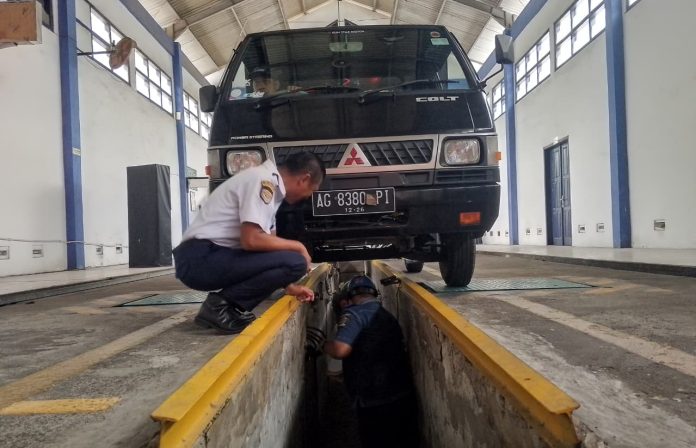

BLITAR – Blitar Vehicle Inspection Program has tested 2,477 vehicles in the first quarter of 2026, reaching just over 20% of its annual target. Authorities now aim to accelerate inspections to meet a total goal of more than 12,000 vehicles this year.
The Blitar Transportation Agency (Dishub) confirmed that both freight and passenger vehicles have undergone mandatory roadworthiness tests, locally known as “kir.” The program plays a key role in maintaining transport safety standards across the region.
Widhianto, Head of Road Safety at Dishub Blitar, said inspections between January and March covered 2,477 vehicles. This figure represents 20.40% of the 2026 target.
“We aim to test 12,140 vehicles this year. That number reflects all vehicles required to undergo inspections twice annually,” he said on Monday (May 4).
However, the first-quarter achievement falls below the same period last year, which reached 26.14%. Even so, officials remain optimistic about meeting the annual target. They point to improved digital services and the removal of inspection fees as key drivers of higher participation.
“Digital service improvements and the elimination of retribution fees have encouraged more vehicle owners to take part without financial burden,” Widhianto explained.
Meanwhile, not all vehicles pass the inspection on their first attempt. Inspectors frequently find issues with braking systems and excessive exhaust emissions that exceed environmental standards.
Therefore, Dishub allows vehicle owners to carry out repairs and return for re-inspection. Since the government has removed testing fees, owners can fix technical problems and retake the test without additional costs.
“We encourage owners to address technical issues immediately. Greater awareness of vehicle roadworthiness will help reduce traffic accidents caused by mechanical failure,” he said.
In addition, officials continue to promote the importance of regular inspections to ensure safer roads. The program also supports broader efforts to improve public safety and environmental compliance in the transportation sector.
With the current pace, Dishub plans to intensify outreach and streamline services in the coming months. As a result, authorities expect higher participation rates and stronger compliance before the end of the year.