
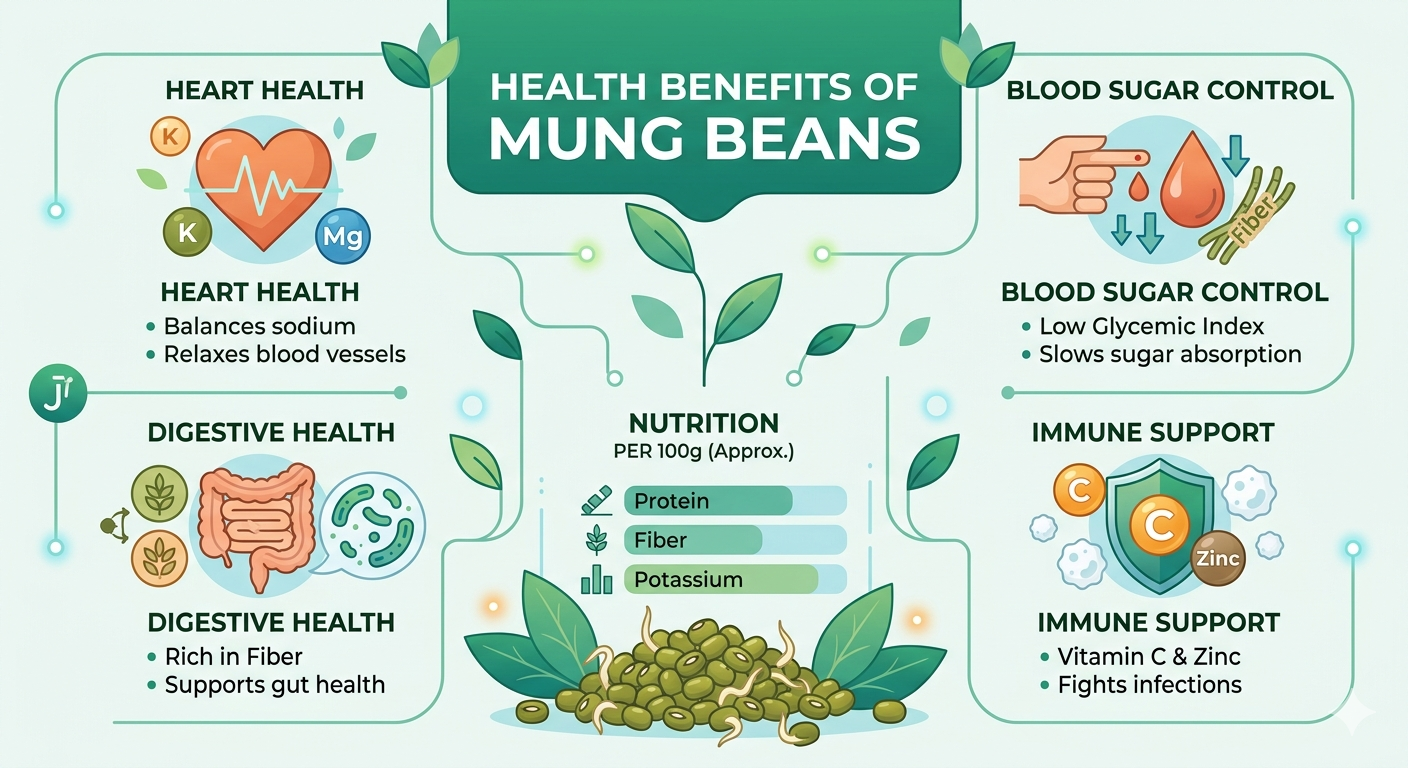

TULUNGAGUNG – Mung bean are widely known as a simple food ingredient, yet they contain nutrients that support several important body functions, especially heart health, blood sugar control, and digestion.
Rich in potassium and magnesium, mung beans help the cardiovascular system work more efficiently. Potassium helps balance sodium levels in the body, while magnesium supports relaxed blood vessels and helps keep blood pressure stable.
Their fiber content also plays a major role in lowering low-density lipoprotein, or LDL, often called bad cholesterol. Lower LDL levels may reduce the risk of heart disease over time.
Health information published by Halodoc notes that mung beans also help regulate blood sugar because they have a low glycemic index. This means the body absorbs sugar more slowly after meals.
That effect can help people living with diabetes and those facing a higher risk of type 2 diabetes. Fiber also improves insulin sensitivity, which helps the body process glucose more effectively.
Beyond metabolic benefits, mung beans also support immune function because they contain vitamin C, zinc, and folate. These nutrients help the body fight infection and support healthy red blood cell production.
Their fiber also improves digestive health by supporting smoother bowel movement and preventing constipation. At the same time, it helps maintain a healthy balance of beneficial bacteria in the gut.
Because they contain both protein and fiber, mung beans also remain a common choice in healthy diet plans. These nutrients help people feel full longer and may reduce excess calorie intake during the day.
Researchers also note that antioxidants in mung beans may help protect liver function. Vitamin C further supports collagen production, which contributes to skin repair and overall skin health.
Per 100 grams, mung beans contain 347 calories, 24 grams of protein, 16 grams of dietary fiber, and 1,246 milligrams of potassium. They also provide magnesium, calcium, iron, and vitamin B6 in meaningful amounts.