
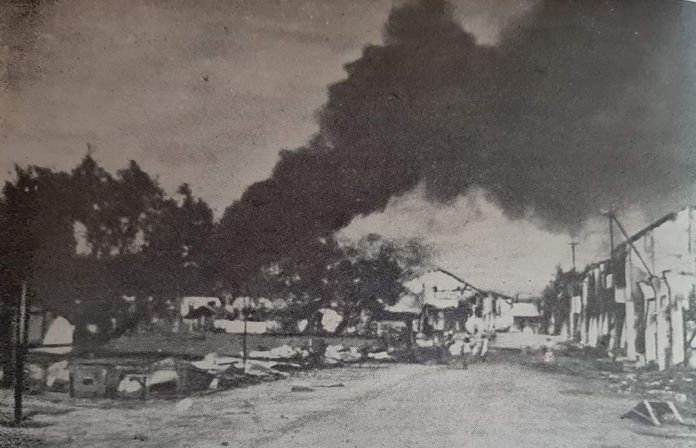

RADAR TULUNGAGUNG – The story of Brandan Bumi Hangus marks a crucial chapter in Indonesia’s history. Pangkalan Brandan in Langkat, North Sumatra, once ranked as the world’s second-largest oil producer after Pennsylvania. The area’s oil wealth began to emerge in the 1880s when Dutch planter Aeilko Jans Zijlker discovered reserves in Telaga Said. This led to the creation of the Telaga Tunggal well in 1885, known as Indonesia’s first oil well. By 1892, a refinery was established, producing thousands of barrels per day. As a result, Langkat transformed into one of the richest regions in Sumatra.
The oil boom brought rapid development to the region. Infrastructure such as schools, hospitals, and railways was built using oil revenues. However, this wealth also made Pangkalan Brandan a strategic target during wartime. In 1942, the Dutch burned the refinery to prevent Japanese forces from taking control. Japan later restored operations and increased production for military needs. After Indonesia’s independence in 1945, local workers took over the refinery, marking the beginning of national oil management.
The peak of the conflict came in 1947 during the Dutch Military Aggression. Facing superior Dutch forces, Indonesian fighters chose to destroy their own refinery. On August 13, 1947, they carried out the Brandan Bumi Hangus action after evacuating civilians. Massive fires destroyed the facilities and burned for days. This strategy prevented the Dutch from using the oil resources and forced their retreat. Although the refinery was later rebuilt, it never fully recovered and officially ceased operations in 2007. Today, the event remains a powerful symbol of sacrifice and resistance in Indonesia’s fight for independence.
The Birth of Indonesia’s Oil Industry
Long before Indonesia gained independence, Pangkalan Brandan had already gained attention due to its abundant natural resources. Oil seeped naturally to the surface, forming pools that local communities used for lighting, medicine, and even warfare. However, large-scale exploration only began in the late 19th century.
In 1882, a Dutch plantation expert named Aeilko Jans Zijlker discovered oil traces in Telaga Said. After further research confirmed high oil content, he initiated drilling operations. By 1885, the Telaga Tunggal well was established, marking Indonesia’s first oil well and the beginning of its petroleum industry.
Soon after, oil production expanded rapidly. By 1892, a refinery was built in Pangkalan Brandan, enabling large-scale processing and distribution. The region produced between 5,000 to 10,000 barrels of oil per day, contributing significantly to global supply. By the 1930s, it accounted for around 3.5% of the world’s oil production.
Oil Wealth Transforms Langkat
The economic impact of this oil boom was extraordinary. Under agreements with the Sultan of Langkat, oil companies paid royalties that funded public infrastructure, including schools, hospitals, and mosques. The region quickly transformed into a modern and prosperous area.
Railways connected Pangkalan Brandan to Medan, while street lighting and improved transportation boosted local development. At its peak, Langkat was considered one of the wealthiest regions in Sumatra, showcasing how natural resources could elevate an entire society.
Strategic Target During War
However, such wealth made Pangkalan Brandan a strategic target during wartime. During World War II, the refinery became a crucial asset for military operations. In 1942, as Japanese forces advanced, the Dutch burned the refinery to prevent it from falling into enemy hands. Despite this, Japan managed to restore operations and even increased production significantly.
After Indonesia declared independence in 1945, the refinery was taken over by local workers. It later became part of a national oil company, laying the foundation for what would eventually become Pertamina.
Brandan Bumi Hangus: A Second Scorched Earth
The most dramatic chapter came in 1947 during the Dutch Military Aggression. As Dutch forces attempted to reclaim control, Indonesian fighters faced overwhelming odds in terms of manpower and weaponry. Recognizing the strategic importance of the refinery, they made a bold decision.
Rather than allowing the Dutch to seize it, Indonesian forces chose to destroy their own vital asset. On August 13, 1947, after evacuating civilians, they set fire to the refinery and surrounding facilities. Massive flames engulfed the area, with thick black smoke rising thousands of feet into the sky.
The fire reportedly burned for more than seven days. Despite Dutch attempts to stop it, the destruction was total. Their mission failed, and they were forced to retreat.
A Symbol of Sacrifice and Resistance
The Brandan Bumi Hangus event symbolizes the ultimate sacrifice, destroying valuable national assets to protect sovereignty. Although the refinery was heavily damaged, local workers later rebuilt and resumed operations by the late 1950s.
However, Pangkalan Brandan never fully regained its former glory. Oil reserves gradually declined, and after more than a century of production, operations officially ceased in 2007.
Today, the site stands as a cultural heritage area, preserving the memory of both Indonesia’s early oil success and the bravery of its people. Each year, the event is commemorated to honor the struggle and remind future generations of the cost of independence.
The story of Brandan Bumi Hangus is not just about oil, it is about resilience, strategy, and the unwavering spirit of a nation determined to remain free.