
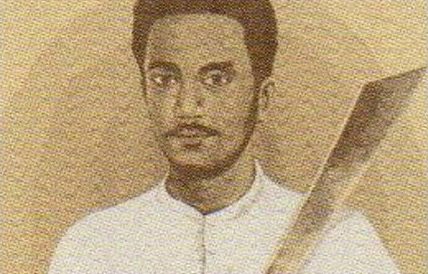

RADAR TULUNGAGUNG – The Pattimura identity debate has resurfaced on social media and YouTube, reviving claims that Indonesian national hero Kapitan Pattimura was not Thomas Matulessy, as recognized in official history, but a Muslim figure named Ahmad Lussy. However, historical evidence currently available continues to support the identification of Pattimura as Thomas Matulessy, while claims linking him to Ahmad Lussy remain unverified.
The renewed discussion stems from online content questioning whether Dutch colonial records altered the identity and religious background of one of Maluku’s most celebrated resistance leaders. Supporters of the alternative theory argue that oral traditions and local narratives point to a different historical figure. Yet historians emphasize that extraordinary claims require documentary evidence, and no primary historical records have conclusively established Ahmad Lussy as Pattimura.
Pattimura remains one of Indonesia’s most respected anti-colonial figures, remembered for leading a major uprising against Dutch rule in Maluku in 1817. His legacy has been formally recognized by the Indonesian government, which named him a National Hero in 1973.
The Origins of the Pattimura Identity Debate
The controversy centers on competing narratives regarding Pattimura’s identity and religion. Official Indonesian historiography identifies him as Thomas Matulessy, born in Haria on Saparua Island, Maluku, in 1783. Historical accounts describe him as a former soldier who served under British administration before leading resistance against Dutch colonial authorities after control of Maluku returned to the Netherlands in 1817.
According to established historical records, the people of Saparua appointed Thomas Matulessy as Kapitan Pattimura in May 1817. He subsequently led attacks against Dutch positions, including the capture of Fort Duurstede, an event that became one of the most significant episodes of anti-colonial resistance in eastern Indonesia.
Claims that Pattimura was actually Ahmad Lussy have circulated periodically in books, social media discussions, and public debates. Proponents often cite oral traditions and alternative interpretations of local history. However, historians note that oral history, while valuable, must be corroborated by contemporary documents before it can overturn well-established historical conclusions.
Historical Evidence and the Debate Over Pattimura’s Identity
Available historical records identify Pattimura as Thomas Matulessy and describe him as originating from a Protestant Christian family in Maluku. Researchers have pointed to family records, colonial-era documentation, and local genealogical accounts that consistently use the Matulessy name.
The broader historical context is also important. Maluku was home to both Muslim sultanates and Christian communities during the colonial period. Resistance to Dutch rule emerged from diverse social, ethnic, and religious backgrounds. Historians caution against reducing anti-colonial movements solely to religious identity, noting that opposition to colonial exploitation united many groups across the archipelago.
Meanwhile, no authenticated baptismal controversy, archival discovery, or newly verified primary source has emerged in recent years to substantiate the Ahmad Lussy theory. Scholars generally regard the claim as unproven due to the absence of documentary evidence from Pattimura’s lifetime.
Why the Controversy Continues to Shape Public Discussion
The debate highlights a broader challenge in interpreting colonial-era history. Historians acknowledge that colonial records can contain biases and should be critically examined. However, they also stress that revising historical conclusions requires credible evidence rather than speculation alone.
Public discussion surrounding Pattimura’s identity has generated strong reactions online, with some groups calling for further research and others warning against the spread of unsupported historical claims. Academic researchers continue to encourage the use of archival materials, oral traditions, and interdisciplinary methods to better understand Indonesia’s past.
For many Indonesians, Pattimura’s significance extends beyond questions of religion. His leadership during the 1817 uprising remains a symbol of resistance against colonial domination and a key part of Maluku’s historical heritage.
In the absence of new primary evidence, the historical consensus continues to recognize Kapitan Pattimura as Thomas Matulessy. While debate and research remain legitimate parts of historical inquiry, current facts do not support replacing the established historical record with the unverified Ahmad Lussy narrative.