
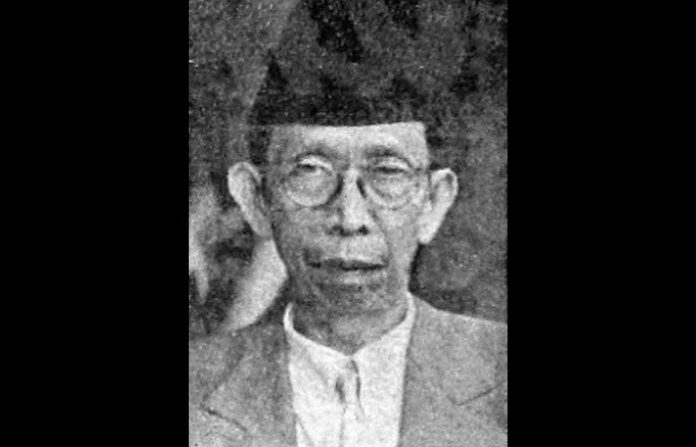

RADAR TULUNGAGUNG – Ki Hajar Dewantara, widely regarded as the Father of Indonesian National Education, transformed the struggle against Dutch colonialism through education rather than armed resistance. His ideas reshaped Indonesia’s education system and inspired generations of nationalists seeking independence and social equality.
Born as Raden Mas Suwardi Suryaningrat in Yogyakarta on May 2, 1889, Ki Hajar Dewantara emerged as one of the most influential intellectual figures in Indonesia’s modern history. From journalism and political activism to educational reform, his lifelong mission centered on providing equal access to education for all Indonesians regardless of social status.
His legacy remains deeply embedded in Indonesia today, with his birthday commemorated annually as National Education Day and his educational philosophy continuing to influence schools across the country.
Key Explanation: From Aristocratic Roots to Nationalist Activist
Ki Hajar Dewantara was born into the royal Pakualaman family in Yogyakarta. Despite his noble background, he became increasingly concerned about educational inequality under Dutch colonial rule, where formal schooling was largely reserved for Europeans and indigenous elites.
He attended the Europeesche Lagere School (ELS) and later enrolled at STOVIA, a medical school for indigenous students in Batavia. However, illness prevented him from completing his studies. After leaving STOVIA, he pursued a career in journalism, writing for several newspapers and using the press as a platform to criticize colonial policies.
In 1912, he joined forces with Dr. Ernest Douwes Dekker and Dr. Cipto Mangunkusumo to establish the Indische Partij, one of the earliest nationalist political organizations in the Dutch East Indies. The party openly advocated self-determination and greater political rights for Indonesians.
A year later, Suwardi published his famous article, “Als Ik Eens Nederlander Was” (“If I Were a Dutchman”), criticizing Dutch plans to celebrate the centennial of Dutch independence while continuing to colonize Indonesia. The article triggered a strong reaction from colonial authorities and led to his exile in the Netherlands in 1913.
Supporting Data and Background: The Birth of Taman Siswa
During his years in the Netherlands, Suwardi studied educational theories and became influenced by international thinkers, including Maria Montessori and Rabindranath Tagore. He concluded that education offered the most effective path toward national awakening and social progress.
After returning to Indonesia in 1919, he focused increasingly on educational reform. On July 3, 1922, he founded Taman Siswa in Yogyakarta, a national educational movement designed to provide learning opportunities for indigenous Indonesians who had been largely excluded from colonial schools.
Taman Siswa combined modern educational methods with Indonesian cultural values and nationalism. The institution emphasized character development, independence, and social responsibility alongside academic learning. Its educational philosophy later became known as the Among System, which encouraged teachers to guide rather than dominate students.
A significant personal transformation followed in 1928 when Suwardi formally adopted the name Ki Hajar Dewantara and abandoned his aristocratic title. The move reflected his belief in equality and his desire to remain close to ordinary Indonesians. Historical records indicate the name change occurred on February 3, 1928, rather than February 23 as sometimes reported.
Reactions, Impact, and National Legacy
The rapid expansion of Taman Siswa alarmed Dutch colonial authorities. During the early 1930s, the government introduced regulations aimed at restricting independent schools. Ki Hajar Dewantara and fellow educators strongly opposed these measures, arguing that educational freedom was essential for national development. Their resistance gained broad support from nationalist groups and helped strengthen Indonesia’s independence movement.
During the Japanese occupation, Ki Hajar participated in organizations that brought together prominent nationalist leaders, including Sukarno and Mohammad Hatta. Following Indonesia’s proclamation of independence in 1945, he became the country’s first Minister of Education.
His educational philosophy produced one of Indonesia’s most enduring mottos: “Tut Wuri Handayani”, a principle encouraging educators to guide and inspire learners from behind. The phrase remains the official motto of Indonesia’s Ministry of Education.
Ki Hajar Dewantara died in Yogyakarta on April 26, 1959, but his vision of education as a tool of liberation continues to shape Indonesian society. As he consistently argued, true national progress depends not only on intellectual achievement but also on character, culture, and humanity.