
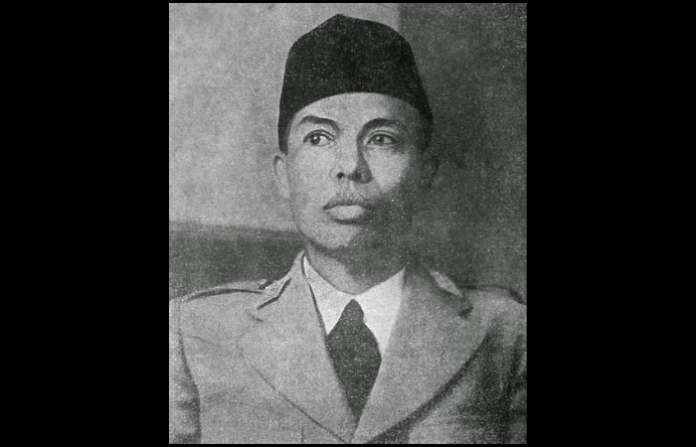

RADAR TULUNGAGUNG – The General Sudirman guerrilla war stands as one of the most pivotal episodes in Indonesia’s struggle for independence. As Dutch forces launched a major offensive against the Republic in late 1948, the country’s top military commander chose to continue armed resistance despite suffering from severe tuberculosis and deteriorating health.
While President Sukarno and Vice President Mohammad Hatta pursued diplomatic efforts following their detention by Dutch authorities, General Sudirman led a months-long guerrilla campaign across Java. His decision helped sustain the morale of Indonesian fighters and demonstrated that the Republic remained active despite the loss of its capital in Yogyakarta.
The campaign also exposed a strategic divide within Indonesia’s leadership. Sudirman believed military pressure should continue to strengthen the Republic’s position, while political leaders viewed negotiations as the fastest route to securing international recognition of Indonesia’s sovereignty. Despite those differences, the military commander ultimately placed national unity above personal convictions, cementing his legacy as both a wartime leader and a defender of democratic principles.
General Sudirman’s Decision to Continue the Guerrilla War
When Dutch forces launched their second major military offensive against the Republic of Indonesia in December 1948, targeting the republican capital of Yogyakarta, General Sudirman faced a critical choice. Although suffering from severe tuberculosis, the commander of Indonesia’s armed forces rejected the idea of remaining in the city.
Instead, Sudirman left Yogyakarta and led a guerrilla campaign aimed at proving that the Republic still existed despite Dutch attempts to dismantle it. While President Sukarno and Vice President Mohammad Hatta decided to remain and pursue diplomatic efforts after their arrest by Dutch authorities, Sudirman continued resistance from the countryside.
His departure inspired soldiers and civilians alike. News that Sudirman had avoided capture boosted morale among republican forces, many of whom feared that the arrest of national leaders signaled the end of the independence movement.
Escorted by troops through southern Java, Sudirman eventually established guerrilla command centers in strategic mountainous areas, including regions around Mount Wilis in East Java. Due to his worsening health, he often traveled by stretcher while continuing to direct military operations.
One of the most significant military actions associated with the guerrilla campaign was the 1 March 1949 General Offensive in Yogyakarta, carried out by Indonesian forces to demonstrate that Dutch claims of total control were inaccurate.
International Pressure and the Path Toward Negotiations
By mid-1949, Indonesia’s diplomatic efforts began producing results. Through mediation involving the United Nations Commission for Indonesia (UNCI), international pressure on the Netherlands increased significantly.
The Dutch government faced growing criticism from the international community, including concerns in the United States that post-war aid provided through the Marshall Plan was being used to finance military operations in Indonesia rather than economic recovery.
At the same time, continuing resistance across Java demonstrated that Dutch authorities had failed to establish effective control over the territory. Military operations by republican forces strengthened Indonesia’s bargaining position and convinced international observers that the conflict could not be resolved solely through force.
These developments paved the way for negotiations that would eventually culminate in the Round Table Conference (KMB) later in 1949, where sovereignty transfer became the central issue.
Why Sudirman Opposed the 1949 Ceasefire
Despite supporting Indonesian independence and eventual negotiations, Sudirman strongly opposed the timing of a ceasefire agreement announced on August 1, 1949.
Historically, his disagreement centered on strategy rather than personal hostility toward Sukarno or Hatta. Sudirman believed continued military pressure would improve Indonesia’s negotiating position before formal talks with the Dutch began.
The commander feared that halting military operations too early could weaken the Republic’s leverage and potentially allow the Dutch to influence the political future of Indonesia. These concerns led him to consider resigning as Commander-in-Chief of the Armed Forces.
On August 2, 1949, Sudirman met Sukarno in Yogyakarta and expressed his willingness to step down because he felt unable to fully support the ceasefire policy. However, the resignation never took effect.
According to historical accounts, both Sukarno and senior military leaders, including Abdul Haris Nasution, emphasized that preserving unity between civilian and military leadership was more important than differences over strategy.
Sudirman ultimately agreed. He withdrew his resignation plan and remained loyal to the constitutional leadership of the Republic. His decision reflected a principle he consistently upheld: the military served the state and remained subordinate to elected national leadership.
Although he disagreed with aspects of the diplomatic approach, Sudirman accepted the government’s final decision. His actions helped preserve unity during a decisive period that eventually led to Dutch recognition of Indonesian sovereignty later in 1949.
In the final years of his life, General Sudirman became a symbol not only of military resistance but also of discipline, constitutional loyalty, and national unity. His legacy endures as a reminder that Indonesia’s independence was secured through both armed struggle and diplomacy.