
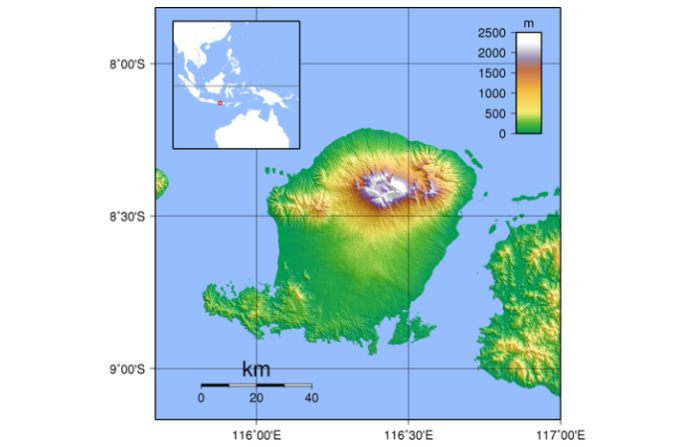

RADAR TULUNGAGUNG – The story behind Lombok history extends far beyond the popular assumption that the island’s name is linked to chili peppers. Historical records, local traditions, and ancient manuscripts suggest that Lombok’s identity emerged from a complex blend of Sasak culture, Majapahit influence, religious traditions, and the rise of early kingdoms that shaped the island for centuries.
Today, historians continue to debate several aspects of Lombok’s early past because reliable written sources remain limited. Much of the island’s ancient history survives through traditional chronicles known as babad, oral traditions, and references in old Javanese texts. As a result, separating historical fact from legend remains one of the greatest challenges in studying Lombok’s origins.
The island’s indigenous population is the Sasak people, who continue to form the overwhelming majority of Lombok’s residents. Their culture, language, and traditions remain central to the island’s identity and have played a significant role in preserving historical narratives passed down through generations.
The Origins of Lombok and the Sasak People
Several theories attempt to explain the origin of the word “Sasak.” One widely cited interpretation links it to the term sak-sak, meaning a boat or raft, reflecting stories that the island’s earliest settlers arrived by sea. Another tradition associates the word with sa’-saq, meaning “the one” or “unity.” Scholars have also proposed linguistic connections to ancient Sanskrit and Old Javanese terms.
Many historians and cultural experts trace the name “Lombok” to the Sasak word lomboq, meaning “straight,” “honest,” or “upright.” This interpretation has become deeply embedded in local philosophy and is often linked to values of integrity and moral conduct within Sasak society.
Religious education has long occupied an important place in Sasak culture. For generations, families have encouraged children to participate in Islamic learning from an early age, helping preserve values that many communities associate with the meaning of the island’s name and identity.
Ancient Records and the Majapahit Connection
One of the earliest documented references to Lombok appears in the 14th-century Majapahit manuscript Nagarakretagama, written by Mpu Prapanca in 1365. The text mentions “Lombok Mirah” and “Sasak Adi” as territories under Majapahit influence, providing one of the most significant historical references to the island.
Many local historians interpret the phrase “Lombok Mirah Sasak Adi” as a philosophical expression emphasizing honesty, virtue, and noble character. While interpretations vary, the phrase remains an important cultural symbol across the island.
Historical evidence indicates that Lombok maintained connections with Java during the Majapahit era. However, historians caution that many claims regarding the island’s earliest kingdoms rely heavily on traditional chronicles rather than independently verified archaeological evidence. Consequently, some narratives should be viewed as cultural traditions rather than established historical fact.
Kingdoms, Selaparang, and Lasting Historical Legacy
Among the most influential kingdoms associated with Lombok history is the Kingdom of Selaparang. Historical traditions regard Selaparang as one of the island’s most important political centers and a major force in shaping regional governance before later external influences arrived. Although scholars continue to debate its precise origins, the kingdom remains a powerful symbol of Sasak heritage.
Historical records suggest that Lombok consisted of numerous competing principalities and local kingdoms before the early modern period. Over time, the island experienced influences from Majapahit, Balinese kingdoms, Makassarese powers, and later Dutch colonial authorities. These successive periods of political change helped shape the diverse cultural landscape visible in Lombok today.
The enduring legacy of Lombok history lies not only in its kingdoms and rulers but also in the resilience of the Sasak people. Their traditions, language, and cultural values continue to preserve the island’s distinctive identity while connecting modern Lombok to a past that remains both fascinating and partly mysterious.