
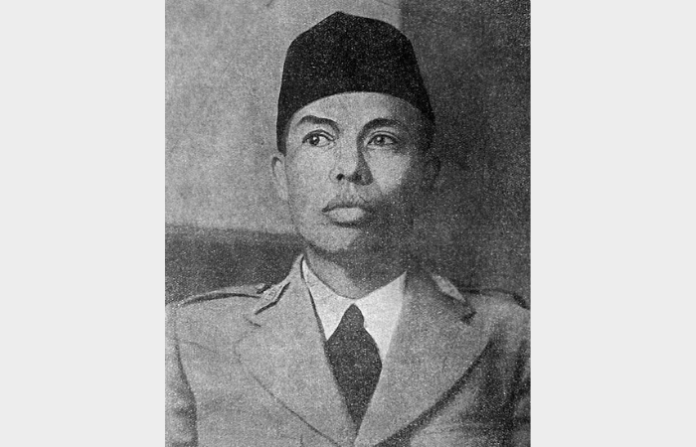

RADAR TULUNGAGUNG – General Sudirman, one of Indonesia’s most revered national heroes and the first commander of the country’s armed forces, played a decisive role in defending Indonesian independence against Dutch efforts to re-establish colonial rule. Despite suffering from severe tuberculosis, General Sudirman led a remarkable guerrilla campaign that became a symbol of national resistance and determination.
Born on January 24, 1916, in Purbalingga, Central Java, Sudirman rose from humble beginnings to become one of the most influential military figures in Indonesian history. His leadership during the struggle for independence earned him widespread respect, including from President Sukarno.
The story of General Sudirman continues to inspire generations of Indonesians, not only because of his military achievements but also because of his dedication, integrity, and unwavering commitment to the nation during one of its most challenging periods.
From Teacher and Community Leader to Military Commander
General Sudirman spent much of his childhood in Cilacap after being adopted and raised by relatives of his mother. He received a strong religious upbringing and developed a reputation for discipline, leadership, and academic excellence from an early age.
After completing his education, Sudirman became a teacher at a Muhammadiyah school in Cilacap. Although his salary was modest, he quickly gained recognition as an effective educator and respected community leader. His involvement in youth organizations and religious activities further strengthened his standing among local residents.
The outbreak of World War II and the Japanese occupation of Indonesia changed the course of his life. In 1944, Sudirman joined PETA (Pembela Tanah Air), a military force established by Japan. The training he received provided valuable military experience that later helped shape his leadership during Indonesia’s fight for independence.
Following Indonesia’s proclamation of independence on August 17, 1945, Sudirman rapidly emerged as a key military figure. At only 29 years old, he was elected Commander-in-Chief of the newly established Indonesian armed forces, making him one of the youngest military leaders in the country’s history.
Leading Indonesia’s Historic Guerrilla Campaign
One of Sudirman’s most significant contributions came during the Indonesian National Revolution from 1945 to 1949. After the Netherlands launched military operations to regain control of Indonesia, the newly independent republic faced one of the greatest threats to its sovereignty.
During the Second Dutch Military Aggression in December 1948, Sudirman was already suffering from severe tuberculosis. Historical records indicate that one of his lungs had been seriously damaged, leaving him physically weakened.
Despite his condition, Sudirman refused to remain inactive. Against medical advice, he left the city and led a guerrilla campaign across Java. For approximately seven months, he traveled through forests, mountains, and rural areas while directing resistance efforts against Dutch forces.
As his health deteriorated, soldiers often carried him on a stretcher. Nevertheless, his determination inspired Indonesian troops and demonstrated that the Republic of Indonesia continued to resist despite Dutch attempts to dismantle its government and military leadership.
Military historians widely regard the guerrilla campaign as one of the defining chapters in Indonesia’s struggle for independence.
Enduring Legacy of Indonesia’s National Hero
After international negotiations resulted in Dutch recognition of Indonesian sovereignty in late 1949, Sudirman’s health continued to decline. He underwent treatment in several locations, including Magelang, but his condition worsened.
On January 29, 1950, General Sudirman died at the age of 34 after a prolonged battle with tuberculosis. His passing triggered nationwide mourning and marked the loss of one of Indonesia’s most respected military leaders.
Today, Sudirman remains a central figure in Indonesia’s national memory. Major roads across the country carry his name, including Jakarta’s iconic Jalan Jenderal Sudirman. His portrait has also appeared on numerous Indonesian banknotes, underscoring his lasting significance.
His influence extends beyond Indonesia. A statue of General Sudirman stands in Tokyo, Japan, near the Ministry of Defense, reflecting the respect he has received internationally and symbolizing the strong relationship between Indonesia and Japan.
While many stories highlight his personal discipline, religious devotion, and commitment to public service, historians emphasize that Sudirman’s greatest legacy lies in his leadership during Indonesia’s fight for independence. His determination to continue leading despite severe illness cemented his place as one of the nation’s most celebrated heroes.
General Sudirman remains a symbol of courage, sacrifice, and resilience, remembered as the commander who never stopped fighting for Indonesia’s freedom.