
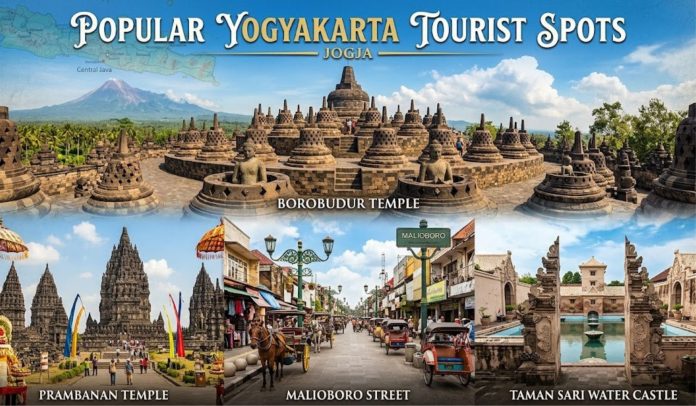

YOGYAKARTA – Best budget tourist spots in Jogja are becoming increasingly popular among Indonesian travelers as destinations across Yogyakarta offer affordable entrance fees, Bali-like scenery, and family-friendly attractions. Tourism businesses in the region are capitalizing on social media exposure to attract visitors throughout 2026.
Budget Tourism Becomes Yogyakarta’s Competitive Strength
Yogyakarta’s tourism industry continues evolving through affordable recreation concepts that combine natural landscapes, cultural heritage, and entertainment facilities.
One destination attracting widespread attention is Pantai Ngobaran in Gunung Kidul, often described by visitors as the “Bali of Java.” The beach features seaside Hindu temples, limestone cliffs, and ocean scenery resembling Bali’s famous Uluwatu coastline.
Visitors only pay Rp8,000 for regional access tickets covering multiple nearby beaches, including Nguyahan, Ngrenehan, and Midodaren.
The destination has become popular for photography tourism, especially among travelers seeking Bali-style visuals without expensive travel costs.
Tourists can also rent traditional costumes and hire photographers for personalized photo sessions overlooking the sea.
Family Tourism Expands Across Yogyakarta
Family-oriented tourism continues expanding across Yogyakarta as attractions develop more inclusive facilities.
Ibarbo Park in Sleman has emerged as one of the region’s leading family destinations through its combination of aviaries, mini zoos, amusement rides, and cartoon-themed attractions.
The park includes more than 100 bird species, educational animal feeding zones, and artificial snow attractions designed for children.
Accessibility has also become a major selling point. The park provides stroller-friendly pathways, wheelchair rentals, and facilities tailored for elderly visitors and young families.
Meanwhile, Obelix Sea View has gained popularity through luxury-style tourism experiences featuring infinity pools, ocean-view lounges, amphitheaters, and dynamic light shows.
The attraction offers more than 50 photography spots and has become especially popular among social media users searching for premium visual experiences.
Traditional Destinations Continue Attracting Crowds
Although modern tourism dominates online trends, Yogyakarta’s classic destinations remain highly relevant.
Pantai Parangtritis continues attracting thousands of visitors through its black-sand beaches, traditional horse rides, ATV rentals, and legendary cultural reputation.
Regional entrance fees cost Rp15,000 and include access to multiple southern beaches in Bantul Regency.
Tourists are advised not to swim due to dangerous currents, although shoreline activities and sunset viewing remain highly popular.
Malioboro Street also continues functioning as Yogyakarta’s cultural and commercial center. The pedestrian corridor remains crowded with tourists shopping for batik, handicrafts, and traditional foods late into the evening.
Nearby landmarks such as Benteng Vredeburg and Titik Nol Kilometer regularly host art exhibitions, live music, and cultural events that strengthen Yogyakarta’s tourism identity.
Culinary Experiences Support Tourism Growth
Culinary tourism has become another important driver behind Yogyakarta’s tourism expansion.
Pasar Ngasem remains one of the city’s most famous traditional food markets, attracting visitors searching for authentic Javanese dishes and viral local snacks.
Meanwhile, Pawon Bah Gito in Kaliurang offers village-style buffet dining surrounded by rice fields and traditional architecture. Meals start from Rp14,000 per person, making it highly attractive for families seeking affordable dining experiences.
Restaurants across coastal tourism areas also continue supporting local economies through seafood markets, cafes, and traditional food stalls.
As tourism trends increasingly prioritize affordability, aesthetics, and local culture, Yogyakarta’s tourism sector appears positioned for continued growth.
The success of the best budget tourist spots in Jogja demonstrates how affordable pricing and authentic experiences can compete successfully against premium tourism destinations elsewhere in Southeast Asia.