
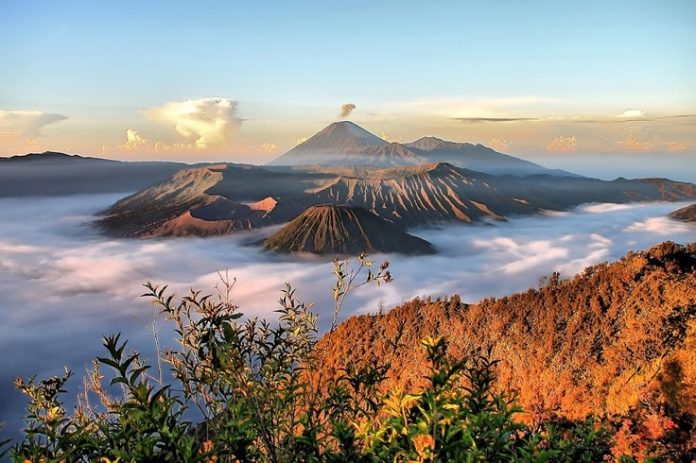

JAKARTA – East Java tourism 2025 is gaining momentum as a curated list of 15 must-visit destinations highlights the province’s diverse appeal, from iconic volcanoes like Mount Bromo to secluded beaches and remote islands, reinforcing its status as one of Indonesia’s top travel hotspots for domestic and international visitors.
The rising interest in East Java tourism 2025 reflects a broader trend in post-pandemic travel, where nature-based and experience-driven destinations dominate traveler preferences. The latest compilation showcases a mix of national parks, coastal escapes, and high-altitude landscapes that continue to attract adventurers and leisure tourists alike.
With destinations spread across Banyuwangi, Malang, Probolinggo, and Madura, East Java tourism 2025 offers a comprehensive travel ecosystem—combining biodiversity, cultural heritage, and unique geological phenomena.
National Parks and Natural Landscapes Lead the Appeal
At the core of East Java tourism 2025 are its protected landscapes and national parks, which serve as major attractions for eco-tourism.
Baluran National Park, spanning approximately 250 square kilometers across Situbondo and Banyuwangi, is known for its vast savanna ecosystem. The park is home to 44 plant species, 26 mammals, and 155 bird species, making it one of the most biodiverse areas in the region.
Further south, Alas Purwo National Park offers a contrasting environment with dense forests, beaches, and over 584 plant species. The park also features around 40 caves accessible to visitors, adding an element of exploration.
Meanwhile, Bromo Tengger Semeru National Park remains a flagship destination. The area includes Mount Semeru—the highest peak on Java at 3,676 meters above sea level—and Mount Bromo, famous for its volcanic landscape. The park hosts more than 1,000 flora species, including 158 types of orchids, 40 of which are considered rare.
“The attraction lies in the combination of mountains, savanna, and biodiversity,” the narrator notes, emphasizing the region’s ecological richness.
Beaches, Islands, and Unique Phenomena Attract Global Visitors
Coastal tourism plays a crucial role in East Java tourism 2025, with several beaches and islands gaining international recognition.
Red Island Beach (Pulau Merah) in Banyuwangi features a distinctive reddish hill rising about 200 meters above sea level, paired with a three-kilometer stretch of white sand. In Malang, the Three-Color Beach stands out for its visible red, green, and blue water zones, with strict visitor quotas and a two-hour limit imposed to protect its fragile ecosystem.
Another standout is Banyu Tibo Beach in Pacitan, where a freshwater waterfall flows directly into the ocean—an uncommon natural feature that allows visitors to bathe beneath cascading water along the الساحل.
Mount Ijen, located between Banyuwangi and Bondowoso, continues to draw global attention for its rare “blue fire” phenomenon, visible only under specific conditions. The site remains one of the few places in the world where such volcanic activity can be observed.
Offshore, Gili Ketapang near Probolinggo offers snorkeling opportunities, including sightings of clownfish, while Bawean Island—120 kilometers north of Gresik—features endemic wildlife such as the Bawean deer and multiple eco-tourism sites.
Emerging Destinations and Experiential Travel Trends
The evolution of East Java tourism 2025 also reflects a shift toward niche and experiential travel.
Gili Iyang in Sumenep has gained attention as the “oxygen island,” reportedly recording oxygen levels up to 21% above average, making it one of the cleanest air environments globally after Jordan. This claim has fueled curiosity among health-conscious travelers.
Highland destinations such as Wonosari Tea Plantation in Malang and Mount Welirang offer cooler climates and scenic landscapes. Welirang, standing at 3,156 meters, is also known for its sulfur mining activities, which remain part of the local economy.
For trekking enthusiasts, Ranu Kumbolo—located at 2,400 meters above sea level along the Mount Semeru hiking route—has become one of the most sought-after camping spots. Despite the physically demanding trek, the lake’s panoramic sunrise views continue to attract climbers.
“Even with the long and exhausting hike, the natural beauty keeps drawing people back,” the narrator says.
As East Java tourism 2025 continues to expand, the province reinforces its reputation as a destination where dramatic landscapes meet unique natural phenomena. With 15 standout locations spanning mountains, beaches, and islands, East Java offers a compelling invitation for travelers seeking both adventure and authenticity in Indonesia.