

RADAR TULUNGAGUNG – The Japanese occupation in Indonesia remains one of the darkest chapters in the nation’s history. Although it lasted only 3.5 years, the impact of the Japanese occupation in Indonesia left wounds far deeper than the centuries-long Dutch colonial rule.
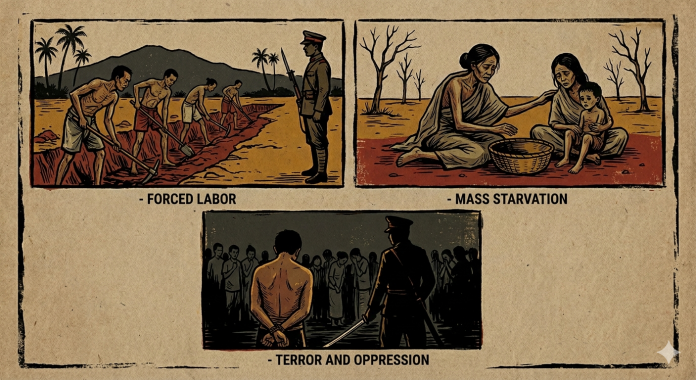
From the very beginning, the Japanese occupation in Indonesia was marked by brutality, exploitation, and widespread suffering. Millions of Indonesians were forced into unpaid labor, while food shortages and military terror turned daily life into a constant struggle for survival.
From “Liberators” to Oppressors
Japan initially arrived in Southeast Asia under the guise of being Asia’s “elder brother,” promising liberation from Western colonialism. However, this narrative quickly collapsed. After launching a surprise attack on Pearl Harbor in December 1941, Japan rapidly expanded its military campaign into Southeast Asia.
Within months, Japanese forces captured strategic oil-rich regions such as Tarakan, Balikpapan, and Palembang. By March 8, 1942, the Dutch colonial government officially surrendered in Kalijati, marking the beginning of full Japanese control over Indonesia.
Instead of freedom, Indonesians entered a new era of military dictatorship. The colonial system was replaced almost overnight by a strict and centralized Japanese regime that governed through fear and discipline.
Military Rule and Total Control
Under Japanese rule, Indonesia was divided into three military zones. The government imposed strict surveillance, forcing citizens to carry identification and limiting their movement between villages.
Village leaders were transformed into instruments of control, responsible for enforcing Japanese policies, collecting resources, and mobilizing labor. This system allowed Japan to dominate rural areas, where the majority of Indonesians lived.
The notorious military police, known as Kenpeitai, became symbols of terror. Arbitrary arrests, torture, and public executions were common, ensuring that resistance was crushed before it could grow.
Propaganda and Indoctrination
To maintain control, Japan launched an aggressive propaganda campaign. Schools were restructured, Dutch language banned, and Japanese culture promoted. Students were required to sing the Japanese national anthem and show respect to the emperor daily.
Mass media, including newspapers and radio, were strictly controlled to spread pro-Japanese narratives. Even traditional arts like wayang were used to promote loyalty to Japan.
Organizations such as Putera and later Jawa Hokokai were established to mobilize public support, often involving prominent Indonesian leaders. However, these efforts also unintentionally fostered nationalist sentiment among Indonesians.
Forced Labor and Economic Collapse
One of the most devastating aspects of the Japanese occupation in Indonesia was the forced labor system known as romusha. Millions of Indonesians were taken from their villages and forced to work on military infrastructure projects.
They labored under extreme conditions with minimal food, inadequate shelter, and no medical care. Many died from exhaustion, disease, or starvation. Projects like the Pekanbaru railway became infamous for their high death tolls.
At the same time, Japan exploited Indonesia’s natural resources. Farmers were required to surrender large portions of their harvest, leading to widespread famine. By 1943, severe food shortages caused mass starvation, particularly in densely populated regions like Java.
Jugun Ianfu and Human Rights Abuses
Beyond forced labor, thousands of Indonesian women were subjected to sexual slavery as “jugun ianfu” or comfort women. Many were deceived or forcibly taken from their homes and placed in military brothels.
These women endured unimaginable abuse, often serving multiple soldiers daily under harsh conditions. Many never returned home, while survivors carried lifelong trauma and social stigma.
Collapse of Japanese Power and Independence
By 1944, Japan’s position in World War II had weakened significantly. Military defeats and disrupted supply lines worsened conditions in Indonesia. In a desperate move, Japan promised future independence to gain local support.
This led to the formation of preparatory bodies such as BPUPKI and PPKI, which laid the groundwork for Indonesia’s independence.
Following the atomic bombings of Hiroshima and Nagasaki, Japan surrendered on August 15, 1945. The sudden power vacuum provided a crucial opportunity for Indonesian leaders.
Just two days later, on August 17, 1945, Indonesia declared its independence.
A Painful Legacy
The Japanese occupation in Indonesia left a complex legacy. While it brought immense suffering, through forced labor, famine, and violence, it also accelerated nationalist unity and military preparedness.
Former members of Japanese-trained organizations later became key figures in Indonesia’s independence struggle. However, the human cost was staggering, with millions affected by the occupation.
Even today, the memory of those 3.5 years serves as a reminder that independence was not granted, it was fought for, at an immense human price.