
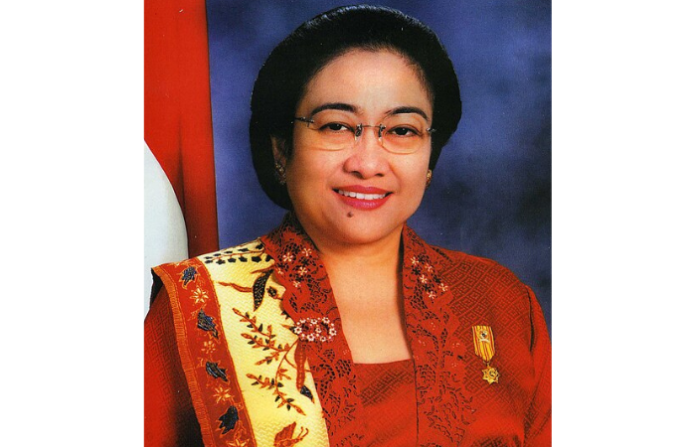

RADAR TULUNGAGUNG – The story of Megawati Soekarnoputri biography remains one of the most compelling political journeys in Indonesia’s modern history. From being the daughter of founding father Soekarno to becoming the country’s first female president, her path was shaped by turmoil, resilience, and controversy.
Born on January 23, 1947, in Yogyakarta, Megawati, whose full name is Diah Permata Megawati Setiawati Soekarnoputri, grew up in the Merdeka Palace. As the second child of President Soekarno and Fatmawati, she experienced a childhood surrounded by state affairs, yet her mother instilled values of simplicity, discipline, and empathy.
The Megawati Soekarnoputri biography also highlights her early exposure to leadership and public life. Known as an active and charismatic student, she attended schools in Jakarta but could not complete her university education due to political instability following the 1965 upheaval.
Early Struggles and Personal Loss
Megawati’s life took a dramatic turn in her early 20s. She married Indonesian Air Force pilot Surindro Supjarso in 1968, but tragedy struck when he went missing during a flight mission in 1970. At just 23, she became a single mother of two.
In the same year, she lost her father, President Soekarno. These back-to-back losses forced her to pause her studies again and focus on raising her family. Despite these setbacks, she remained engaged in political discussions, quietly preserving her father’s nationalist ideals.
Her second marriage to Taufik Kiemas in 1973 marked a more stable phase in her personal life. While primarily a homemaker, Megawati continued to build her political awareness through informal networks and discussions.
Rise in Politics and Clash with the New Order
The turning point in the Megawati Soekarnoputri biography came in the late 1980s when she joined the Indonesian Democratic Party (PDI). Leveraging her father’s legacy, she quickly gained public support, especially among those disillusioned with President Soeharto’s New Order regime.
In 1993, Megawati was elected chairwoman of PDI, transforming the party into a symbol of resistance. However, her growing influence alarmed the government. A rival congress in 1996 reinstated Suryadi as party leader, triggering a major conflict.
This political tension culminated in the July 27, 1996 riot, known as Kudatuli. The violent clash at the PDI headquarters in Jakarta resulted in at least five deaths, hundreds injured, and 23 people reported missing, including activist Wiji Thukul. The incident became one of the darkest human rights violations of the era.
Despite losing legal battles against the government, Megawati’s popularity surged, positioning her as a key opposition figure during the Reformasi movement.
Becoming Indonesia’s First Female President
Following the fall of Soeharto in 1998, Megawati rebranded her party into PDI Perjuangan (PDIP). In the 1999 general election, PDIP won the largest share of votes, securing 33 percent.
However, the presidency went to Abdurrahman Wahid (Gus Dur), while Megawati became vice president. In 2001, after Wahid’s impeachment, she officially assumed office, making history as Indonesia’s first female president.
During her presidency, she introduced significant reforms. These included the establishment of the Corruption Eradication Commission (KPK) and the implementation of direct presidential elections. She also pushed for the separation of the military and police, strengthening democratic institutions.
Policies, Controversies, and Legacy
The Megawati Soekarnoputri biography cannot be separated from controversies. Her administration faced criticism for slow responses to regional conflicts in Maluku and Poso, as well as her decision to sell shares of state-owned telecom company Indosat.
Her economic policies, including ending cooperation with the International Monetary Fund (IMF), sparked debate. While critics warned of risks, Indonesia’s macroeconomic indicators showed improvement, with lower inflation and stronger currency performance.
Another contentious issue was the loss of Sipadan and Ligitan islands to Malaysia. Although the International Court of Justice ruled against Indonesia in 2002, the dispute predated her presidency.
Megawati also faced backlash over fuel price hikes and allegations of nepotism involving close family members. Despite these challenges, she completed her term in 2004.
After losing the 2004 and 2009 presidential elections, Megawati remained a dominant political figure. As chairwoman of PDIP, she played a crucial role in the rise of Joko Widodo, who won the presidency in 2014 and 2019.