
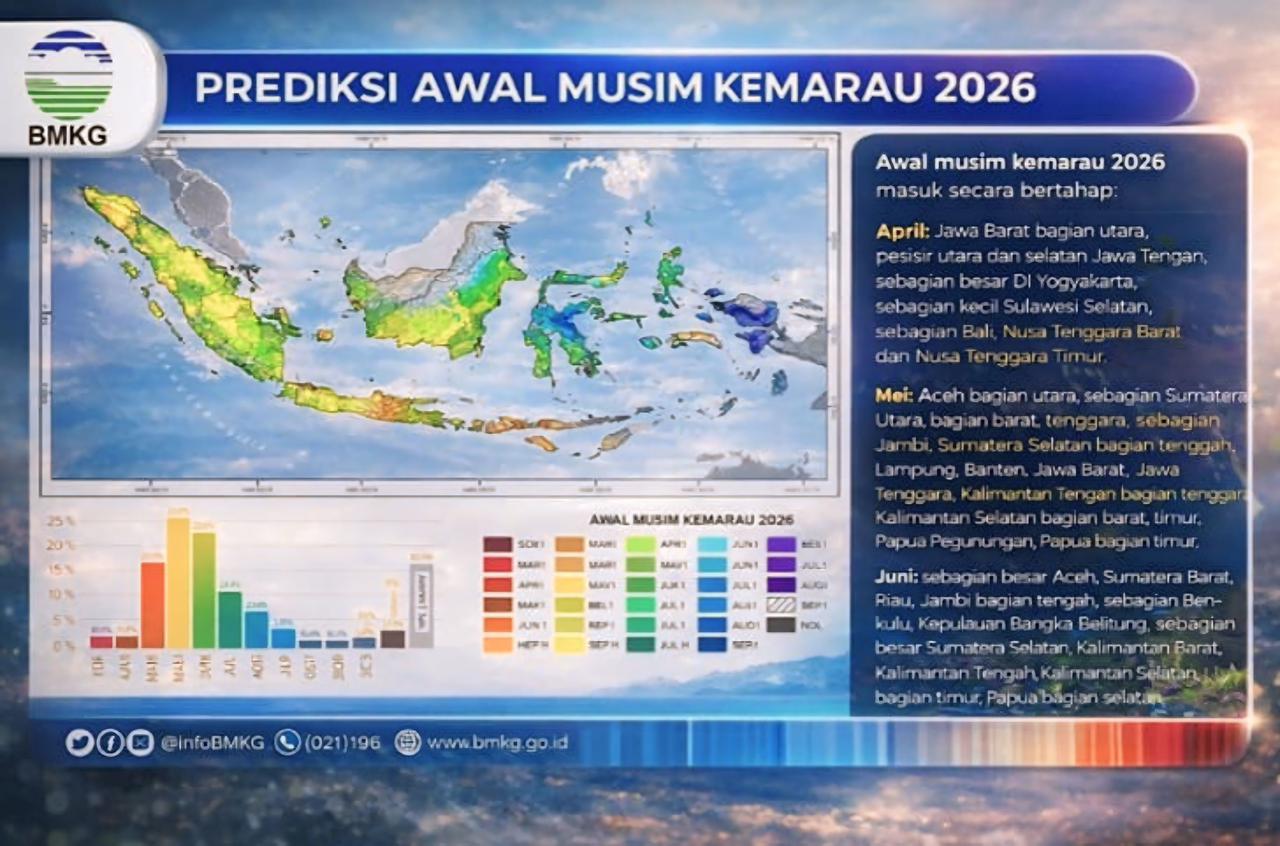

RADAR TULUNGAGUNG – The 2026 dry season will arrive earlier, last longer, and bring drier conditions across much of Indonesia, according to the Meteorology, Climatology, and Geophysics Agency (BMKG). The agency confirmed that 325 seasonal zones, or 46.5 percent of all climate zones nationwide, will enter the 2026 dry season sooner than usual.
BMKG also confirmed that La Nina officially ended in February, clearing the way for a transition toward a more dominant dry pattern this year. With La Nina no longer influencing rainfall intensity, the 2026 dry season is expected to develop more quickly and expand across regions in stages.
Head of BMKG, Dwikorita Karnawati, through climatology officials, explained that Indonesia will not only face an earlier onset but also a prolonged dry period. Authorities urge local governments and communities to anticipate the potential impacts, particularly in agriculture, water management, and disaster mitigation.
BMKG recorded that 325 out of Indonesia’s total seasonal zones will experience an earlier start to the dry season. Meanwhile, 173 zones will see the dry season begin at roughly the same time as last year.
This shift means nearly half of Indonesia’s climate zones must prepare for drought conditions sooner than usual. An earlier onset naturally extends the duration of dry weather, especially in regions that typically rely on steady rainfall patterns.
Climatology officials stressed that this year’s dry season may also bring below-normal rainfall in several areas. Lower precipitation levels could intensify dryness and increase the risk of water shortages during peak months.
BMKG outlined the movement pattern of the 2026 dry season. The transition will begin in the Nusa Tenggara region before gradually spreading westward and then expanding to other parts of Indonesia.
Historically, eastern Indonesia often enters the dry season first. However, the projected acceleration this year means provinces in Nusa Tenggara must prepare earlier for reduced rainfall and hotter temperatures.
After affecting Nusa Tenggara, dry conditions will move toward Java, Bali, and parts of Sumatra and Kalimantan. The gradual westward shift follows Indonesia’s typical monsoonal wind patterns, but the timing will advance compared to the climatological average.
BMKG projects that the peak of the dry season will occur around mid-year to August 2026, when rainfall reaches its lowest levels in most affected regions.
BMKG confirmed that La Nina ended in February 2026. During La Nina, Indonesia typically experiences above-normal rainfall due to cooler sea surface temperatures in the Pacific Ocean.
The end of La Nina signals a significant shift in atmospheric circulation. Without the additional rainfall boost from La Nina, Indonesia will likely experience more stable but drier weather patterns in the coming months.
Climate experts note that while La Nina’s departure reduces the likelihood of extreme rainfall, it increases the probability of prolonged dry spells. This transition often reshapes planting cycles, reservoir management, and wildfire risk levels.
The longer and earlier dry season poses challenges for farmers across Indonesia. Agricultural producers who depend on rainfall must adjust planting calendars and irrigation strategies to prevent crop failure.
Local governments may also need to strengthen water resource management systems. Reservoir levels, groundwater supplies, and irrigation networks require close monitoring, especially in densely populated and agricultural regions.
In addition, prolonged dry conditions increase the risk of forest and land fires. Regions with peatlands remain particularly vulnerable during extended drought periods. Authorities must intensify prevention efforts and early detection systems to minimize potential damage.
BMKG encourages stakeholders to treat the forecast as an early warning. With the 2026 dry season approaching faster than usual, proactive measures can reduce economic losses and environmental impact.
Nearly half of Indonesia’s seasonal zones will face an accelerated dry transition this year. The earlier onset gives policymakers, farmers, and communities a limited but crucial window to prepare.
BMKG urges regional governments to promote water conservation, optimize irrigation, and strengthen disaster mitigation programs. Communities can also contribute by managing water use more efficiently during the transition period.
As Indonesia moves past La Nina and enters a longer dry cycle, coordinated action becomes essential. The 2026 dry season will test preparedness at both local and national levels.
With 46.5 percent of climate zones entering drought earlier and the peak expected around August, Indonesia must act now to safeguard food security, water supply, and environmental stability.