
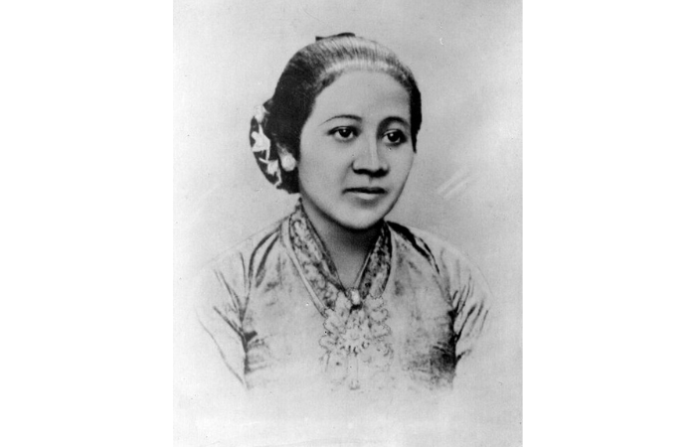

RADAR TULUNGAGUNG – RA Kartini, one of Indonesia’s most influential national heroines, transformed the conversation around women’s rights and education during the Dutch colonial era. Although she died at just 25 years old, Kartini’s ideas on equality, education, and social progress continue to shape Indonesian society more than a century later.
Born into a Javanese aristocratic family in Jepara, Central Java, on April 21, 1879, RA Kartini witnessed firsthand the social restrictions imposed on women under both colonial rule and traditional customs. Her experiences inspired a lifelong struggle to expand educational opportunities for indigenous women.
Today, her legacy is commemorated annually on April 21 through Kartini Day, a national observance that honors her contributions to women’s emancipation and Indonesia’s intellectual awakening.
Early Life Shaped by Social Inequality
RA Kartini, whose full name was Raden Adjeng Kartini, was the daughter of Raden Mas Adipati Ario Sosroningrat, the Regent of Jepara. Despite her noble background, she grew up in a society where women faced severe limitations on education and personal freedom.
Kartini attended the Europeesche Lagere School (ELS), a Dutch primary school that provided her with access to Western education and the Dutch language. However, like many aristocratic Javanese girls of her era, she was required to enter a period of seclusion known as pingitan after the age of 12, forcing her to leave formal education.
During her years in seclusion, Kartini continued learning independently. She read European books, newspapers, and magazines and corresponded extensively with Dutch friends, including Rosa Abendanon-Mandri and Estelle Zeehandelaar. These exchanges exposed her to progressive ideas about democracy, human rights, and women’s equality.
In her letters, Kartini repeatedly criticized traditions that restricted women’s opportunities. She questioned practices such as forced marriage, limited access to education, and polygamy, arguing that women deserved the same intellectual development as men.
Building a Movement Through Education and Writing
Kartini’s advocacy extended beyond personal correspondence. Determined to improve the lives of indigenous women, she established educational initiatives aimed at teaching literacy, practical skills, and self-development.
In 1903, Kartini married Raden Adipati Joyodiningrat, the Regent of Rembang. Historical records indicate that her husband supported her educational ambitions and allowed her to continue promoting women’s education after marriage.
Soon after moving to Rembang, Kartini founded a school for girls, creating one of the earliest organized efforts to expand educational access for women in Java. The initiative reflected her belief that education served as the foundation for social advancement and independence.
Her written correspondence also gained attention among Dutch intellectuals and policymakers. Through her letters, Kartini articulated a vision of a society where women could pursue knowledge, participate in public life, and contribute to national progress.
On September 13, 1904, Kartini gave birth to her only son, Soesalit Djojoadhiningrat. Four days later, on September 17, 1904, she died at the age of 25. Historians generally attribute her death to complications following childbirth, although speculation and alternative theories have appeared in later publications without conclusive evidence.
Letters That Changed Indonesian History
Kartini’s influence expanded significantly after her death. In 1911, Dutch official and educator J.H. Abendanon compiled and published her correspondence under the title Door Duisternis tot Licht (“Through Darkness to Light”).
The collection later became widely known in Indonesia as Habis Gelap Terbitlah Terang (“Out of Darkness Comes Light”). The book introduced generations of readers to Kartini’s ideas about education, social justice, humanitarian values, and women’s empowerment.
Her writings also helped inspire supporters of the Dutch Ethical Policy, which promoted expanded educational opportunities for indigenous Indonesians during the early twentieth century.
Kartini’s legacy continued to grow through the establishment of Kartini Schools in several Indonesian cities, including Semarang, Surabaya, Yogyakarta, Malang, Madiun, and Cirebon. These institutions sought to advance the educational ideals she championed throughout her life.
The Indonesian government formally recognized her national importance when President Sukarno issued Presidential Decree No. 108 of 1964, naming Kartini a National Independence Hero and designating April 21 as Kartini Day.
RA Kartini’s life was brief, but her vision transformed Indonesia’s understanding of women’s rights, education, and social equality. More than a century after her death, her message remains a powerful reminder that education can become a catalyst for national progress and lasting social change.