
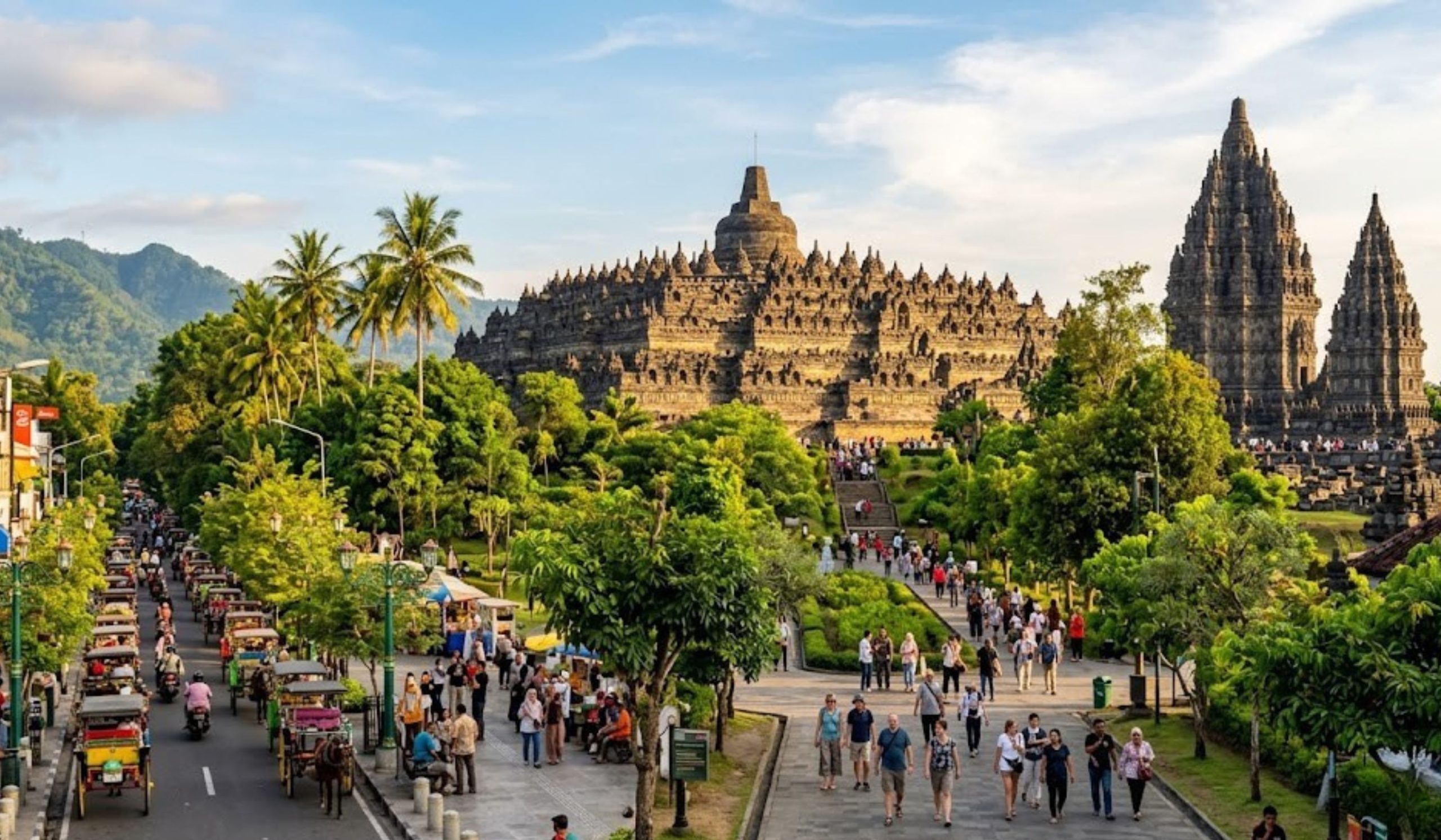

YOGYAKARTA – Malioboro and Gunung Kidul are leading a new tourism surge across Yogyakarta as travelers increasingly seek affordable destinations offering scenic views, viral photo spots, and authentic local experiences. Tourism operators say the combination of low-cost entertainment and social media exposure continues driving visitor growth in 2026.
Malioboro and Gunung Kidul Become Tourism Hotspots
Yogyakarta’s tourism landscape is expanding rapidly, but two regions continue dominating visitor interest: Malioboro in central Yogyakarta and Gunung Kidul along the southern coast.
Malioboro remains the city’s most iconic tourism corridor, attracting visitors day and night with street performances, culinary stalls, traditional markets, and shopping districts.
Tourists can purchase batik products, handmade souvenirs, and local foods while enjoying live music and cultural attractions throughout the pedestrian-friendly area.
Photography businesses have also flourished in Malioboro. Street photographers now provide quick portrait services starting at Rp5,000, while premium packages featuring traditional Javanese costumes cost approximately Rp165,000 per session.
The nearby Titik Nol Kilometer and Benteng Vredeburg areas continue serving as major gathering points for tourists exploring Yogyakarta’s cultural district.
Gunung Kidul Expands Beyond Beach Tourism
While Gunung Kidul has long been famous for its beaches, tourism operators are now introducing modern recreational concepts to attract wider audiences.
HeHa Ocean View remains among the most visited attractions, combining cliffside restaurants, aesthetic installations, live music, and sunset viewing areas overlooking the Indian Ocean.
The attraction’s Bali-inspired atmosphere has made it especially popular among younger visitors and couples seeking romantic vacation spots.
Another destination gaining strong traction is Puncak Segoro, which offers panoramic sea views from limestone cliffs. The site includes cafes, gondola transportation, villas, and premium viewing platforms.
Tourists purchasing all-inclusive tickets priced at Rp100,000 can access multiple facilities, including transportation services and restaurant vouchers.
Meanwhile, Drini Park and Gesing Wonderland are targeting family tourism through amusement rides, cafes, and scenic photography locations positioned near coastal cliffs.
Several attractions now provide complete tourism ecosystems, including food courts, souvenir shops, prayer rooms, and overnight accommodations.
Nature and Culinary Tourism Continue Growing
Beyond modern attractions, Yogyakarta’s natural tourism sector remains highly competitive.
Sri Gethuk Waterfall in Gunung Kidul continues attracting visitors looking for outdoor experiences. Entrance tickets cost Rp15,000 and include access to Goa Rancang Kencana, a cave tourism site featuring limestone formations and underground scenery.
Tourists can reach the waterfall by bamboo raft along the Oyo River for an additional Rp10,000 round trip.
The waterfall itself stands approximately 25 meters high and is surrounded by cliffs and dense vegetation, creating a peaceful atmosphere for nature tourism.
Culinary tourism also plays a major role in Yogyakarta’s visitor economy. Pasar Ngasem has become a favorite destination for travelers seeking traditional snacks and breakfast dishes, while Pantai Ngrenehan attracts seafood lovers through fresh fish markets and beachfront dining.
At Pantai Ngrenehan, tourists can watch fishing boats return from the sea before selecting fresh seafood prepared directly at local restaurants.
Affordable Tourism Strengthens Regional Economy
Industry observers say affordability remains one of Yogyakarta’s strongest tourism advantages.
Many destinations offer entrance fees between Rp10,000 and Rp50,000, making them highly accessible for students, families, and domestic tourists.
Local businesses are also benefiting from increased visitor numbers. Coastal tourism areas now support seafood vendors, transportation providers, photographers, accommodation owners, and souvenir sellers.
Tourism operators increasingly combine cultural identity with modern entertainment concepts to maintain competitiveness in Indonesia’s domestic travel market.
As visitors continue prioritizing budget-friendly destinations with strong visual appeal, Malioboro and Gunung Kidul are expected to remain among Indonesia’s most influential tourism regions throughout 2026.