
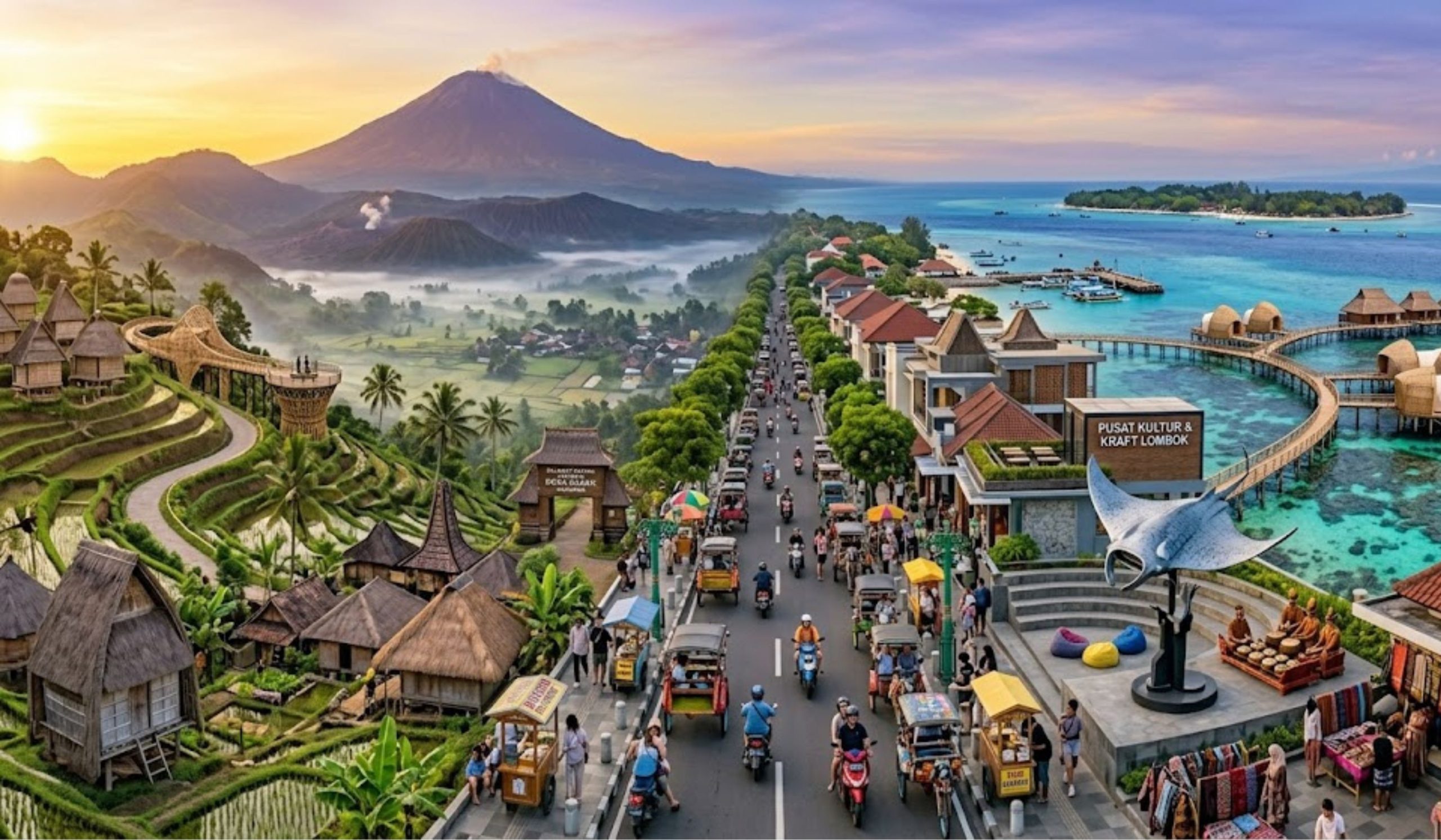

JAKARTA – Lombok is rapidly emerging as one of Indonesia’s hottest travel destinations in 2026 as tourists increasingly search for quieter tropical escapes beyond Bali. The island’s hidden beaches, dramatic hills, waterfalls, and traditional villages are drawing travelers looking for authentic experiences, natural beauty, and less crowded attractions.
Tourism activity across Lombok has intensified throughout 2025 and early 2026, especially in areas such as Mandalika, North Lombok, and Central Lombok. Improved infrastructure and easier transportation access have helped boost visitor numbers to both famous landmarks and newly viral destinations.
Among the most visited attractions are Mount Rinjani, Gili Trawangan, Tanjung Aan Beach, Merese Hill, and several cultural villages that preserve the traditions of the Sasak people.
Mount Rinjani and Gili Trawangan Continue to Dominate Tourist Interest
Mount Rinjani remains Lombok’s biggest natural attraction and one of the most iconic volcano trekking destinations in Southeast Asia. Rising 3,726 meters above sea level, the volcano offers panoramic views, crater lakes, natural hot springs, and rugged hiking trails that attract adventure seekers from around the world.
The mountain is located inside Mount Rinjani National Park, which spans East Lombok, North Lombok, and Central Lombok. Trekking routes are commonly accessed from Sembalun and Senaru villages.
Domestic tourists pay entrance fees ranging from Rp20,000 to Rp30,000, while international visitors are charged around Rp150,000 per day. Despite the challenging climb, tourism operators say demand for trekking packages continues to increase in 2026.
Another destination consistently attracting travelers is Gili Trawangan, a small island northwest of Lombok famous for its crystal-clear sea, snorkeling spots, and relaxed tropical atmosphere.
Unlike many tourist islands in Southeast Asia, Gili Trawangan prohibits motorized vehicles. Visitors explore the island using bicycles or traditional horse carts known as cidomo.
Boat tickets from Bangsal Harbor cost approximately Rp20,000 to Rp25,000, while fast boat services from Bali start from Rp250,000. Snorkeling equipment rentals typically range between Rp50,000 and Rp100,000.
The island is especially popular among honeymooners, divers, and tourists seeking beach nightlife combined with quieter island scenery.
Mandalika and Scenic Beaches Push Lombok Tourism Forward
The Mandalika area in Central Lombok continues to transform into one of Indonesia’s premier tourism hubs. Known internationally for hosting MotoGP events, Mandalika also offers a combination of beaches, cultural attractions, and panoramic coastal landscapes.
Kuta Mandalika Beach has become a favorite destination because of its soft white sand that resembles grains of pepper. Nearby beaches such as Tanjung Aan are also attracting visitors searching for calmer waters and cleaner coastlines.
Tourists can swim, snorkel, or simply relax while enjoying the turquoise sea and surrounding green hills. Entrance fees to several beaches in the area range between Rp10,000 and Rp15,000.
Merese Hill, located near Tanjung Aan, has also gained popularity on social media because of its sweeping 360-degree ocean views. Visitors only need a short 10 to 15-minute walk from the parking area to reach the top.
Meanwhile, Selong Belanak Beach has become one of Lombok’s fastest-growing surf tourism spots. The beach offers beginner-friendly waves on one side and larger surf breaks for experienced surfers on the other.
Surfboard rental services generally cost Rp50,000 to Rp100,000 per hour, making the area attractive for both local and international surfing enthusiasts.
Waterfalls and Sasak Villages Offer Authentic Experiences
Beyond beaches and hills, Lombok’s waterfalls continue to attract eco-tourists and photographers. Benang Kelambu Waterfall in Central Lombok is famous for its flowing curtain-like streams cascading over green cliffs.
The waterfall area features natural pools suitable for swimming and relaxing. Entrance tickets range from Rp10,000 to Rp15,000 for domestic travelers.
Another highly visited destination is Tiu Kelep Waterfall in North Lombok. Surrounded by tropical forest, the waterfall requires visitors to trek approximately 45 minutes through rivers and jungle trails before reaching the site.
Tourists often combine visits to Tiu Kelep and Sendang Gile waterfalls because of their close proximity near Mount Rinjani.
Cultural tourism is also becoming a major attraction in Lombok. Traditional Sasak villages such as Desa Sade and Sukarara Village provide opportunities for visitors to learn about weaving traditions, local customs, and indigenous architecture.
Tourists can watch weaving demonstrations, purchase handmade fabrics, and wear traditional Sasak clothing for photographs.
Local tourism communities believe Lombok’s growing popularity reflects a broader shift among travelers who now prioritize authentic cultural experiences and natural destinations over crowded urban tourism.
With its mix of volcanoes, tropical islands, hidden beaches, waterfalls, and living cultural heritage, Lombok is increasingly positioning itself as one of Indonesia’s most complete tourism destinations in 2026.