
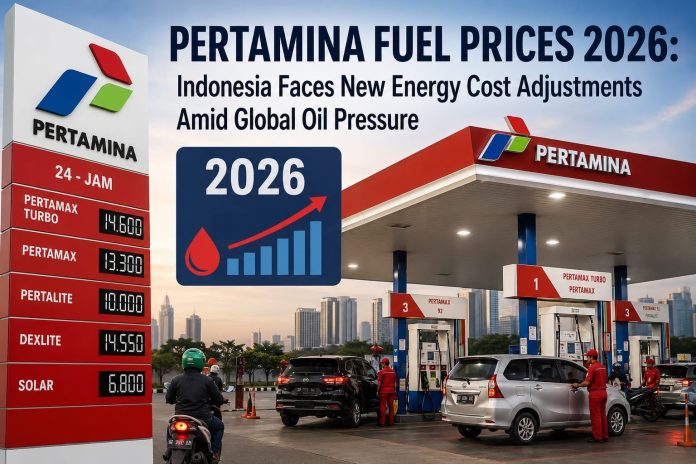

JAKARTA — Indonesia’s state-owned energy company Pertamina is expected to become a major focus of public attention in 2026 as discussions surrounding Pertamina fuel prices 2026 continue to intensify amid fluctuating global crude oil markets and domestic economic pressures.
Fuel price adjustments remain one of the most sensitive economic issues in Indonesia, particularly as transportation, logistics, and household spending are heavily influenced by energy costs. Analysts believe the government and Pertamina will continue balancing public purchasing power with rising global energy prices throughout 2026.
The topic of Pertamina fuel prices 2026 has also gained strong traction online, with many consumers monitoring potential changes to subsidized and non-subsidized fuel products. Concerns are growing that international oil volatility and currency fluctuations could push retail fuel prices higher in the coming months.
Global crude oil prices have remained unstable due to geopolitical tensions, supply chain disruptions, and production policies from major oil-producing countries. Economic observers say these conditions directly affect fuel procurement costs in countries heavily dependent on imported crude and refined petroleum products.
Indonesia, Southeast Asia’s largest economy, continues to rely on fuel subsidies to maintain social stability and control inflation. However, maintaining subsidies also places significant pressure on the state budget, especially when global oil prices rise sharply.
Industry experts note that Pertamina’s pricing policies are closely tied to several key indicators, including global crude benchmarks, the rupiah exchange rate against the US dollar, and domestic energy subsidy allocations approved by the government.
Over the past few years, Indonesian consumers have become increasingly sensitive to fuel price adjustments as transportation and food distribution costs typically rise shortly after fuel hikes are announced. Economists warn that higher fuel prices could contribute to broader inflationary pressures across multiple sectors.
Meanwhile, the Indonesian government continues encouraging energy diversification and electric vehicle adoption to reduce long-term dependence on fossil fuels. Several initiatives aimed at accelerating the transition toward cleaner energy are expected to continue throughout 2026.
Despite concerns over possible increases, officials have repeatedly emphasized the importance of maintaining energy affordability for lower-income communities. Subsidized fuel programs are expected to remain a key component of Indonesia’s economic protection strategy.
Public transportation operators, logistics businesses, and ride-hailing drivers are among the sectors most closely monitoring developments related to Pertamina fuel prices. Any significant adjustment could directly impact operational expenses and consumer prices nationwide.
Energy market analysts also predict that global demand recovery, particularly from Asian economies, may influence oil price movements in 2026. If crude prices remain elevated, governments across the region could face difficult decisions regarding subsidies and retail fuel pricing.
For consumers, the uncertainty surrounding fuel prices has increased interest in fuel-efficient vehicles and alternative transportation options. Hybrid and electric vehicle markets in Indonesia have shown gradual growth as consumers seek ways to reduce fuel dependency.
As 2026 progresses, Pertamina and Indonesian policymakers are expected to continue evaluating market conditions before implementing any major pricing decisions. Observers believe transparency and effective public communication will be critical in maintaining consumer confidence amid ongoing economic uncertainty.