
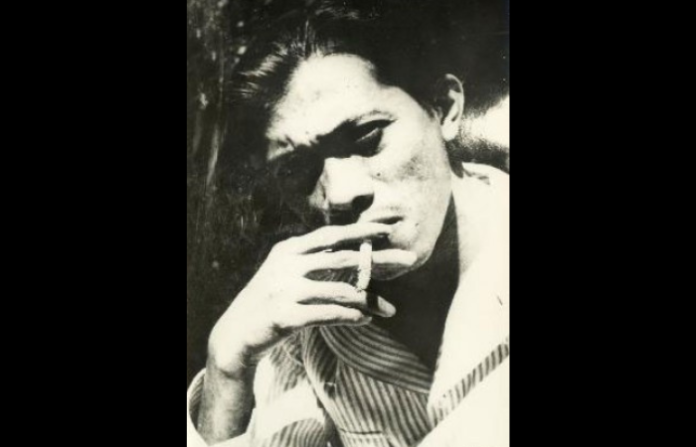

RADAR TULUNGAGUNG – Chairil Anwar remains one of the most influential figures in Indonesian literary history, despite dying at just 26 years old. Through groundbreaking poetry, a fiercely independent spirit, and a revolutionary writing style, Chairil Anwar transformed modern Indonesian literature and became the defining voice of a generation living through war, occupation, and the struggle for independence.
More than seven decades after his death, his poems continue to be read, studied, and recited across Indonesia. His famous declaration, “Aku mau hidup seribu tahun lagi” (“I want to live another thousand years”), has become one of the most enduring lines in Indonesian literature and a symbol of his lasting cultural influence.
Emerging during the final years of Dutch colonial rule, the Japanese occupation, and Indonesia’s fight for independence, Chairil introduced a new literary voice that challenged convention and inspired generations of writers who followed.
Chairil Anwar Became the Defining Voice of the Generation of 45
Born on July 26, 1922, in Medan, North Sumatra, Chairil Anwar grew up in a respected family. His childhood, however, was marked by tension between his parents, who later divorced. Following the separation, he moved to Jakarta with his mother, Saleha, where financial difficulties disrupted his formal education.
Although he never completed higher education, Chairil developed an extraordinary passion for reading. He immersed himself in Indonesian, Dutch, English, and world literature, building a broad intellectual foundation through self-study. His extensive reading later enabled him to translate and adapt works by prominent international writers while refining his own literary style.
Chairil began attracting attention in Jakarta’s literary circles around 1943. At a time when many writers worked within cultural institutions established during the Japanese occupation, he distinguished himself by prioritizing artistic freedom and personal expression. Rather than producing literature for propaganda purposes, he explored themes of identity, freedom, mortality, and human struggle.
His breakthrough poem, Aku (“Me”), became a landmark in Indonesian literature. Its bold individualism and direct language represented a sharp departure from established literary traditions and helped define the spirit of the Generation of 45.
Revolutionary Poetry Transformed Modern Indonesian Literature
Chairil Anwar’s greatest contribution was his role in modernizing Indonesian poetry. Before his emergence, many poems followed traditional forms such as pantun, syair, and gurindam. Chairil challenged these conventions by emphasizing meaning, emotion, and personal experience over rigid structure.
His poetry introduced concise language, vivid imagery, and powerful emotional intensity. Literary scholars widely regard him as a pioneer who expanded the expressive possibilities of the Indonesian language and opened the door for modern poetic experimentation.
During a literary career that lasted only about seven years, Chairil produced around 70 original poems in addition to numerous translations and adaptations. Among his most celebrated works are Aku, Doa, Diponegoro, Karawang-Bekasi, and Derai-Derai Cemara.
His writings reflected both personal experiences and broader national aspirations. Themes of love, loneliness, nationalism, faith, and resistance appeared repeatedly throughout his work, resonating with readers during a period of profound social and political change.
A Brief Life That Created a Lasting Legacy
Chairil’s personal life was often turbulent. He married Hafsah Wiraredja on September 6, 1946, and the couple had a daughter, Eva Wani Alissa. Economic hardship and personal differences eventually led to their separation in 1948.
In his final years, Chairil faced declining health while continuing to write and engage with Jakarta’s literary community. He was hospitalized in April 1949 and died on April 28, 1949, at the age of 26. His death shocked fellow writers and intellectuals, many of whom recognized his extraordinary contribution to Indonesian culture.
He was buried at Karet Public Cemetery in Jakarta. Among those attending his funeral was his uncle, former Indonesian Prime Minister Sutan Sjahrir.
Ironically, Chairil did not live long enough to witness the full impact of his literary achievements. His landmark collection, Deru Campur Debu, was published in 1949 shortly after his death, helping secure his place as one of Indonesia’s greatest poets.
Today, Chairil Anwar remains a towering figure in Indonesian literature. His works continue to inspire readers, students, scholars, and writers across generations. While his life was tragically short, his poetry achieved what he once imagined through verse: a form of immortality that transcends time, ensuring that his voice continues to be heard long after his passing.