
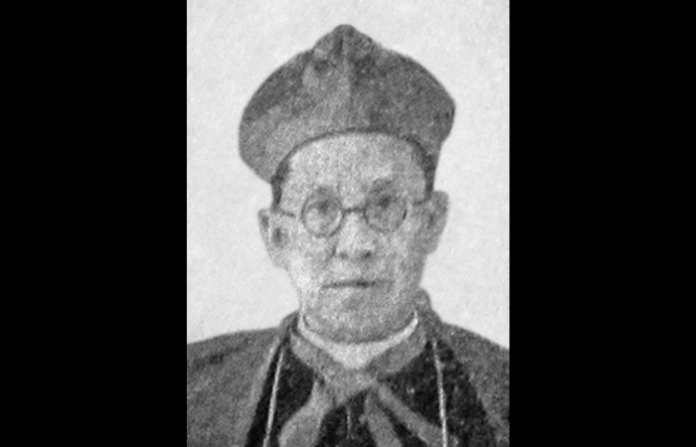

RADAR TULUNGAGUNG – Albertus Soegijapranata, Indonesia’s first indigenous Catholic bishop, played a pivotal role in supporting the country’s struggle for independence and promoting national unity during some of the nation’s most turbulent years. Remembered for his enduring message of “100% Catholic, 100% Indonesian,” he became one of the most influential religious figures in the Indonesian Revolution.
As both a church leader and a committed nationalist, Albertus Soegijapranata used his position to mobilize support for the newly proclaimed Republic of Indonesia following independence on August 17, 1945. His efforts extended beyond religious leadership, encompassing humanitarian work, diplomacy, and mediation during armed conflicts.
His legacy continues to resonate across Indonesia, where he is honored as a National Hero for helping bridge faith, nationalism, and social responsibility during the country’s formative years.
The Rise of Indonesia’s First Indigenous Catholic Bishop
Born as Soegija in Surakarta, Central Java, on November 25, 1896, he came from a Javanese family and spent much of his childhood in Yogyakarta. After studying at the Jesuit-run Xaverius College in Muntilan, he converted to Catholicism and was baptized on December 24, 1910, taking the baptismal name Albertus.
He later pursued priesthood studies in the Netherlands, where he studied philosophy and theology before Church authorities ordained him a priest on August 15, 1931. Upon returning to the Dutch East Indies, he served in several pastoral roles before Pope Pius XII appointed him Apostolic Vicar of Semarang on August 1, 1940.
The appointment marked a historic milestone. Soegijapranata became the first indigenous Catholic bishop in the archipelago at a time when the Catholic hierarchy remained largely dominated by Europeans.
During the Japanese occupation beginning in 1942, he defended church properties and protected Catholic communities. Historical accounts describe his firm opposition to Japanese military attempts to seize church buildings, demonstrating his willingness to confront authorities despite significant risks.
Supporting Indonesia’s Independence and International Recognition
Following Indonesia’s declaration of independence in 1945, Soegijapranata quickly aligned himself with the Republican cause. He encouraged Catholics to participate actively in defending the new nation and opened church facilities to shelter civilians displaced by conflict.
One of his most significant contributions came during the Five-Day Battle of Semarang in October 1945. Acting as a mediator, he helped facilitate negotiations that contributed to a ceasefire between Indonesian fighters, Japanese forces, and Allied representatives, reducing the risk of further bloodshed.
In 1946, when the Republican government relocated from Jakarta to Yogyakarta, Soegijapranata moved there as well. The decision reflected his solidarity with the Republic and strengthened his role as a national figure.
He also leveraged his connections with the Holy See to advocate for international recognition of Indonesian sovereignty. His diplomatic efforts contributed to the Vatican’s recognition of Indonesia in 1947. The Holy See became one of the earliest international actors in the Western world to formally acknowledge the Republic, providing important diplomatic support during a critical stage of the independence struggle.
Championing Unity, Social Reform, and Indonesian Catholic Identity
After sovereignty was formally recognized in 1949, Soegijapranata focused on strengthening the role of Catholics within Indonesian society. He promoted civic engagement, encouraged participation in nation-building, and emphasized national unity during periods of political tension.
Throughout the 1950s, he advocated social initiatives designed to support workers, farmers, and community development. He also warned against ideological extremism and argued that Indonesia should remain faithful to the principles of Pancasila while safeguarding social justice.
Within the Church, Soegijapranata pioneered efforts to integrate Indonesian culture into Catholic worship. Long before reforms associated with the Second Vatican Council became widespread, he encouraged the use of local languages, including Javanese, in religious services. He also supported the use of gamelan music and traditional wayang performances as educational tools for communicating biblical teachings.
His vision helped shape a distinctly Indonesian Catholic identity that remained connected to local culture while maintaining universal Catholic values.
Albertus Soegijapranata died in Steyl, the Netherlands, on July 22, 1963, while preparing to participate in the Second Vatican Council. Four days later, President Soekarno declared him a National Hero of Indonesia through Presidential Decree No. 152 of 1963. Today, his message remains a powerful reminder that religious faith and national loyalty can stand side by side in service of a united Indonesia.