
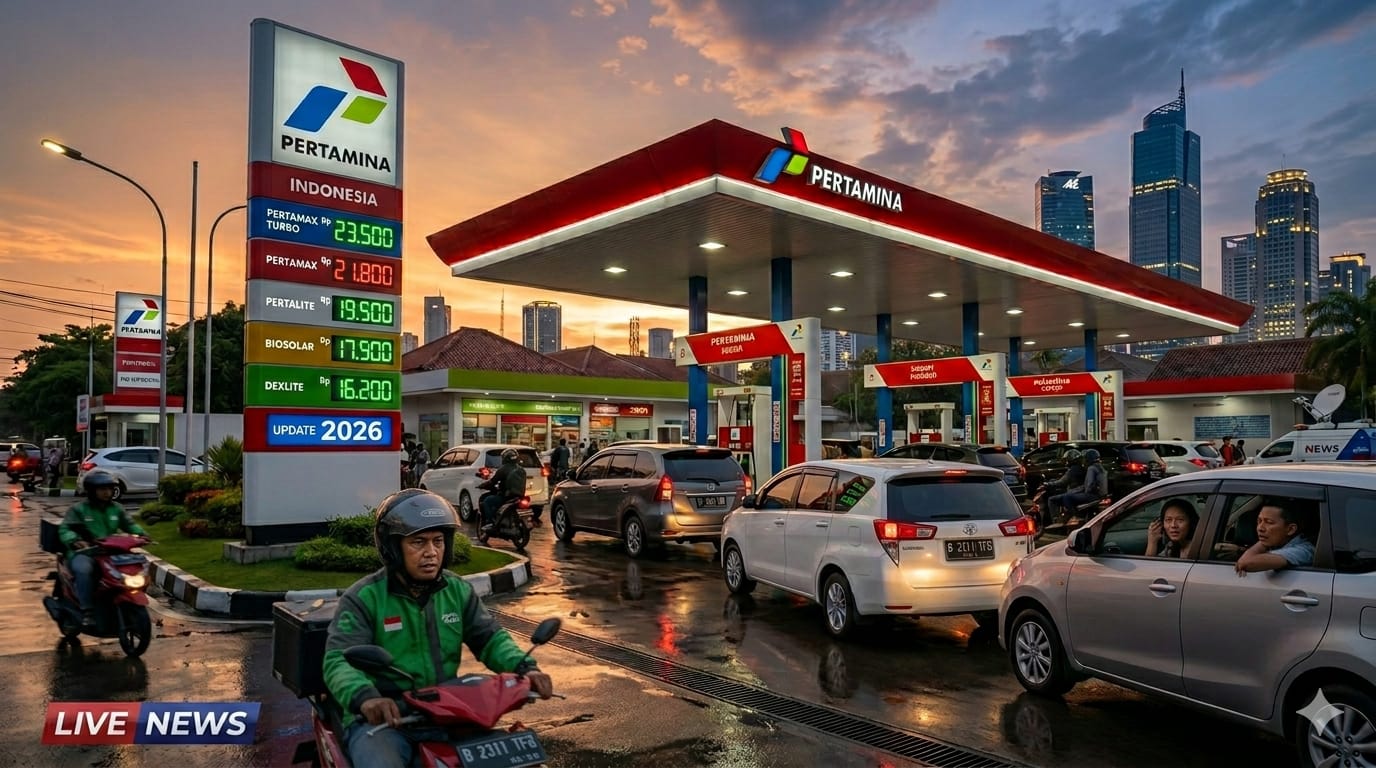

JAKARTA — Indonesia is facing renewed concern over a potential Pertamina fuel price hike 2026 as rising global oil prices and economic uncertainty continue putting pressure on the country’s energy sector.
State-owned energy company Pertamina is expected to reassess domestic fuel pricing policies in response to changing international crude oil markets. The possibility of higher fuel costs has sparked widespread public discussion across the country.
The issue surrounding the Pertamina fuel price hike 2026 has become increasingly sensitive because fuel prices directly affect transportation, food distribution, and overall living expenses for millions of Indonesians.
Global energy markets have remained volatile over the past year due to geopolitical conflicts, unstable supply chains, and production cuts by major oil-producing nations. Economists say these conditions have significantly increased operational costs for energy-importing countries.
Indonesia continues relying on fuel subsidies to stabilize domestic prices and protect household purchasing power. However, maintaining subsidies requires substantial government spending, especially when crude oil prices remain high for long periods.
Financial analysts warn that any major increase in fuel prices could trigger broader inflation across multiple industries. Sectors such as logistics, public transportation, fisheries, and small businesses are considered among the most vulnerable to higher operational costs.
Many Indonesian consumers are already preparing for possible spending adjustments if fuel prices rise in 2026. Some households have started reducing non-essential expenses while considering more fuel-efficient transportation options.
The automotive industry has also seen increasing interest in hybrid and electric vehicles as consumers look for alternatives to conventional fuel-powered transportation. Government incentives for electric mobility are expected to continue expanding throughout 2026.
Experts say the rupiah exchange rate against the US dollar will remain another key factor influencing domestic fuel prices. A weaker rupiah could increase import costs for crude oil and refined fuel products.
Meanwhile, government officials have repeatedly emphasized that protecting lower-income communities remains a priority. Authorities are expected to continue targeted fuel subsidy programs to minimize the economic burden on vulnerable households.
Several economists believe Indonesia must gradually reduce dependence on fossil fuels to improve long-term energy security. Renewable energy investment and electric transportation infrastructure are increasingly viewed as strategic national priorities.
As uncertainty in global energy markets persists, public attention toward Pertamina’s pricing decisions is likely to remain high throughout 2026. Any official announcement regarding fuel adjustments is expected to have a significant impact on Indonesia’s economic outlook and consumer sentiment.