
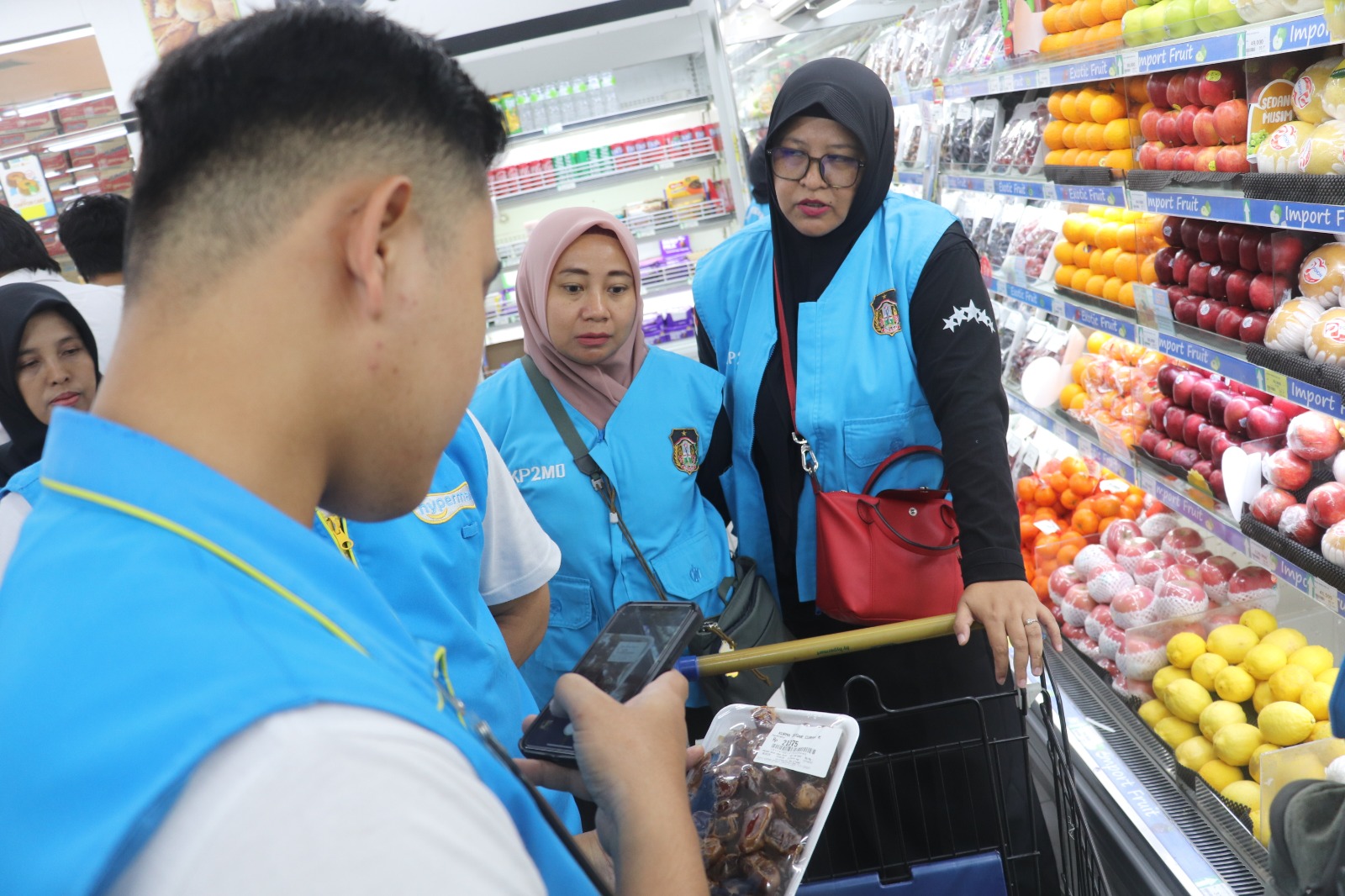

BLITAR – A Blitar food safety inspection uncovered unlabeled candy during surprise checks at several modern retail stores as local authorities strengthened consumer protection measures ahead of higher food demand.
A joint inspection team visited multiple stores across Blitar on Wednesday. Officers checked product labels, storage systems, and expiration dates to make sure food sold to residents remained safe for consumption.
Endang Purwono, head of community health at the Blitar City Health Office, said the operation involved police officers, regional laboratory staff, consumer protection representatives, and municipal public order officers. The team scheduled visits to three retail locations during the inspection round.
“We formed a joint team with the police, health office, regional laboratory, KLKI, and Satpol PP. Today we planned inspections at three locations,” he said.
At one retail outlet in the Poyono area, inspectors found a candy product displayed without a label. That immediately drew attention because customers could not check ingredients, production details, or expiry information before buying it.
“There were several findings, including a candy product without a label,” Endang said.
The team also examined cold-storage practices inside the store. Officers noticed that several refrigerated products lacked proper temperature monitoring because staff had not installed thermometers inside cooling units.
According to Endang, products such as meat must stay below five degrees Celsius so freshness and food quality remain stable. Without temperature monitoring, store operators face greater risk of product damage.
“We advised stores to place thermometers in every refrigerator so the temperature can be monitored,” he said.
Despite those findings, inspectors reported that overall food conditions remained good in the two stores already checked. They did not find expired items or damaged packaging during the inspection.
“From the two locations we checked today, we found no damaged packaging and no expired products,” Endang added.
Officials plan to continue inspections during Ramadan because food purchases usually rise during the season and retail circulation becomes more active.