
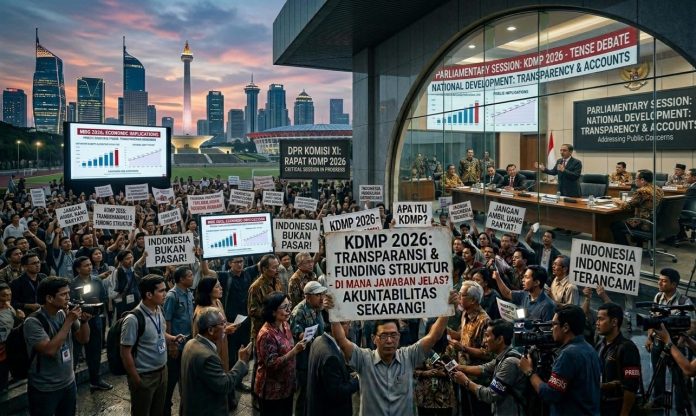

JAKARTA — Public scrutiny surrounding the KDMP 2026 issue is continuing to intensify in Indonesia as citizens, analysts, and civil society groups demand greater transparency and accountability from policymakers.
The KDMP 2026 issue has become a major national conversation after concerns emerged regarding budget management, implementation strategies, and the long-term effectiveness of the program. The topic has rapidly gained attention across television networks, online media, and social platforms.
Government officials maintain that the KDMP initiative is intended to strengthen economic resilience and accelerate national development goals. Authorities also insist that ongoing evaluations are being conducted to ensure the program operates effectively and responsibly.
Despite those assurances, critics argue that the government has yet to provide sufficient clarity regarding funding structures and execution plans. Several policy experts say clearer public communication is needed to prevent misinformation and reduce public distrust.
Economic observers warn that uncertainty surrounding major national programs can influence market sentiment and investor confidence. According to analysts, transparency and policy consistency are increasingly important as Indonesia faces global economic pressure and rising fiscal challenges.
Supporters of the KDMP program believe the initiative could bring long-term benefits if implemented correctly. They argue the policy has the potential to stimulate regional economies, improve infrastructure development, and create new employment opportunities.
At the same time, public opinion remains divided. While some Indonesians view the initiative as a positive step toward economic progress, others remain skeptical about financial efficiency and government accountability.
Academic institutions and watchdog organizations have also joined the discussion, urging stronger oversight mechanisms and independent monitoring. Experts say regular evaluations and transparent reporting will be critical to maintaining public confidence.
Social media discussions related to KDMP 2026 continue expanding nationwide, with many users calling for more open dialogue between authorities and the public. The issue has become one of the country’s most talked-about policy debates entering the second half of 2026.
Political analysts predict the KDMP controversy could continue shaping Indonesia’s national discourse in the coming months, especially if economic uncertainty persists. They believe public trust will largely depend on how transparently the government handles the issue moving forward.
Meanwhile, officials say feedback from communities, researchers, and stakeholders will continue being considered as part of future policy improvements. Authorities also emphasized their commitment to balancing development priorities with fiscal responsibility.
As debate continues growing, the KDMP 2026 issue is expected to remain under close national attention throughout the year.