
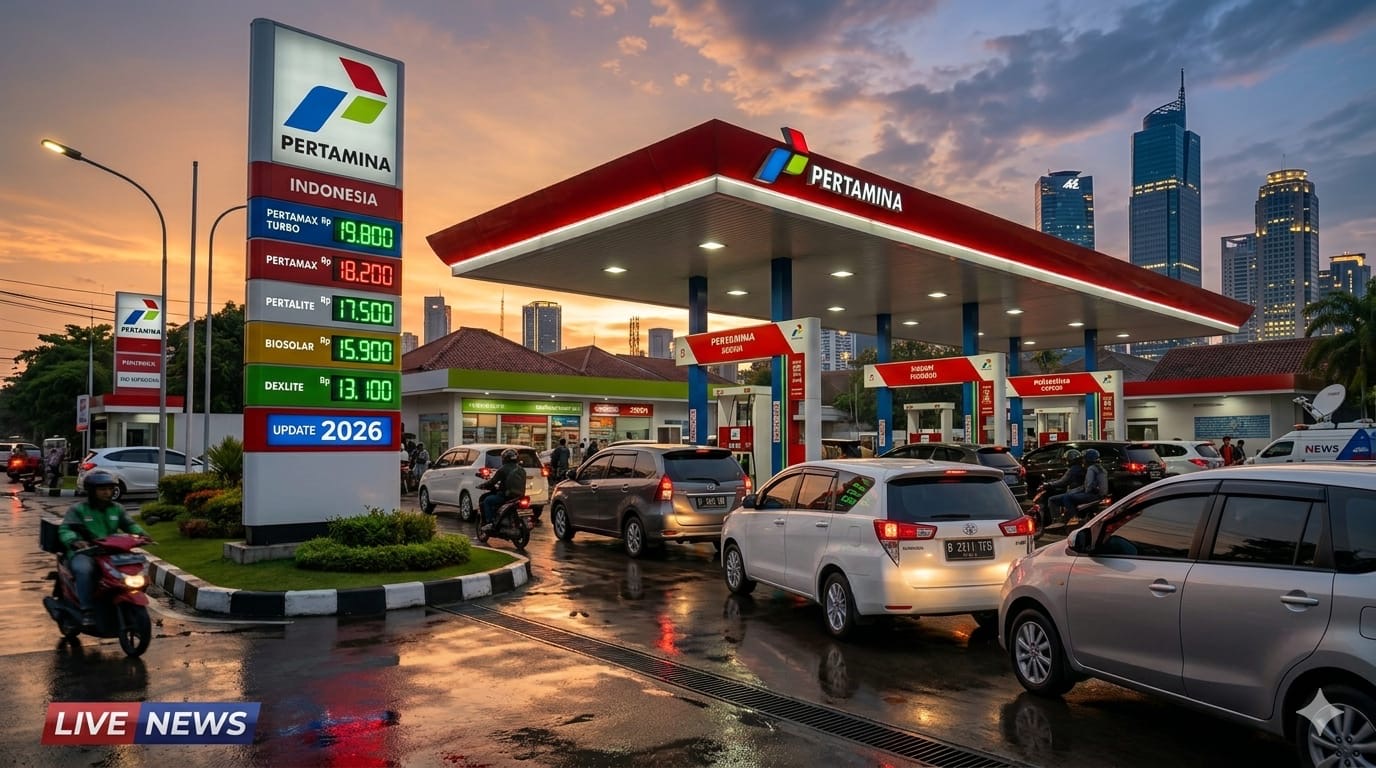

JAKARTA — Concerns over a possible Pertamina fuel prices 2026 increase are growing across Indonesia as global crude oil prices continue to show volatility amid ongoing geopolitical and economic uncertainty.
Indonesia’s state-owned energy company Pertamina is reportedly evaluating fuel pricing adjustments to respond to rising international energy costs. The issue has quickly become one of the country’s most closely watched economic topics entering 2026.
The conversation around Pertamina fuel prices 2026 increase has intensified after analysts warned that prolonged pressure in the global oil market could force adjustments to both subsidized and non-subsidized fuel products.
International oil markets remain unstable due to supply disruptions, production strategies from major exporters, and fluctuating demand from large economies in Asia and Europe. These conditions have directly impacted fuel procurement costs in developing countries, including Indonesia.
Economic experts say Indonesia faces a difficult balancing act between maintaining public subsidies and protecting state finances. Fuel subsidies remain crucial for millions of Indonesians, particularly low-income households and workers who rely heavily on private transportation.
In recent years, fuel price changes have had immediate effects on transportation fares, food prices, and logistics costs. Analysts believe another increase in fuel prices could contribute to inflationary pressure across several sectors of the economy.
Public transportation operators and delivery services are among the industries most vulnerable to rising fuel costs. Ride-hailing drivers have also expressed concerns that higher operational expenses may reduce their daily income if transportation tariffs remain unchanged.
At the same time, the Indonesian government continues promoting electric vehicle adoption and renewable energy development as part of its long-term energy transition strategy. Officials hope cleaner energy alternatives can reduce dependence on imported fuel in the future.
Market observers note that the rupiah’s exchange rate against the US dollar will also play a major role in determining fuel pricing policies in 2026. A weaker rupiah could increase import costs and add further pressure to domestic fuel prices.
Despite mounting speculation, government officials have emphasized that any fuel pricing decision will consider social and economic stability. Authorities are expected to maintain targeted subsidies to help vulnerable communities cope with rising living costs.
Consumer behavior is already beginning to shift as uncertainty over fuel prices grows. Demand for fuel-efficient vehicles and hybrid technology has continued increasing in Indonesia’s automotive market over the past year.
Energy analysts predict the government and Pertamina will likely adopt a cautious approach before implementing major adjustments. However, if global oil prices remain elevated throughout 2026, fuel price increases may become increasingly difficult to avoid.