
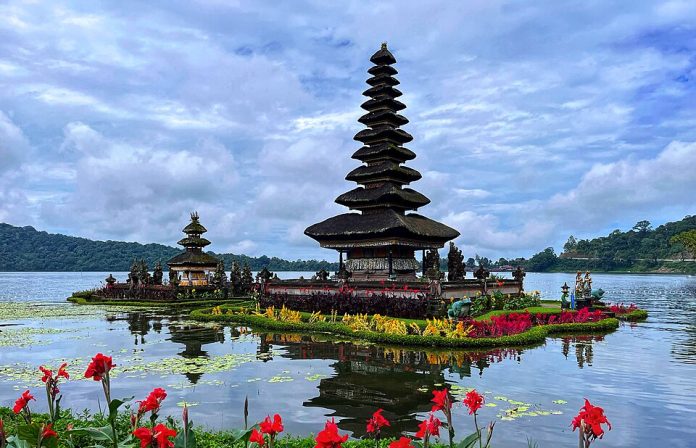

RADAR TULUNGAGUNG – Bali preserved its Hindu identity while most of Indonesia, especially Java, embraced Islam through a combination of political strength, cultural continuity, and historical timing. Historians say the island’s rulers protected Hindu traditions for centuries, allowing Bali to develop into Indonesia’s only Hindu-majority region today.
The survival of Hinduism in Bali did not happen because the island rejected Islam entirely. Muslim communities arrived in Bali centuries ago through trade, diplomacy, and migration. However, Balinese kingdoms maintained strong Hindu political systems and cultural traditions that continued shaping everyday life across the island.
Today, Bali stands as one of the world’s most recognized centers of Hindu culture. Temples, religious ceremonies, traditional dances, and spiritual rituals remain central to Balinese society, attracting millions of visitors every year while preserving traditions that date back to the Majapahit era.
The Majapahit Influence Strengthened Hindu Rule in Bali
Bali’s Hindu identity grew stronger after the Majapahit Empire expanded into the island in 1343 under Mahapatih Gajah Mada. Majapahit rulers introduced Javanese Hindu-Buddhist political systems, court traditions, and religious teachings that later became deeply rooted in Balinese society.
The Gelgel Kingdom eventually emerged as Bali’s dominant Hindu kingdom. At its peak during the 16th century, Gelgel controlled Bali, Lombok, and parts of Sumbawa. The kingdom adopted governance structures similar to Majapahit and placed Hindu teachings at the center of royal authority.
Historical accounts also show that Islam entered Bali peacefully during this period. During the reign of King Hayam Wuruk in the late 14th century, Dalem Ketut Ngulesir of Gelgel reportedly returned from the Majapahit court with 40 Muslim guards and attendants.
Instead of forcing them to convert, the Gelgel ruler allowed the Muslim group to settle permanently in Bali. The community later established one of Bali’s earliest Muslim settlements and built a mosque in Gelgel, which many historians consider the oldest mosque on the island.
This early interaction reflected Bali’s openness toward Muslim communities. Muslim traders, sailors, and soldiers continued arriving in Bali through maritime trade routes, particularly in northern coastal areas connected to Java, Lombok, and Sulawesi.
Political Power Helped Bali Resist Islamization
Islamic kingdoms in Java expanded rapidly during the 15th and 16th centuries, especially after the rise of the Demak Sultanate. However, Bali’s rulers managed to maintain their independence during a crucial period when Islamic influence spread across the archipelago.
Historians say Demak attempted to build peaceful relations with Bali during the reign of Sultan Trenggono. The kingdom reportedly sent envoys to establish diplomatic ties and encourage the spread of Islam without military conquest.
Dalem Waturenggong, one of Bali’s most powerful rulers, rejected efforts to Islamize his kingdom. Instead, he expanded Gelgel’s influence into Blambangan, Lombok, and Sumbawa between 1512 and 1520, strengthening Bali’s regional position.
Timing also played a major role in Bali’s survival as a Hindu kingdom. After the fall of Majapahit, Islamic kingdoms in Java still competed for power and influence. During that transition, Gelgel strengthened its military and political authority before larger Islamic kingdoms could dominate Bali.
By the time the Mataram Sultanate became a major force in Java, Dutch colonial expansion had already begun reshaping political conflicts in the region. Mataram faced internal disputes and growing pressure from the Dutch, limiting its ability to expand toward Bali.
Some historians also link Bali’s resistance to emotional ties with Majapahit. Many nobles and former Majapahit officials fled to Bali after the empire collapsed. They carried stories about the kingdom’s destruction, reinforcing Balinese loyalty to Hindu traditions and royal heritage.
Balinese Hinduism Became Part of Daily Life
Hinduism in Bali evolved together with older local beliefs, including animist and ancestral traditions. This fusion created a unique form of Balinese Hinduism that differs significantly from Hindu practices in India.
Ceremonies such as Ngaben cremation rituals and Galungan celebrations continue to play an important role in Balinese culture. Religious offerings, temple festivals, and traditional art forms remain closely connected to everyday social life across the island.
Dutch colonial authorities also helped preserve Balinese traditions during the 19th century. Colonial officials viewed Bali as a center of ancient Javanese culture and generally avoided disrupting local religious customs.
After Indonesia declared independence in 1945, Bali maintained its Hindu identity under the national ideology of Pancasila. The establishment of Parisada Hindu Dharma Indonesia later strengthened official recognition for Hindu communities throughout the country.
Today, Bali remains a symbol of cultural resilience in Indonesia. Although Muslims form a minority on the island, Hindu and Muslim communities continue building relationships through coexistence and mutual respect. Historians say Bali’s experience demonstrates how traditions can survive major political and religious transformations across centuries.