
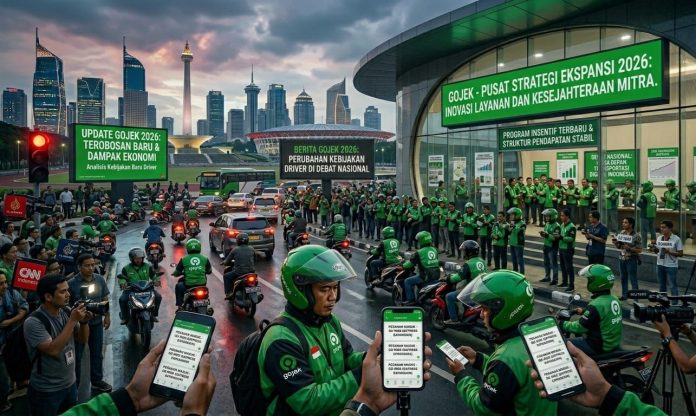

JAKARTA — Discussions surrounding the latest Gojek update 2026 are continuing to grow in Indonesia as the ride-hailing giant explores new expansion strategies amid rising competition in the country’s digital economy.
The latest Gojek update 2026 gained national attention after reports emerged about service innovation, platform improvements, and potential policy adjustments affecting drivers and consumers. The developments have triggered widespread reactions across social media and technology forums.
Gojek remains one of Southeast Asia’s most influential digital platforms, operating across transportation, food delivery, logistics, and digital payment services. Analysts say the company continues playing a major role in shaping Indonesia’s rapidly growing online economy.
Industry observers believe competition in the ride-hailing sector is becoming more aggressive as companies focus on customer retention and service efficiency. Promotions, subscription systems, and integrated digital ecosystems are expected to become key strategies throughout 2026.
Public attention has also focused on driver welfare and income stability. Many drivers are closely monitoring possible changes related to incentives, commission structures, and operational policies amid increasing living costs.
Transportation experts warn that balancing business profitability with driver satisfaction remains one of the biggest challenges facing digital transportation companies. Fuel prices and operational expenses continue affecting workers in the sector.
At the same time, consumers are demanding faster deliveries, cheaper transportation, and more reliable application performance. Companies are responding by investing heavily in artificial intelligence, route optimization, and personalized user experiences.
Economic analysts say Indonesia’s app-based transportation industry still offers significant long-term growth potential due to strong smartphone penetration and expanding digital payment adoption.
The latest Gojek developments have also fueled broader discussions about the future of gig economy workers in Indonesia. Labor groups are increasingly calling for stronger protection and clearer regulations for app-based drivers and couriers.
Meanwhile, government authorities continue reviewing regulations related to online transportation services to ensure fair competition and consumer safety. Policy changes affecting the industry may continue emerging throughout 2026.
Technology experts predict automation and data-driven services will become increasingly important in the next phase of digital transportation growth. Companies that adapt quickly to changing consumer behavior are expected to remain competitive.
As Indonesia’s digital economy continues evolving, the latest Gojek update is expected to remain a major topic among investors, drivers, consumers, and policymakers in the coming months.