

BLITAR – Free Nutritious Meal Program in Blitar City continues to expand, but local authorities are still working to complete hygiene certification requirements for several nutrition service units involved in the initiative.
Officials reported that a number of Nutrition Fulfillment Service Units, known as SPPG, have not yet obtained a Hygiene and Sanitation Eligibility Certificate (SLHS), a key administrative requirement that supports food safety standards.
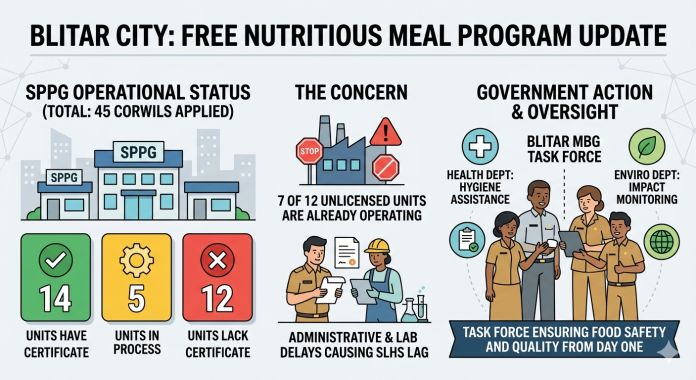
Data from the Blitar City Free Nutritious Meal Task Force show that 14 SPPG units have already secured SLHS certification. Another five units remain in the certification process, while 12 units have yet to obtain the document.
Among the 12 uncertified facilities, seven have already begun operations under the national Free Nutritious Meal Program, locally known as MBG.
Dindin Alinurdin, Secretary of the Blitar City MBG Task Force, said around 31 SPPG units currently operate across the city. Those facilities are part of 45 regional coordinator proposals submitted to the National Nutrition Agency, or BGN.
The remaining proposals are still undergoing verification at the national level.
“The authority to approve operational status belongs entirely to the National Nutrition Agency,” Dindin said on Thursday.
He explained that the absence of certification in several facilities does not necessarily indicate failures in food quality or nutrition standards. Instead, many operators are still completing administrative requirements that require additional time.
Obtaining an SLHS certificate involves several technical procedures, including laboratory testing and document verification. These steps often take longer than operational preparations.
According to Dindin, authorities provide a grace period that allows operators to complete the remaining administrative requirements while continuing efforts to meet all regulatory standards.
“Some facilities may already meet nutritional standards in practice. However, administrative requirements, including laboratory testing, still need completion. We continue encouraging every SPPG unit to finalize those requirements as soon as possible,” he said.
The Blitar City Government has also intensified supervision of the program. Although BGN controls operational licensing, local authorities continue supporting implementation through the MBG Task Force.
Several government agencies participate in monitoring activities. The Health Office assists operators with hygiene and sanitation certification requirements, while the Environmental Agency evaluates potential environmental impacts linked to food preparation activities.
Officials say the support system aims to ensure that meals distributed through the program remain safe, nutritious, and suitable for consumption.
Dindin stressed that local authorities have accompanied the program since its launch. The task force continues guiding operators through certification procedures and regulatory requirements.
“When SPPG units begin operating, the city government provides assistance through the task force. We ensure the main requirements are in place while operators complete the remaining documents,” he said.
As the program expands, officials expect more facilities to secure certification. They hope the process will strengthen food safety oversight and improve administrative compliance across Blitar City.