
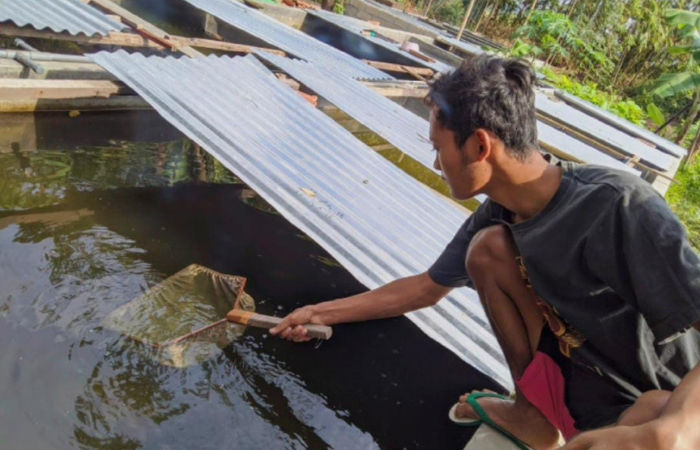

RADAR TULUNGAGUNG – A 24-year-old entrepreneur in East Java has turned financial pressure into opportunity by building a growing betta fish farming business and setting his sights on export markets.
Muhammad Balyan Arif began breeding ornamental fish in 2025 shortly after graduating from college in Tulungagung. As the eldest child, he felt responsible for supporting his family even though the venture did not start from personal passion.
“I started this more out of necessity than hobby,” he said. “But I saw strong potential in the local market, so I continued.”
Unlike many of his peers pursuing office or digital careers, Balyan spends most of his days tending rows of small fish ponds at his home in Boyolangu. His decision initially drew skepticism, including from relatives who questioned why a young graduate chose fish breeding instead of conventional employment.
Those doubts faded as the business began covering his daily expenses. Family and community support gradually followed as his production grew.
Balyan believes betta fish offer a unique combination of low maintenance and high demand. Their affordability also makes them easier to market compared with many other ornamental species.
“This tiny fish has a very bright business prospect,” he said.
Indonesia is one of the world’s leading sources of ornamental fish, and hobbyist demand for bettas has risen globally in recent years, especially among online aquarium communities. Balyan views this trend as a long-term opportunity for small breeders.
Despite working in aquaculture, Balyan relies heavily on digital platforms to expand sales. He markets fish through Facebook groups and online marketplaces while emphasizing trust and branding as essential for new sellers.
“In the digital world, credibility is everything,” he said. “If you want a wider market, you must build a brand first.”
The journey has included setbacks. During the early phase, Balyan suffered significant losses due to disease outbreaks and unstable prices that wiped out harvests. He describes weather variability and feed management as constant risks in fish farming.
To maintain quality, he applies strict grading standards. He sorts fish by color, fin shape, and health to determine price levels. This approach helps stabilize income despite market fluctuations.
Today, Balyan aims to scale up production and welcomes anyone interested in learning betta fish farming, especially fellow youth. He hopes ornamental fish bred in Boyolangu will eventually reach export markets.
“If more youth join, this village could become known for betta fish,” he said. “My dream is to see our fish reach buyers overseas.”