
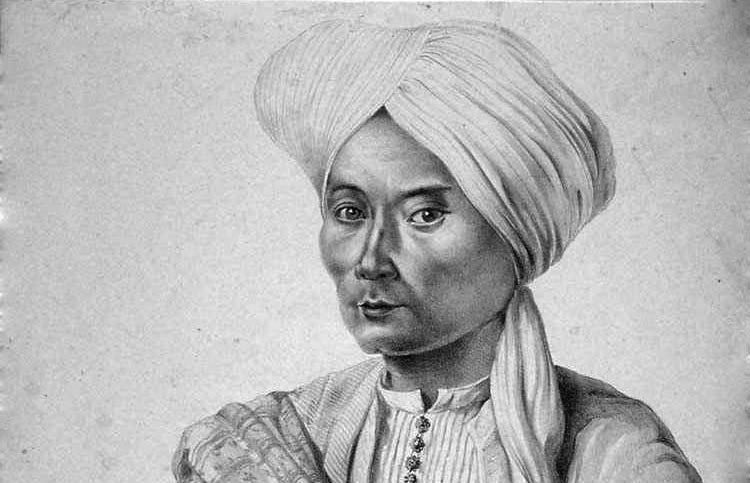

RADAR TULUNGAGUNG – The Diponegoro War, also known as the Java War, stands as one of the largest anti-colonial uprisings in Indonesian history. Led by Prince Diponegoro between 1825 and 1830, the conflict inflicted heavy losses on Dutch colonial forces, caused widespread devastation across Java, and severely strained the finances of the Dutch colonial administration.
The Diponegoro War emerged amid growing dissatisfaction with Dutch interference in the affairs of the Yogyakarta Sultanate and worsening economic conditions for ordinary Javanese people. Historians regard the conflict as a turning point that reshaped Dutch rule in Indonesia and cemented Prince Diponegoro’s status as one of the nation’s most respected national heroes.
The five-year struggle expanded far beyond Yogyakarta, drawing support from nobles, religious leaders, and rural communities across Java. Although the Dutch ultimately suppressed the rebellion, the Diponegoro War exposed the vulnerabilities of colonial rule and left a lasting legacy in Indonesian history.
The Causes Behind Prince Diponegoro’s Rebellion
Prince Diponegoro was born on November 11, 1785, in Yogyakarta as Raden Mas Mustahar, more commonly known as Raden Mas Ontowiryo. He was the eldest son of Sultan Hamengkubuwono III of the Yogyakarta Sultanate but chose to distance himself from court politics and aristocratic life.
By the early nineteenth century, Dutch influence within the courts of Yogyakarta and Surakarta had increased significantly. Colonial authorities frequently intervened in succession disputes and political affairs, weakening the authority of local rulers. Historians, including British scholar Peter Carey, have noted that foreign intervention contributed to growing instability within the Javanese courts.
At the same time, many Javanese farmers faced economic hardship. Heavy taxation, compulsory labor obligations, and colonial economic policies fueled resentment among local communities. Diponegoro became increasingly concerned about the suffering experienced by ordinary people under colonial rule.
Tensions reached a breaking point in 1825 when Dutch authorities approved the construction of a road near Diponegoro’s residence at Tegalrejo. Survey markers were reportedly placed through land that included ancestral graves associated with the prince’s family. The action was viewed as deeply disrespectful and became a powerful symbol of Dutch disregard for Javanese traditions.
Java War Expands Across the Island
Open conflict began in July 1825 when Dutch forces moved to capture Diponegoro at Tegalrejo. Although Dutch troops destroyed the area, the prince escaped and established a new resistance base in Selarong, south of Yogyakarta.
Diponegoro adopted guerrilla warfare tactics that proved highly effective against conventional colonial forces. His supporters launched attacks across central and eastern Java, while prominent figures such as Kyai Maja and Sentot Prawirodirdjo joined the struggle.
As the conflict intensified, the rebellion spread into regions including Banyumas, Kedu, Pekalongan, Semarang, Rembang, Madiun, Kediri, and surrounding areas. The scale of the uprising led historians to refer to the conflict as the Java War.
Dutch military commander Lieutenant General Hendrik Merkus de Kock responded by implementing the Benteng Stelsel (Fortress System), a strategy that involved constructing hundreds of fortified posts connected by military roads. The system gradually restricted the movement of Diponegoro’s forces and helped the Dutch regain control of contested territories.
Heavy Casualties and Lasting Consequences
By 1830, the rebellion had weakened under sustained military pressure. On March 28, 1830, Diponegoro attended negotiations with Dutch authorities in Magelang under a flag of truce. Instead of reaching an agreement, Dutch officials arrested him, effectively ending the war.
After his capture, Diponegoro was exiled first to Manado and later to Makassar, where he remained until his death on January 8, 1855.
The war ranks among the deadliest conflicts in Indonesian history. Historians estimate that approximately 200,000 people died during the fighting, the vast majority of them Javanese civilians. Dutch military losses totaled more than 8,000 soldiers, while thousands of indigenous fighters also lost their lives.
Although the Dutch emerged victorious, the financial burden proved enormous. The conflict consumed vast military resources and contributed to a severe fiscal crisis within the colonial administration. Many historians argue that the economic strain created by the war helped drive subsequent colonial policies aimed at increasing revenue from Java.
Today, Prince Diponegoro remains a symbol of resistance against colonialism. His leadership during the Java War continues to be remembered as one of the most significant struggles for justice and self-determination in Indonesia’s history.