
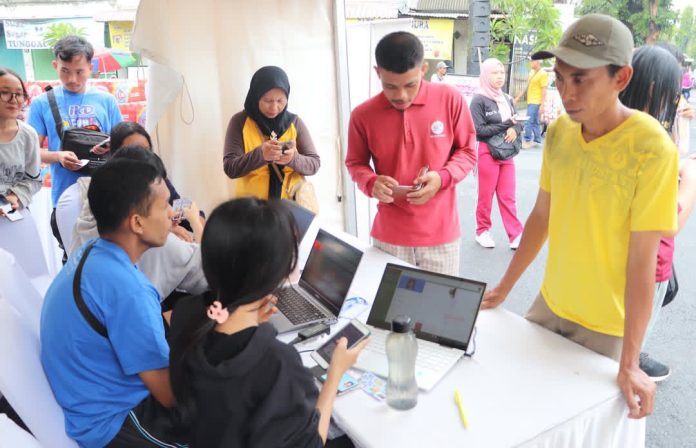

BLITAR – The Blitar digital ID (IKD) adoption rate remains low, with only 24% of eligible residents activating the system as of March, raising concerns over digital transformation efforts in the city.
Data from the local civil registry office shows that out of 122,605 residents required to have a digital ID, only 29,552 have activated their IKD. Meanwhile, more than 93,000 people or nearly 76% have yet to adopt the digital identity system.
Head of the Civil Registration Office, Wahyudi Eko Surono, said several challenges continue to slow progress. He noted that adoption remains below expectations despite ongoing efforts.
“This achievement still needs improvement. We face various challenges in the field,” he said on April 22.
One major hurdle is uneven digital literacy. Many residents still lack familiarity with digital services, which makes it harder for them to activate and use the IKD system.
“Some people are not yet comfortable with digital platforms. So we need to provide more direct assistance,” he explained.
Limited public awareness also contributes to the slow uptake. Many residents do not fully understand how IKD can simplify administrative services.
“We see that public understanding of IKD benefits remains limited. That is why we continue to intensify outreach,” he added.
At the same time, concerns over personal data security have made some residents hesitant. Reports of data breaches elsewhere have increased public caution toward digital systems.
“There are concerns about personal data security. We continue to reassure the public that the system is safe,” he said.
Technical barriers further complicate the rollout. Not all smartphones support the IKD application, and internet connectivity remains inconsistent in several areas.
“Some devices are not compatible, and network access can still be unstable in certain locations,” he noted.
Despite these challenges, the city government plans to step up its efforts. Officials aim to expand outreach programs and provide hands-on assistance to help residents adopt digital IDs more easily.
“We will continue to push through direct services and outreach initiatives so people can access IKD more conveniently,” he said.